How to Fix Jaw Bone Loss in 3 Treatment Steps
How to Fix Jaw Bone Loss: The Direct Path to Rebuilding Your Foundation
By Dr. Justin Wright, DDS
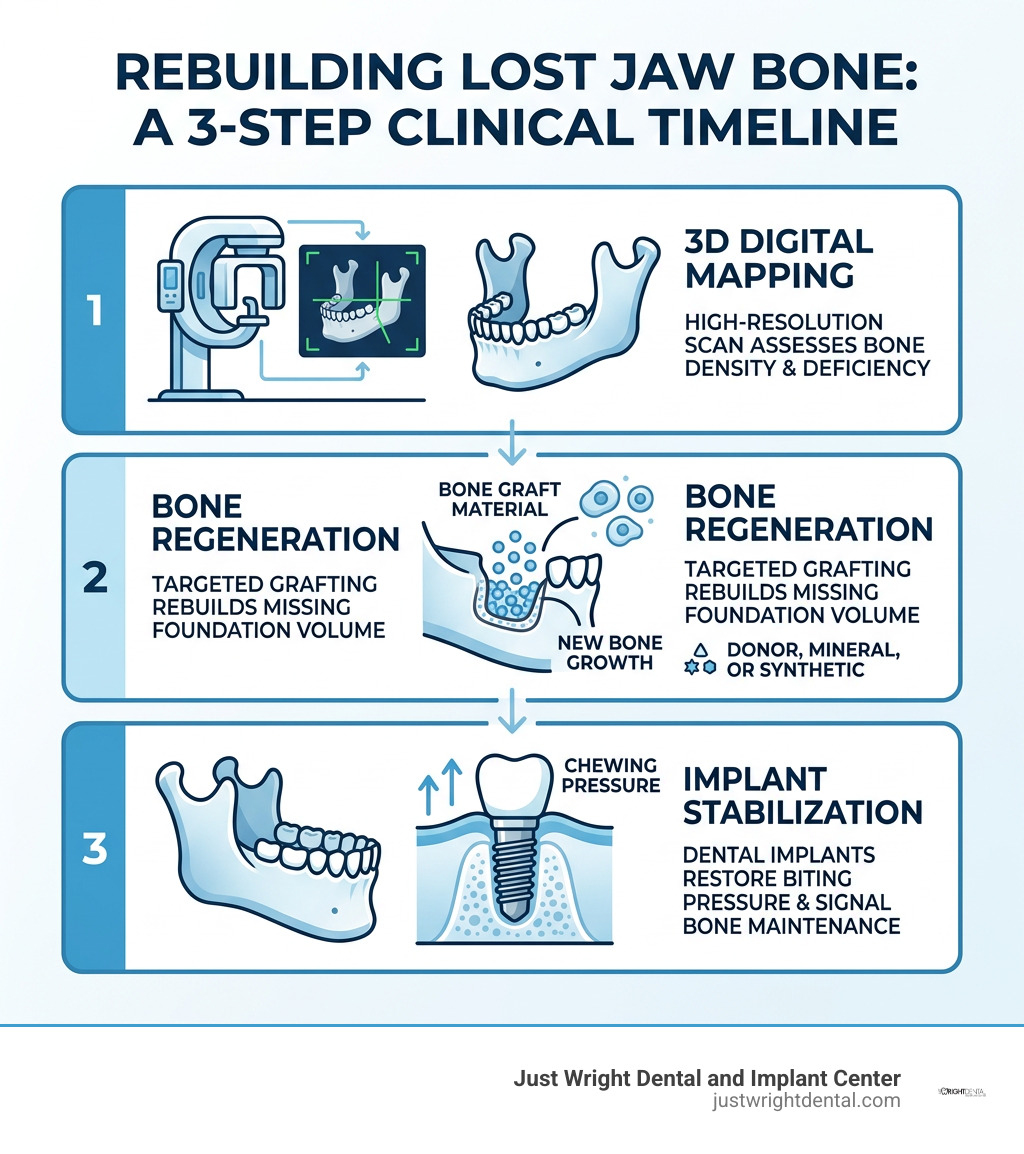
Knowing how to fix jaw bone loss comes down to three clear steps: mapping the bone, rebuilding lost volume, and restoring daily biting pressure.
Here is the direct treatment path:
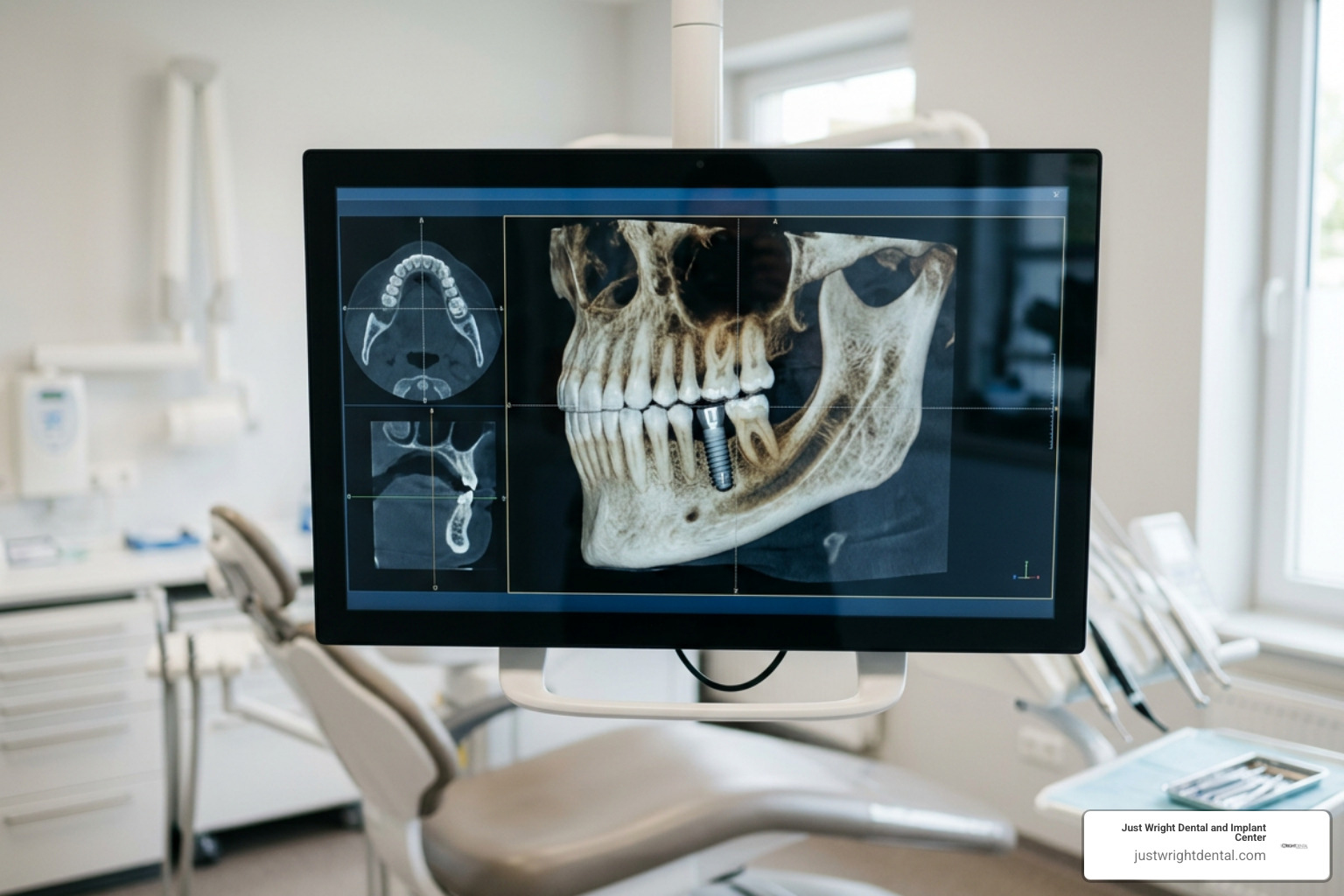
3D Digital Mapping: A high-resolution CBCT scan evaluates bone depth, width, and density to pinpoint exact deficiency areas.
Bone Regeneration: Targeted bone grafting (such as ridge augmentation or a sinus lift) rebuilds the missing foundation using donor, mineral, or synthetic materials.
Implant Stabilization: Dental implants are placed into the restored bone to deliver everyday chewing pressure, which continually signals your body to maintain bone density.
When bone loss is severe, remote-anchorage implants—such as zygomatic or pterygoid implants anchored into naturally dense cheekbone—can often restore a full smile without requiring extensive grafting.
Your jaw bone relies on constant stimulation from tooth roots to stay strong. When a tooth is missing, that signal disappears, and the body naturally resorbs the surrounding bone tissue.
I am Dr. Justin Wright, DDS, and over 18 years in practice placing more than 10,000 implants, I have specialized in guiding patients through how to fix jaw bone loss even after they were told they had no bone left. In this guide, we will walk through the exact steps and modern options available to restore your smile and protect your facial structure.
Why Does Jaw Bone Deterioration Happen in the First Place?
Jaw bone loss occurs primarily because the bone loses the continuous physical stimulation delivered by natural tooth roots during everyday chewing. Without this direct mechanical signal, your body resorbs the unused mineral structure.
Your jaw is living, dynamic tissue. As an adult, your bones naturally remodel themselves at a rate of roughly 10% each year through a delicate balance of specialized cells: osteoclasts (which clear away old bone) and osteoblasts (which build new bone). This biological principle—known in orthopedic science as Wolff’s Law—dictates that bone forms and maintains its density directly in response to physical load.
When a tooth is removed or lost, that localized physical load disappears. In the first year after tooth removal, up to 25% of the surrounding alveolar bone volume is lost, and that shrinkage continues over time if the space remains unaddressed.
Beyond simple tooth loss, several underlying factors accelerate jaw deterioration:
Periodontal Disease: Advanced gum infections harbor destructive bacteria that trigger chronic inflammation, breaking down the connective tissue and alveolar bone holding teeth in place.
Traditional Removable Prosthetics: Unlike roots or implants, traditional removable appliances sit directly on soft gum tissue. The friction and unnatural resting pressure can wear down the delicate alveolar ridge over time.
Facial Trauma or Infection: Direct trauma or deep bone infections (such as osteomyelitis) can destroy localized bone volume.
Sinus Expansion: In the upper jaw, tooth loss allows the maxillary sinus cavities to expand downward (pneumatization), thinning the available bone height from above.
When jaw bone atrophies, it changes more than your bite. It alters your facial profile—causing thinning lips, deeper creases around the mouth, a sunken lower jaw, and premature signs of aging. Addressing this bone shrinkage through comprehensive cosmetic dentistry and structural reconstruction is essential for maintaining natural facial harmony and oral health.
How to Fix Jaw Bone Loss: The 3 Primary Treatment Steps
Fixing jaw bone loss requires a structured, three-phase approach that transitions from high-precision digital diagnosis to clinical tissue regeneration, ending with permanent functional stabilization.
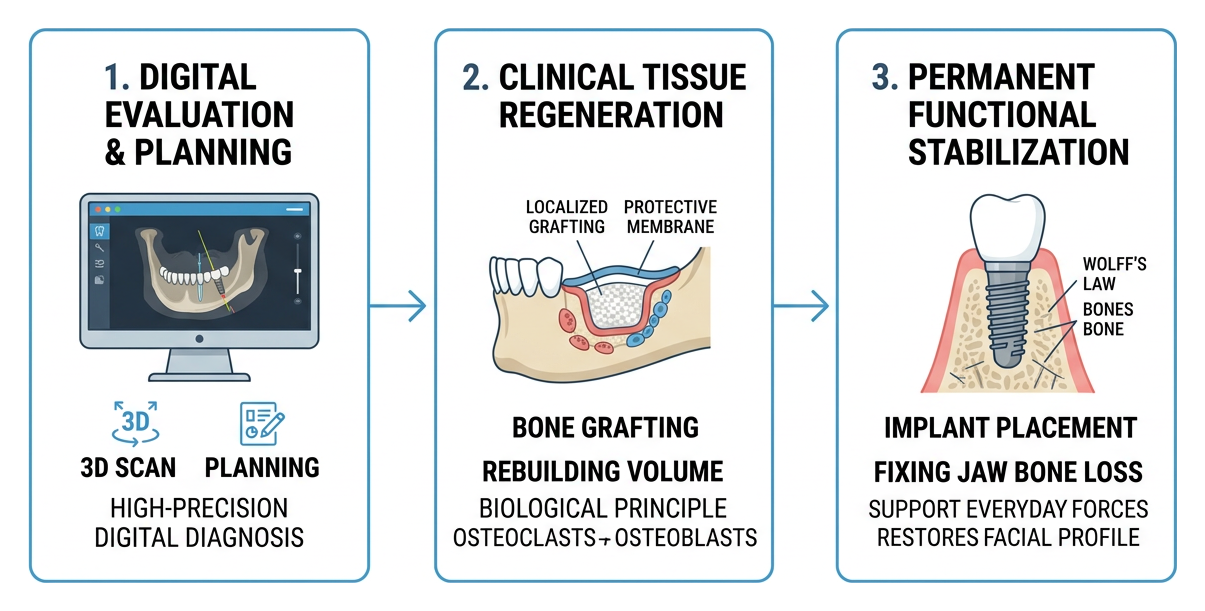
This sequenced protocol is designed to help your rebuilt jaw possess both the structural volume and cellular vitality necessary to support everyday chewing forces for years to come.
Step 1: Digital Evaluation and Planning How to Fix Jaw Bone Loss
The first step in resolving jaw bone deterioration is capturing a comprehensive, 3D anatomical map of your upper and lower jaws. We never guess with bone dimensions—we measure them down to fractions of a millimeter.
Standard dental implants generally require approximately 5 to 6 millimeters of horizontal bone width and at least 10 millimeters of vertical bone height to remain stable. Using advanced Cone Beam Computed Tomography (CBCT) 3D imaging, we evaluate your bone volume, density, nerve pathways, and sinus floor positions in three-dimensional space.
At our Corsicana, Texas practice, we evaluate your facial proportions and anatomy together using 3D facial and intraoral scanning. This prosthetically driven planning allows us to determine precisely where new bone must be regenerated to support an ideal, natural smile design before any clinical work begins. If you want to understand your current bone health, starting with a complimentary smile assessment provides clear, objective answers about your structural foundation.
Step 2: Surgical Bone Grafting and Ridge Augmentation
Once we have mapped your anatomy, the next step is regenerating lost bone tissue using targeted grafting techniques. Bone grafting places specialized biocompatible material into deficient areas, acting as a biological scaffold that encourages your body to grow fresh, living bone cells.
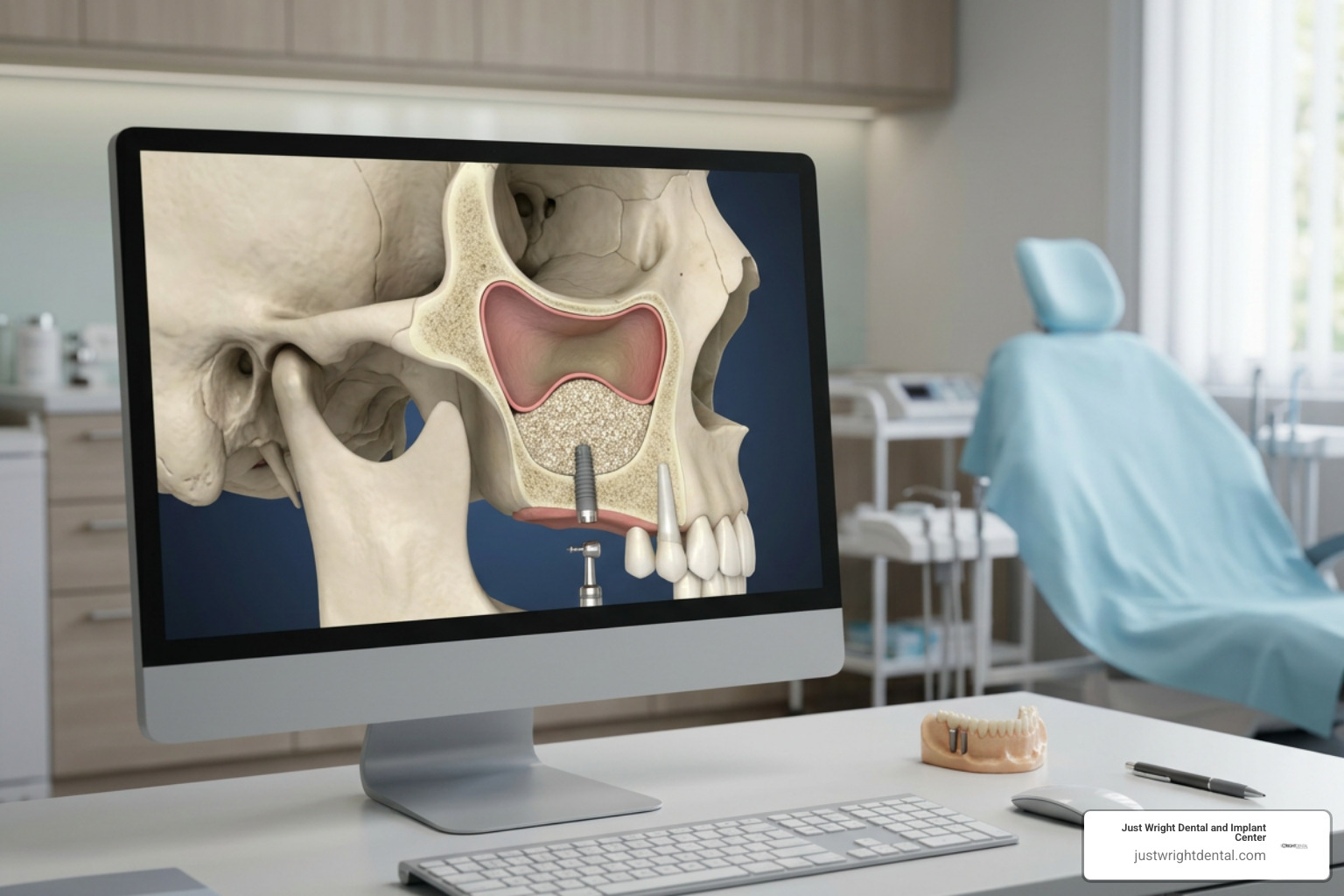
Depending on your specific pattern of bone loss, we utilize several established approaches:
Socket Preservation (Ridge Preservation): Performed immediately following tooth removal, we place bone material directly into the open socket. This prevents the surrounding walls from collapsing inward during the initial healing period.
Ridge Augmentation: If you have experienced horizontal or vertical ridge narrowing after years without teeth, grafting material is placed along the ridge and protected beneath a specialized barrier membrane, allowing new bone to widen the area.
Sinus Lift (Subantral Augmentation): When upper back molars are missing, the sinus floor often drops. We gently elevate the thin sinus membrane upward and place grafting material beneath it, creating the necessary vertical height for stable support.
We utilize various graft materials—including your own natural bone (autograft), donor bone (allograft), mineralized tissue (xenograft), and synthetic mineral matrices (alloplasts)—often combined with Platelet-Rich Fibrin (PRF) derived from your own blood to promote natural healing factors. Bone grafting typically takes 3 to 9 months to fully integrate with your existing jaw structure and harden into functional, natural bone.
Step 3: Permanent Stabilization and Stimulation with Dental Implants
The final, crucial step in reversing jaw bone loss is placing permanent dental implants to restore daily chewing pressure into the newly regenerated bone. Bone grafts rebuild the physical volume, but only routine mechanical load keeps that bone alive long term.
Dental implants are crafted from biocompatible medical-grade titanium or zirconia. Through a natural cellular process called osseointegration, your living bone cells fuse directly to the implant surface over several months. Once integrated, the implant functions exactly like a natural tooth root.
Every time you chew, the implant transfers natural biting forces into the surrounding jaw, signaling osteoblasts to continually renew bone matrix cells. Choosing dental implants provides the definitive solution to prevent future bone resorption.
For full-arch restorations, our temporary and healing teeth are 3D-designed and printed in-house using our 12 CAD/CAM mills and 4 3D printers. This allows you to test-drive your smile on day one while our in-house lab technicians work directly chairside to fine-tune your bite, fit, and appearance with zero outside lab delays.
Can You Get Implants When Bone Loss Is Severe?
Yes, you can still receive stable, permanent teeth even with severe bone loss. Patients who have been told by other practices that they have "no bone" often qualify for advanced, specialized reconstruction methods that bypass traditional grafting timelines entirely.
For patients experiencing extreme bone resorption in the upper jaw, we utilize remote-anchorage implants:
Zygomatic Implants: Extra-long implants that anchor securely into the dense, sturdy bone of the cheekbones (zygomatic arch), completely bypassing missing upper jaw bone.
Pterygoid Implants: Implants placed at a precise angle into the dense pterygomaxillary pillar behind the upper jaw, providing solid rear anchorage without requiring sinus lift grafting.
Transsinus and Transnasal Implants: Specialized angled fixtures that engage cortical bone along the nasal floor or sinus walls to achieve firm stability.
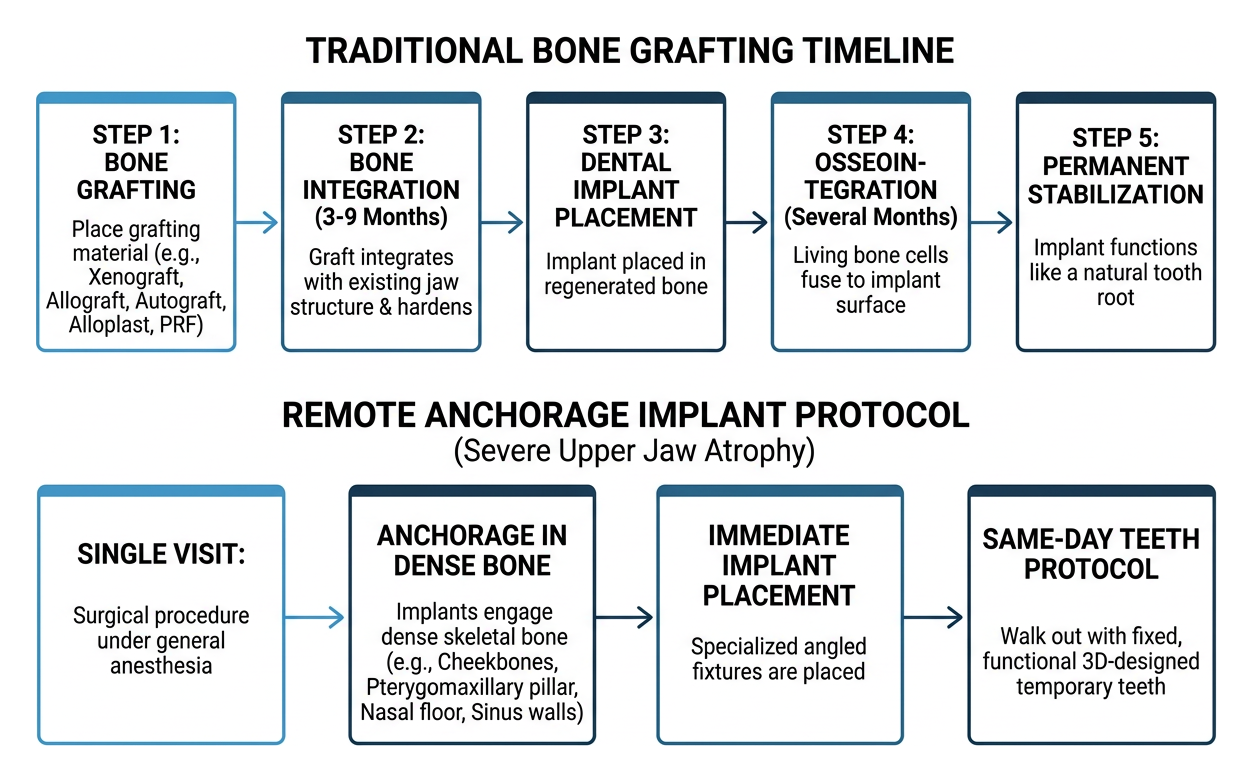
These remote-anchorage options make All-on-X full arch rehabilitation accessible even in complex situations. By anchoring into denser skeletal bone, we can frequently provide same-day teeth protocols, allowing you to walk out of our practice with a fixed, functional smile in a single visit while sleeping comfortably under general anesthesia.
Clinical Factor | Traditional Comprehensive Bone Grafting | Remote-Anchorage Implants (Zygomatic / Pterygoid) |
|---|---|---|
Primary Indication | Moderate localized or generalized bone loss | Severe upper jaw bone atrophy ("no bone" cases) |
Grafting Requirement | Extensive ridge augmentation and sinus lifts | Minimal to no bone grafting required |
Treatment Timeline | 6 to 12+ months across multiple stages | Immediate placement and same-day provisional teeth |
Anchorage Site | Regenerated alveolar ridge bone | Naturally dense zygomatic or pterygoid bone |
Sedation Options | Local numbing, IV, or general anesthesia | General anesthesia with board-certified anesthesiologist |
How Can You Protect Your Rebuilt Jawbone Long Term?
Protecting your rebuilt jaw bone requires maintaining healthy gum tissue around your restorations and supporting your body's natural bone metabolism through proper daily habits and balanced nutrition.

To maintain your rebuilt bone and protect your health investment over the coming decades, focus on these essential habits:
Rigorous Oral Hygiene: Clean thoroughly around teeth, bridges, and implant abutments daily using soft-bristled brushes, water flossers, and specialized interdental cleaners to prevent peri-implant inflammation.
Targeted Micronutrient Support: Bone remodeling requires essential raw materials. Ensure adequate intake of Calcium alongside Vitamin D3 and Vitamin K2, which work together to direct calcium into bone matrix rather than soft tissues. Magnesium and trace minerals also support bone density.
Avoid Tobacco and Nicotine: Nicotine constricts microvascular blood vessels, significantly reducing blood flow and oxygen delivery to healing bone and gum tissues.
Manage Systemic Health: Keep blood sugar levels well-managed if you have diabetes, as balanced glucose levels support continuous tissue regeneration and immune function.
Consistent Preventive Visits: Schedule regular cleanings and 3D imaging exams through general dentistry to confirm your bone levels remain stable and healthy.
Frequently Asked Questions About Jaw Bone Restoration
Can natural remedies alone address how to fix jaw bone loss?
Dietary improvements, calcium intake, and vitamins D3 and K2 support your overall bone metabolism, but nutritional changes alone cannot physically regrow bone that has already atrophied from tooth loss. Once alveolar bone resorbs, clinical interventions like bone grafting or remote-anchorage implants are necessary to rebuild structural volume and restore the mechanical chewing signals required to maintain it.
How long does bone grafting take to heal before implant placement?
Bone grafting typically takes 3 to 9 months to integrate fully with your existing jaw structure and transform into solid natural bone. In some cases with minor bone loss, grafting and implant placement can occur simultaneously in one visit. For larger ridge reconstructions or extensive sinus lifts, allowing the graft to mature over several months provides a stable foundation for the implant.
Do traditional dentures accelerate jaw bone loss compared to implants?
Yes, traditional removable dentures can accelerate jaw bone loss because they rest directly on top of the gums rather than anchoring within the bone. As you chew, the acrylic base creates friction and uneven compression across the ridge, gradually wearing down the bone beneath. Transitioning to All-on-4 denture alternatives transfers chewing forces down into the bone itself, helping prevent continued shrinkage.
What is the health investment required to fix jaw bone loss?
The health investment to repair jaw bone loss varies depending on the severity of bone shrinkage and the techniques used. Full-arch implant solutions range from same-day 3D-printed options to our most durable premium full-arch restorations, while single implants and targeted bone grafts are quoted based on complexity. During your initial 3D consultation, we provide a transparent, personalized breakdown of your treatment plan with zero hidden fees.
Conclusion: Restoring Your Facial Structure and Smile
Living with jaw bone loss does not mean you have to accept loose dentures, changes to your facial appearance, or limited food choices. Modern restorative techniques, precise 3D digital planning, and advanced implant methods make it entirely possible to rebuild a solid foundation and enjoy a permanent, confident smile.
At Just Wright Dental and Implant Center in Corsicana, Texas, we treat the whole patient, not just the teeth. Whether you have minor bone loss from a recent extraction or have been told elsewhere that you do not have enough bone for implants, I invite you to visit our office for a judgment-free conversation about your oral health. Our entire digital workflow—from CBCT planning to custom in-house fabrication—is designed to deliver predictable, lasting results in a calm and comfortable environment.
Take the first step toward restoring your foundation. Book an appointment with our team in Corsicana today.
Author Bio
By Dr. Justin Wright, DDS
Dr. Justin Wright, DDS is the founder and clinical director of Just Wright Dental and Implant Center in Corsicana, Texas. With 18 years in practice and more than 10,000 dental implants placed, Dr. Wright specializes in advanced full-mouth reconstructions, remote-anchorage solutions for severe bone loss, and facially driven 3D digital smile design.