The Ultimate Guide to Getting Dental Implants with Periodontal Disease
Can You Get Dental Implants If You Have Periodontal Disease?
By Dr. Justin Wright, DDS
You cannot receive dental implants safely while an active gum infection is present, but you can become a great candidate once the infection is eliminated and the tissue is fully stabilized. The key to long-term success is clearing out harmful bacteria and establishing a clean, healthy foundation before placing any titanium posts.
When gum disease is active, the oral environment is filled with inflammatory bacteria that attack the tissues supporting your teeth. If an implant is placed into that infected environment, those same bacteria can attach to the implant surface and prevent proper osseointegration—the natural process where your jawbone fuses solidly to the titanium implant.
At our practice in Corsicana, Texas, we treat patients from across Navarro County, Ellis County, and nearby communities like Waxahachie and Waco who were previously told their gum disease disqualified them from restorative care. We believe in treating the patient, not just the teeth. Once we achieve clinical clearance by removing the infection, your body can build strong, lasting support for replacement teeth.
Gum Health Stage | Clinical Condition | Implant Candidacy Status | Recommended Treatment First |
|---|---|---|---|
Healthy Gums | Pink, firm tissue; pocket depths under 3 mm; no bleeding | Immediate candidate | Routine preventive cleaning and 3D planning |
Gingivitis | Superficial inflammation; bleeding when brushing; zero bone loss | High candidacy after basic care | Professional dental cleaning and improved home oral hygiene |
Moderate Periodontitis | Chronic infection; pocket depths 4–6 mm; early to moderate bone loss | Candidate once infection resolves | Deep scaling and root planing, healing period, bone assessment |
Severe Periodontitis | Deep infection; pocket depths >6 mm; advanced bone loss; loose teeth | Candidate with staged specialty care | Targeted antimicrobial therapy, removals, bone grafting, or remote anchorage |
Gingivitis vs. Periodontitis: Can You Get Dental Implants If You Have Periodontal Disease?
The fundamental difference between gingivitis and periodontitis comes down to whether the infection has caused irreversible bone damage. Gingivitis is a mild, reversible inflammation of the superficial gum tissue, meaning it does not destroy the underlying jawbone. If you have gingivitis, a thorough professional cleaning and consistent brushing and flossing can quickly restore gum health, allowing you to proceed with implant planning without delay.
Periodontitis, on the other hand, is a deeper, chronic bacterial infection that breaks down the periodontal ligament and the alveolar jawbone that anchors natural tooth roots. As bone dissolves, deep spaces called periodontal pockets form around the teeth, creating shelters where bacteria multiply away from your toothbrush. Before considering implants, we must measure these pocket depths and perform deep periodontal scaling to eliminate the colonies of bacteria below the gumline. You can explore helpful patient education articles in the smile education center to learn more about how oral bacteria impact systemic health.
Understanding Peri-Implantitis and Long-Term Implant Protection
Peri-implantitis is an inflammatory condition that damages the soft tissue and jawbone surrounding an integrated dental implant. It begins as peri-implant mucositis—a surface-level inflammation of the surrounding gums similar to gingivitis—which remains reversible if caught early. If neglected, the bacteria create destructive inflammation that weakens the bone supporting the post.
Patients with a past history of periodontitis have a higher natural susceptibility to bacterial buildup, making regular maintenance essential (Durrani et al., 2019). As noted in scientific research on implant therapy in chronic periodontitis, the bacteria that cause natural tooth loss can transfer to the implant site if the mouth is not properly cared for. We protect your smile through structured supportive periodontal therapy, designing precision-milled restorations with smooth contours that promote tight soft tissue seals and allow easy cleaning at home.

How Does Untreated Gum Disease Impact Jawbone Health and Implant Stability?
Untreated gum disease causes progressive jawbone loss by triggering chronic inflammation that signals your body to resorb the very bone holding your teeth in place. Because a dental implant relies entirely on surrounding bone for its structural foundation, placing an implant into weakened, infected bone significantly increases the likelihood of integration failure.
When periodontal bacteria colonize tooth roots, your immune system releases defense compounds that inadvertently break down the alveolar ridge—the specialized ridge of bone in your upper and lower jaws. As this bone melts away, the jaw narrows and shortens, creating a ridge deficiency that lacks the height and width necessary to encase a titanium implant securely.
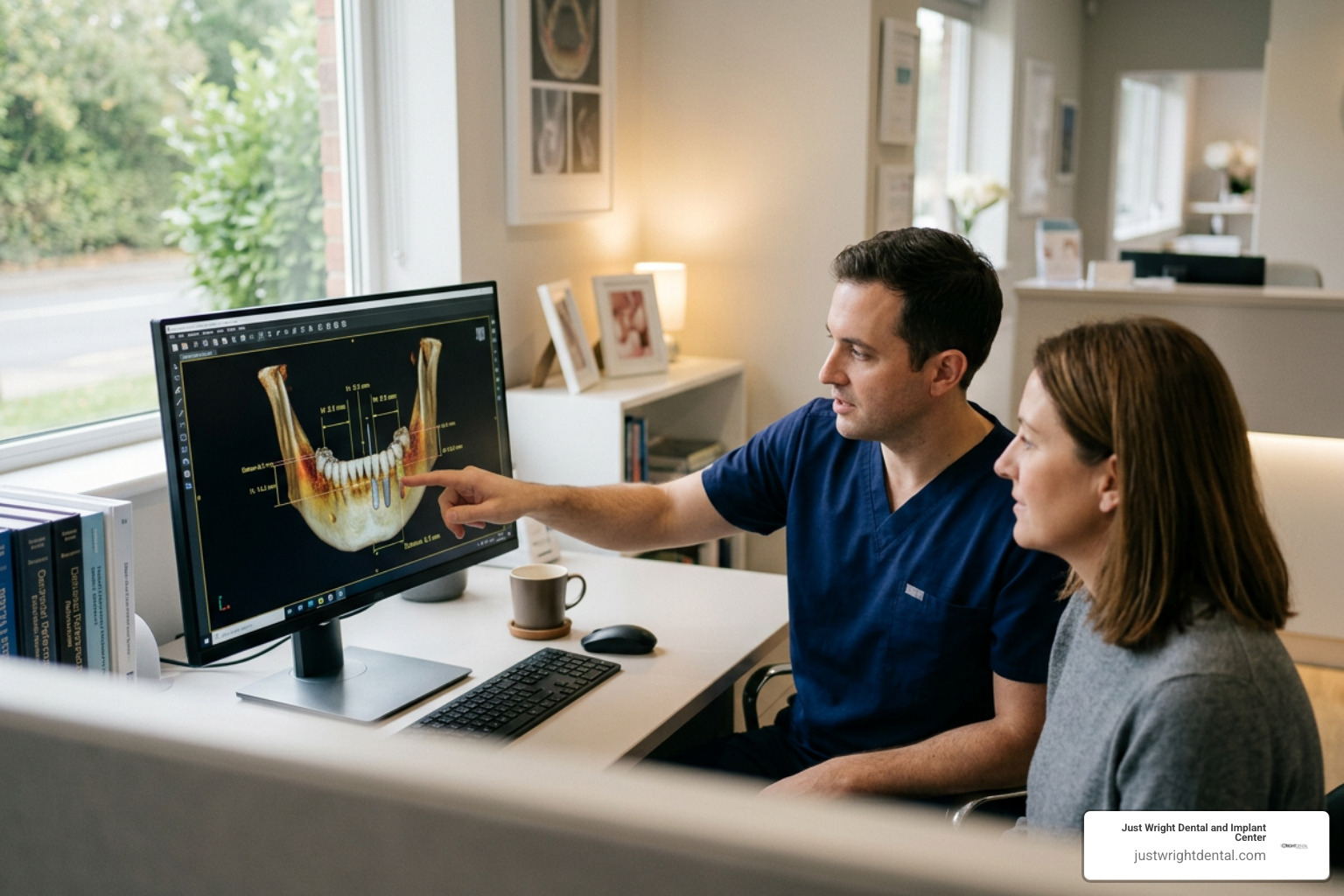
Without sufficient bone volume, an implant post cannot achieve the initial physical tightness, known as primary stability, required for osseointegration. Stabilizing the mouth, halting bone resorption, and accurately assessing the remaining ridge with our high-resolution 3D cone-beam computed tomography (CBCT) scanner are essential first steps before restoring your smile.
The Role of Bone Grafting and Sinus Lifts in Restoring Lost Bone
When periodontal disease has diminished your natural jawbone, bone grafting techniques allow us to rebuild a solid ridge. During a bone graft, we place biocompatible particulate bone material into the deficient areas. Over several months of healing time, your body uses this graft as a scaffold to generate new, living bone cells, creating a dense foundation.
For the upper back jaw, periodontal bone loss and natural sinus expansion often leave only a thin layer of bone beneath the maxillary sinus. In these cases, we perform a sinus lift—a specialized treatment where the sinus membrane is gently lifted upward and bone graft material is placed beneath it. This simple elevation creates the necessary vertical depth to securely anchor advanced restorative dental implants without disturbing your sinuses.
What Is the Step-by-Step Treatment Protocol Before Getting Implants?
The treatment protocol before getting implants involves a clear, phased pathway that moves from infection elimination to bone rebuilding and final digital placement. We never rush the process, because giving your body adequate time to clear bacteria and regenerate tissue provides the most reliable long-term foundation for your new teeth.
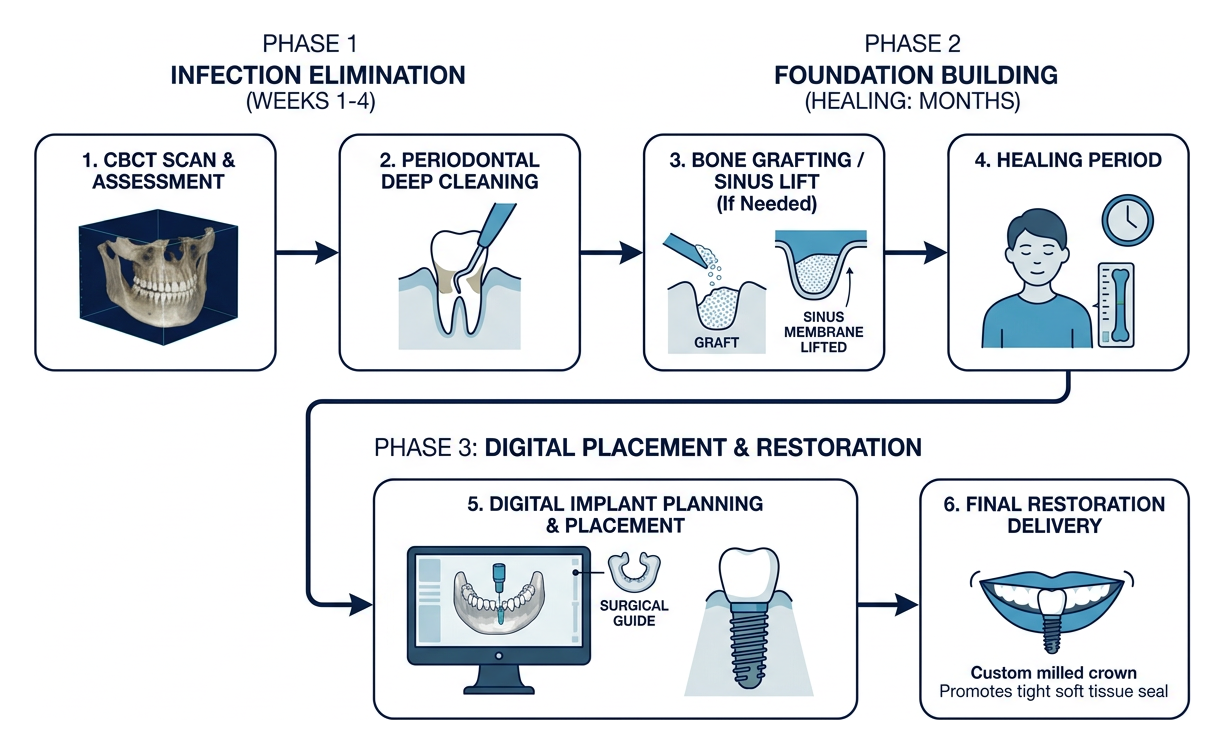
Rather than taking a one-size-fits-all approach, we design every stage around your individual anatomy using our advanced 3D digital ecosystem. From digital facial scanning to in-house planning, our phased protocol guides nervous patients calmly through every milestone.
Phase 1: Deep Cleaning and Antimicrobial Therapy
The journey begins by completely clearing the active bacterial infection through scaling and root planing (SRP), commonly known as a deep cleaning. Using gentle ultrasonic instruments and precision hand tools under comfortable numbing medication, we carefully remove calculus, hardened tartar, and bacterial biofilm from deep below the gumline and smooth the rough root surfaces.
When necessary, we complement mechanical cleaning with localized or systemic antimicrobial therapy to eradicate persistent bacteria hiding in deep periodontal pockets. We also review tailored home-care techniques, empowering you to maintain clean tissues every day. Our goal during this initial phase of preventive general dentistry is to stop tissue destruction and allow inflamed gums to heal.
Phase 2: Healing, Re-Evaluation, and Surgical Placement
After completing your deep cleaning, we allow four to eight weeks for tissue maturation and healing. During your re-evaluation visit, we measure pocket depths across your entire mouth to confirm that inflammation has resolved and depths have reduced to healthy levels (ideally 3 mm or less) before any surgical placement begins.
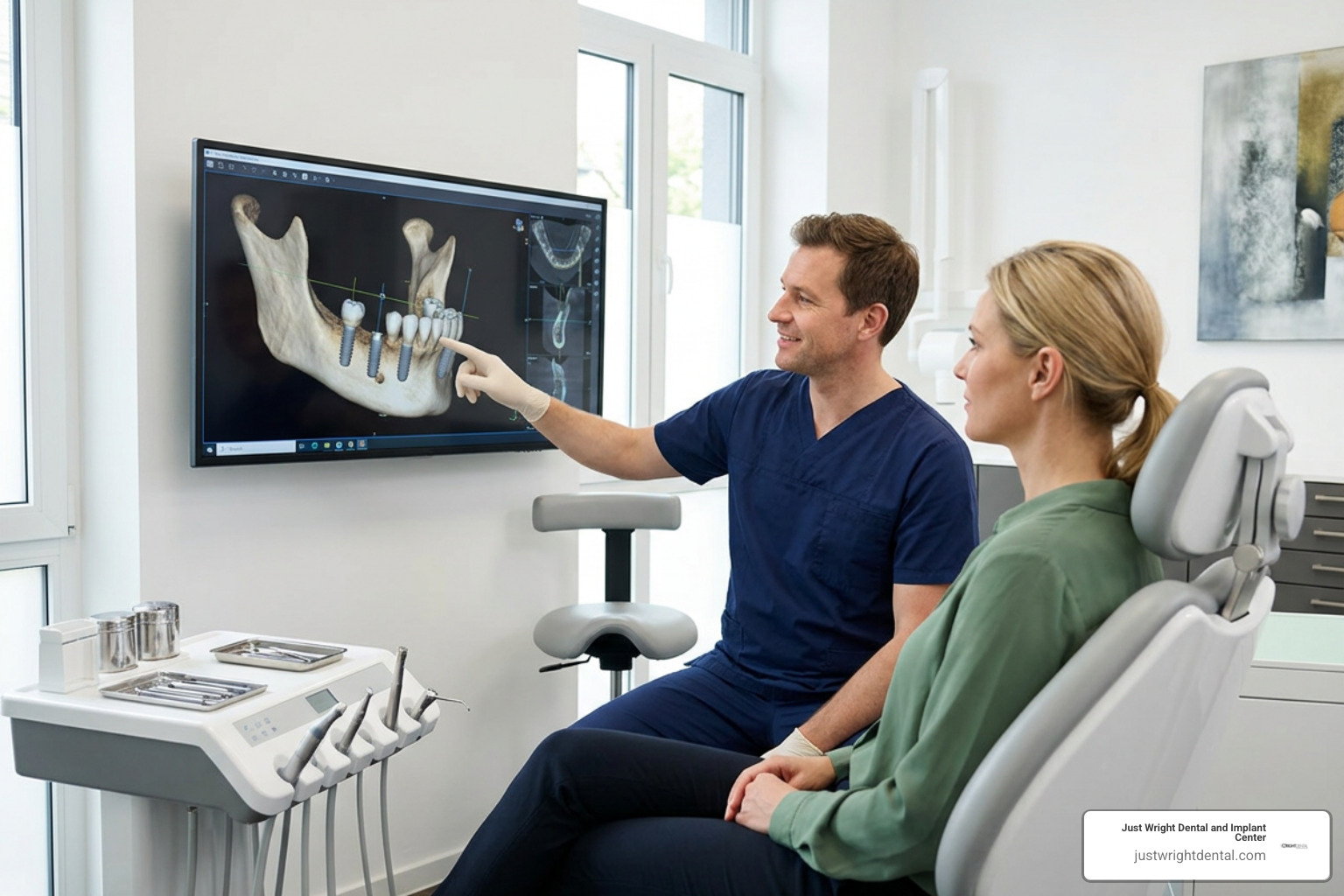
Once your gums are stable, we capture a 3D digital facial scan and CBCT scan to map out your implant placement with sub-millimeter precision. Using our in-house computer-aided design and computer-aided manufacturing (CAD/CAM) mills and 3D printers, we fabricate custom surgical guides and healing teeth right here in Corsicana. On the day of placement, our patients rest comfortably—often sleeping through the entire visit under general numbing or IV sedation overseen by a board-certified professional—and wake up with temporary teeth they can test-drive immediately. For further reading, check out our comprehensive dental implant guides.
What Are Your Tooth Replacement Options If Gum Disease Caused Severe Bone Loss?
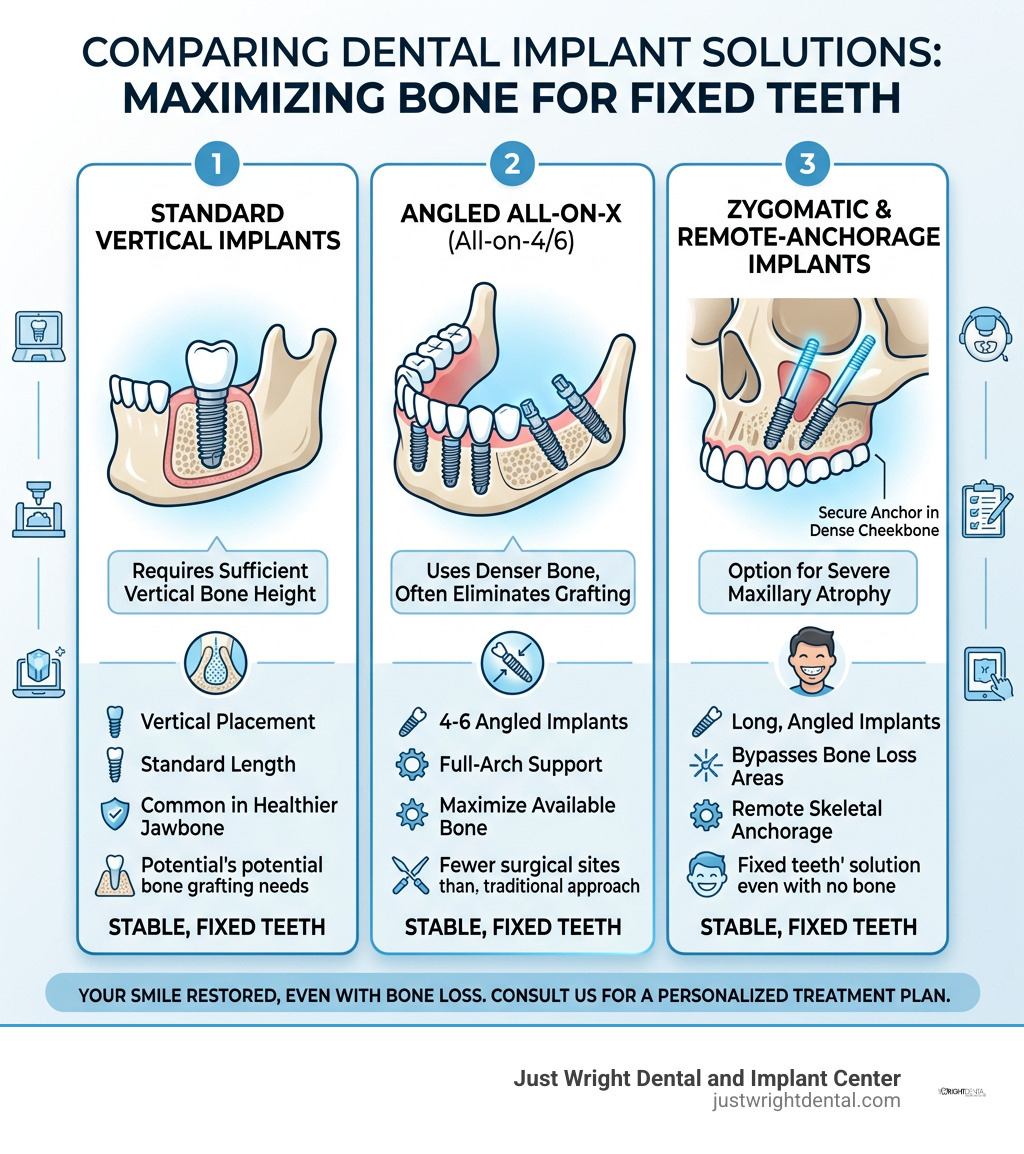
If periodontal disease has caused extensive bone loss, you still have dependable tooth replacement options, including full-arch fixed bridges, angled implant protocols, and remote-anchorage implants that bypass missing bone entirely. Being told by another office that you have "no bone" simply means traditional vertical implants won't work in that specific spot—it does not mean you cannot have fixed, beautiful teeth.
Patients travel to our Corsicana practice from across Texas, including Fairfield, Ennis, and Midlothian, because we handle the severe bone loss cases that many general practices turn away. With modern engineering and digital planning, we can anchor dental implants into denser regions of the facial skeleton to restore full chewing strength and natural aesthetics.
Full-Arch All-on-X Restorations with Angled Implants
For patients who need to replace an entire arch of failing or loose teeth due to advanced periodontitis, full-arch All-on-X restorations offer a life-changing solution. This approach uses four to six strategically placed implants to support a complete, rigid set of replacement teeth.
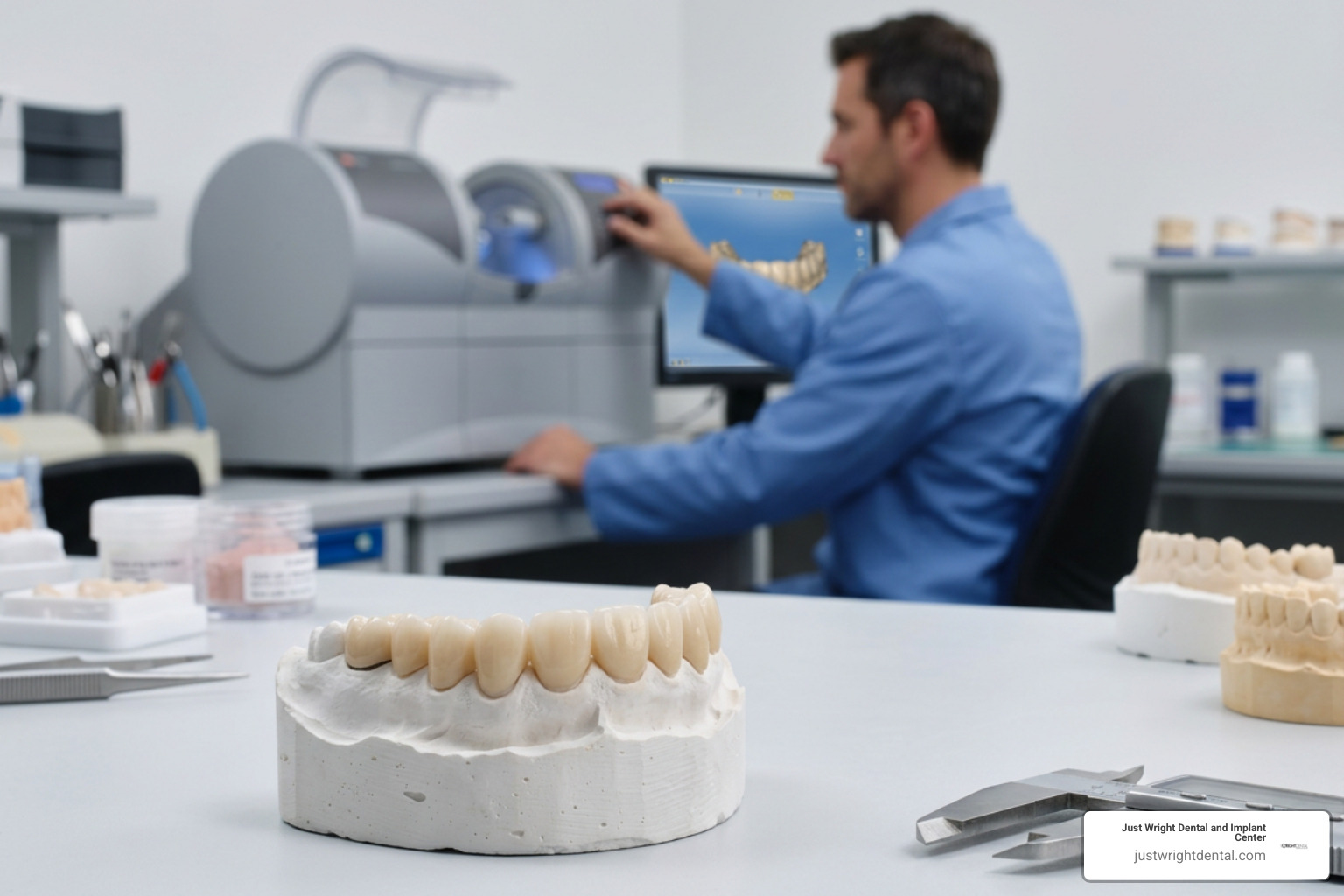
By placing the posterior implants at precise angles, we take full advantage of the denser bone available in the front of your jaw, often eliminating the need for extensive bone grafting. Our in-house lab technicians work directly chairside with me, using our 12 CAD/CAM mills and 4 3D printers to fabricate your provisional teeth the very same day. You leave our office with a beautiful, secure smile while your bone heals.
Zygomatic and Remote-Anchorage Solutions for "No Bone" Cases
When periodontal disease causes extreme upper jaw atrophy, standard implants and even traditional bone grafts may not provide enough support. In these advanced situations, we utilize remote-anchorage implants—including zygomatic, pterygoid, transsinus, and transnasal implants.
Instead of relying on the resorbed maxillary ridge, zygomatic implants are longer posts anchored securely into the sturdy zygomatic bone (the cheekbone), which never suffers from periodontal bone loss. Pterygoid implants anchor into dense bone behind the upper jaw. These techniques allow us to deliver fixed, non-removable teeth to patients who were previously told their only option was a loose, uncomfortable denture.
Frequently Asked Questions About Implants and Gum Disease
Can you get dental implants if you have periodontal disease and severe bone loss?
Yes, you can often receive dental implants even with severe bone loss once all active infection is eliminated. We rebuild the missing foundation using advanced bone grafting and sinus lifts, or we place remote-anchorage implants into the cheekbone or pterygoid plate where bone remains strong and dense. A comprehensive 3D scan allows us to determine the right surgical pathway for your anatomy.
How long do you need to wait after gum disease treatment before getting implants?
Most patients wait between four and twelve weeks after initial periodontal therapy before proceeding with implant placement. This waiting window gives the soft gums time to tighten, reduces pocket depths, and confirms that the bacterial infection is completely controlled. If substantial bone grafting is required before placement, an additional healing time of three to six months may be recommended for optimal bone maturity.
How can you prevent gum disease from returning after getting implants?
Preventing recurrence requires disciplined daily oral hygiene paired with regular professional cleanings. Using an electric toothbrush, interdental brushes, and a water flosser cleans the delicate areas beneath your prosthetic bridge where food particles gather. Scheduling professional checkups every three to six months allows us to monitor your tissues and keep your foundation healthy.
What is the difference between peri-implant mucositis and peri-implantitis?
Peri-implant mucositis is a superficial inflammation of the gum tissue surrounding an implant without any loss of bone, much like gingivitis on natural teeth. If left unmanaged, it can progress to peri-implantitis, where inflammation causes irreversible bone loss around the titanium post. Routine cleanings and good home care keep mucositis from developing into bone-threatening peri-implantitis.
Will getting dental implants hurt if I have sensitive, receding gums?
We prioritize your comfort by using gentle numbing medication and offering full sedation options, including care from a board-certified anesthesiologist, so you can sleep comfortably throughout your visit. After treatment, patients typically report mild soreness that is easily managed with standard over-the-counter pain relievers for a few days. We design every step to be relaxed, gentle, and judgment-free.
Conclusion
Living with the effects of periodontal disease can feel frustrating, but having a history of gum infection does not close the door on getting a permanent, beautiful smile. By staging your care properly—eradicating bacteria first, rebuilding bone when needed, and utilizing precision 3D technology—we can restore your ability to eat, laugh, and speak with complete confidence.
At Just Wright Dental and Implant Center in Corsicana, Texas, everything we do is designed to give you an exceptional, comfortable experience under one roof. We fabricate all restorations using our own 12 CAD/CAM mills and 4 3D printers, ensuring custom-milled precision without the delays of outside commercial labs. Whether you are driving in from Waxahachie, Ennis, Waco, or Cedar Creek Lake, we invite you to invest a brief moment in your health and have a relaxed conversation with us. Take the first step toward restoring your oral health and schedule a consultation and free smile assessment with our caring team today.
References
Durrani F, Shukla A, Painuly H. "Implant therapy in patients with chronic periodontitis: A short follow-up with a successful outcome.." Journal of advanced periodontology & implant dentistry, 2019. PMCID PMC9327471.
Author Bio
Dr. Justin Wright, DDS, is the founder and clinical director of Just Wright Dental and Implant Center in Corsicana, Texas. With 18 years of clinical experience, Dr. Wright specializes in advanced dental implant surgery, full-arch reconstruction, remote-anchorage solutions for severe bone loss, and complete 3D digital smile design.