Do I Need a Bone Graft for an Implant? – A Comprehensive Guide
When Do I Need a Bone Graft for an Implant?
By Dr. Justin Wright, DDS
You need a bone graft whenever your jawbone lacks the height, width, or density required to firmly anchor an implant in place. Think of a dental implant like a sturdy fence post—if you place it in shallow or shifting soil, it cannot withstand everyday force, but anchoring it in solid ground keeps it stable for the long haul.
When a tooth is lost, the surrounding alveolar bone naturally begins to shrink. If the ridge becomes too narrow or thin, placing a standard implant without rebuilding the foundation risks exposing the implant threads or compromising stability. Understanding how to fix jaw bone loss begins with assessing the anatomical structures around the implant site, including the position of the upper sinus cavities and the lower nerve canals. When bone height is insufficient near these critical zones, adding new bone material provides the necessary buffer, giving your body a scaffold to rebuild natural density.
Common Causes of Jawbone Deterioration
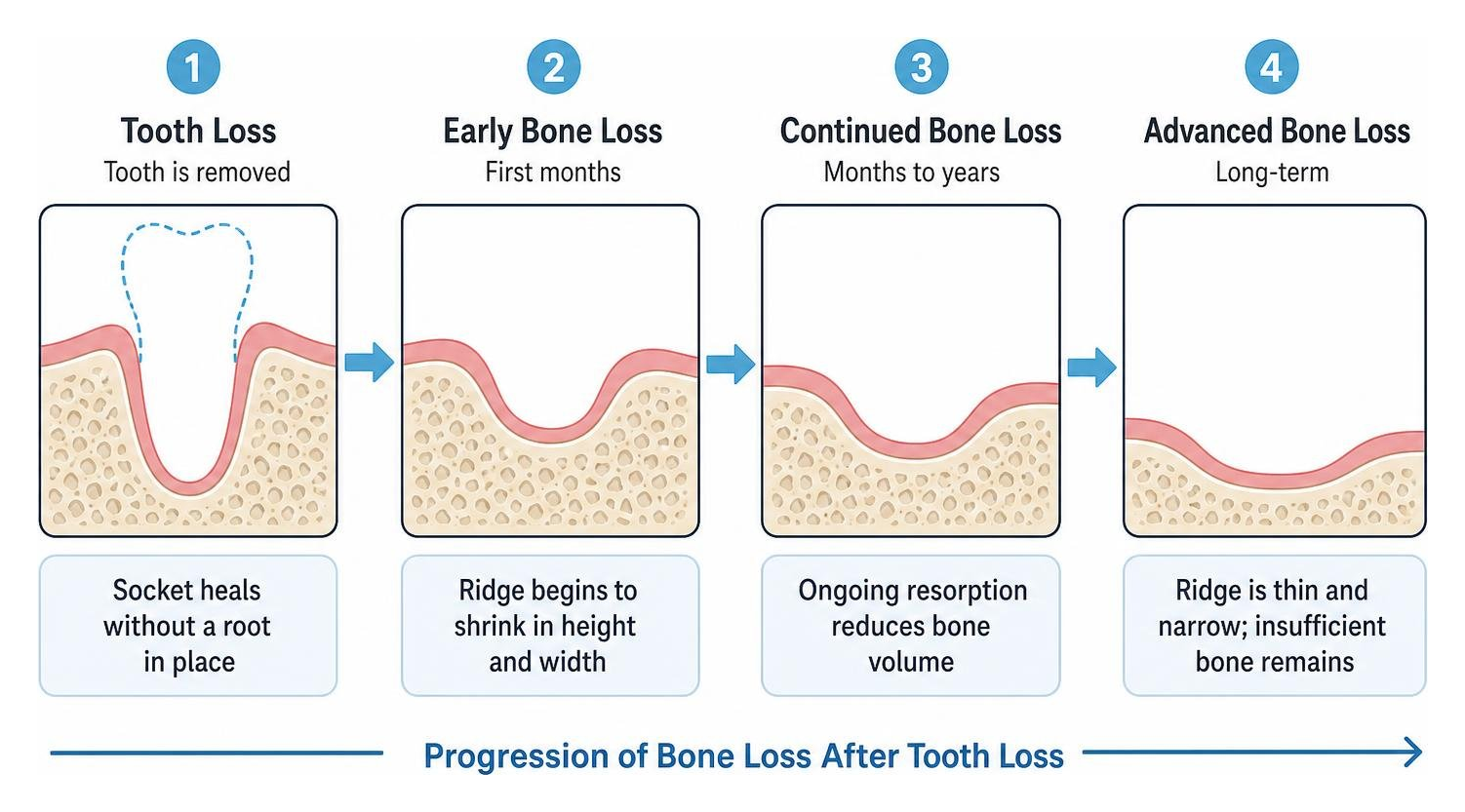
Why does jawbone diminish in the first place? In most cases, it comes down to a lack of stimulation or chronic inflammation. Once a tooth root is removed, the alveolar bone no longer receives the natural chewing pressure that signals the body to maintain its volume.
The most frequent contributors to bone loss include:
Tooth Removal Without Immediate Support: Within the first months following a removal, the jaw ridge naturally narrows as the socket heals without a root structure in place.
Periodontal Disease: Advanced gum infections break down the supportive bone around natural roots. Addressing periodontal disease and implants involves clearing infection and often regenerating lost foundation before or during implant placement.
Long-Term Removable Denture Wear: Traditional dentures rest on top of the gums and accelerate bone resorption over time by applying uneven surface pressure rather than stimulating deep bone.
Facial Trauma: Physical impact can fracture or damage the delicate alveolar bone walls, requiring reconstructive support.
Clinical 3D Imaging: Do I Need a Bone Graft for an Implant?
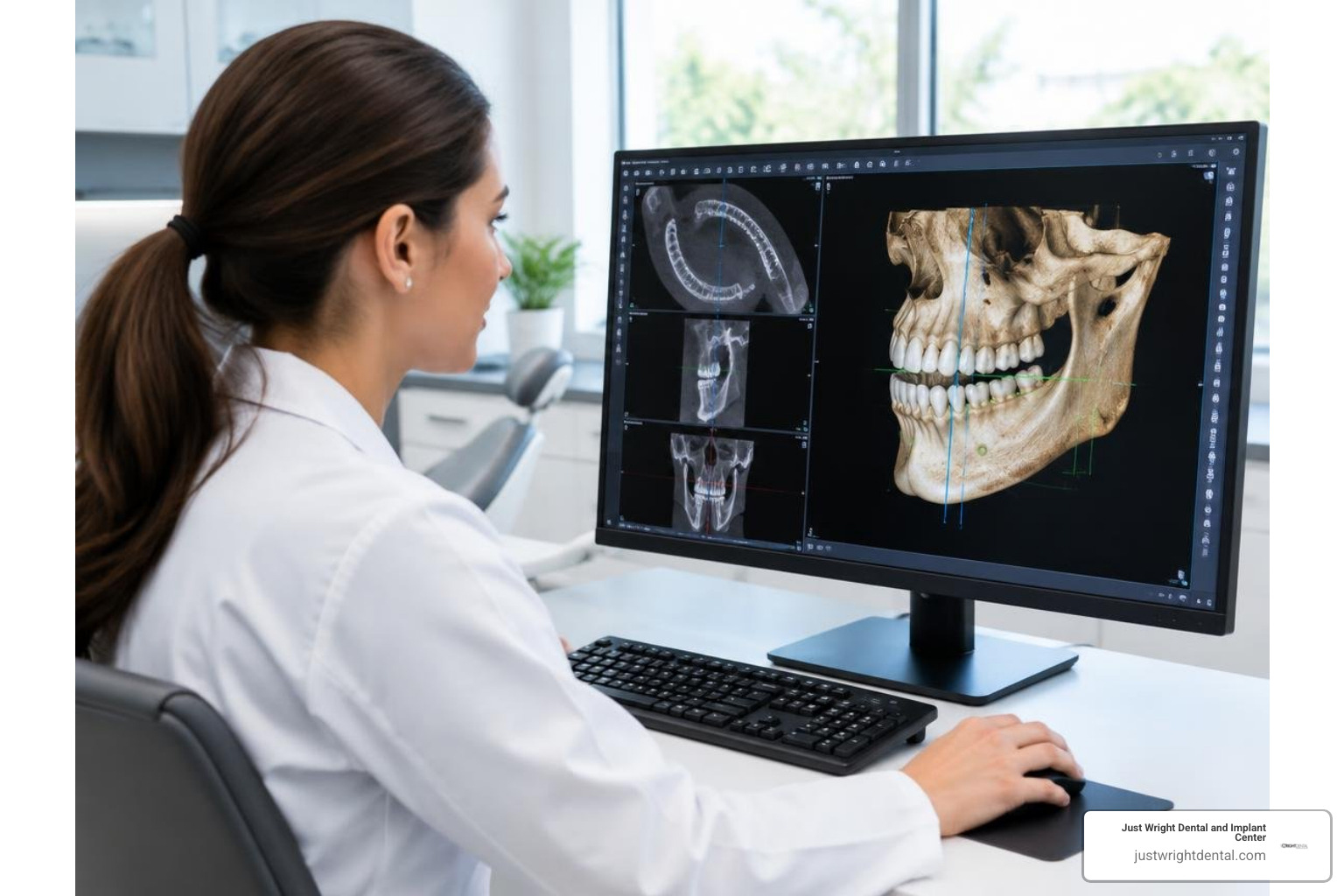
To determine whether your bone is ready for an implant, visual exams alone are not enough. We must evaluate what lies beneath the gum line in three dimensions.
At our Corsicana office, we use high-resolution Cone Beam Computed Tomography (CBCT) imaging. This advanced 3D scan maps your jaw structure with sub-millimeter precision. It allows me to measure:
Vertical Bone Height: Ensuring adequate distance from the sinus floor in the upper jaw or the inferior alveolar nerve in the lower jaw.
Horizontal Bone Width: Ensuring there is a healthy layer of bone completely encasing the implant post.
Bone Density and Cortical Thickness: Evaluating the structural quality of the bone to verify it can provide strong initial stability.
By planning your treatment virtually on the 3D model before starting, we eliminate guesswork and determine whether grafting is necessary or if we can use existing bone contours.
Dr. Justin Wright, DDS, is the founder and clinical director of Just Wright Dental and Implant Center in Corsicana, Texas. With more than 18 years in practice and more than 10,000 implants placed, he leads a team focused on advanced implant reconstruction, full-arch restoration, and digital smile design.
What Types of Bone Grafts Are Used for Dental Implants?
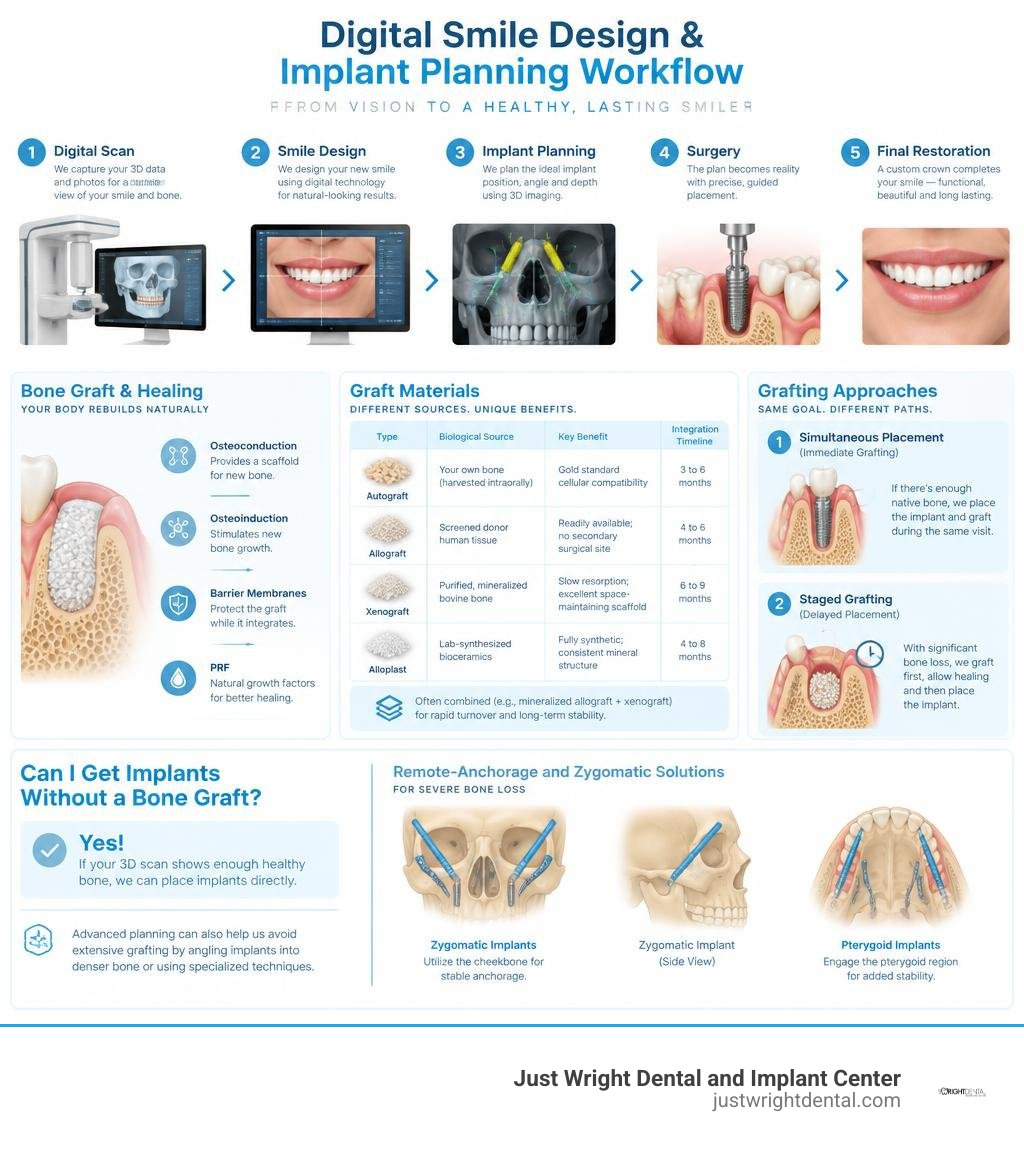
A bone graft acts as a biological framework that encourages your body to grow its own new bone cells into the treated area. Through natural processes known as osteoconduction (providing a physical scaffold) and osteoinduction (chemically stimulating new bone growth), your body gradually replaces the graft material with living, dense bone.
To protect the graft while it integrates, we often place specialized barrier membranes over the site. In many cases, we also utilize platelet-rich fibrin (PRF)—a concentrated matrix derived from your own blood—to introduce natural growth factors that support soft tissue healing and cellular remodeling.
Graft Materials: Autografts, Allografts, Xenografts, and Alloplasts
Depending on your specific anatomy and the amount of reconstruction needed, different grafting materials may be utilized:
Graft Material Type | Biological Source | Primary Benefit | Typical Integration Timeline |
|---|---|---|---|
Autograft | Your own bone (harvested intraorally) | Gold standard cellular compatibility | 3 to 6 months |
Allograft | Carefully screened donor human tissue | Readily available; no secondary surgical site | 4 to 6 months |
Xenograft | Purified, mineralized bovine bone | Slow resorption; excellent space-maintaining scaffold | 6 to 9 months |
Alloplast | Lab-synthesized bioceramics | Fully synthetic; consistent mineral structure | 4 to 8 months |
I often combine materials—such as blending mineralized allograft with slow-resorbing xenograft—to achieve both rapid bone turnover and long-term volume stability.
Simultaneous vs. Staged Grafting Procedures
Depending on how much native bone remains, grafting can be performed in one of two ways:
Simultaneous Placement (Immediate Grafting): If you have enough natural bone to achieve excellent initial implant stability, I can place the implant post and the bone graft during the exact same visit. The graft fills minor voids around the implant collar, healing alongside the post.
Staged Grafting (Delayed Placement): When there is significant vertical or horizontal bone loss, placing an implant immediately would leave it unstable. In these instances, we first place the graft (such as a sinus lift or ridge augmentation) and allow it to mature into solid bone over several months before placing the implant.
Can I Get Dental Implants Without a Bone Graft?
Yes, many patients can get dental implants without a bone graft. If your 3D scan shows ample height and width in healthy bone, we can proceed directly with traditional dental implants.
Furthermore, advanced surgical planning allows us to bypass extensive grafting even when moderate bone loss has occurred. By angling implants into denser cortical bone or utilizing specialized restoration techniques, we can often achieve firm stability while avoiding months of regenerative healing time.
Remote-Anchorage and Zygomatic Solutions for Severe Bone Loss
For patients who have experienced extreme bone resorption in the upper jaw—often those who were told elsewhere that they simply have "no bone" for implants—traditional ridge grafting is not the only path forward.
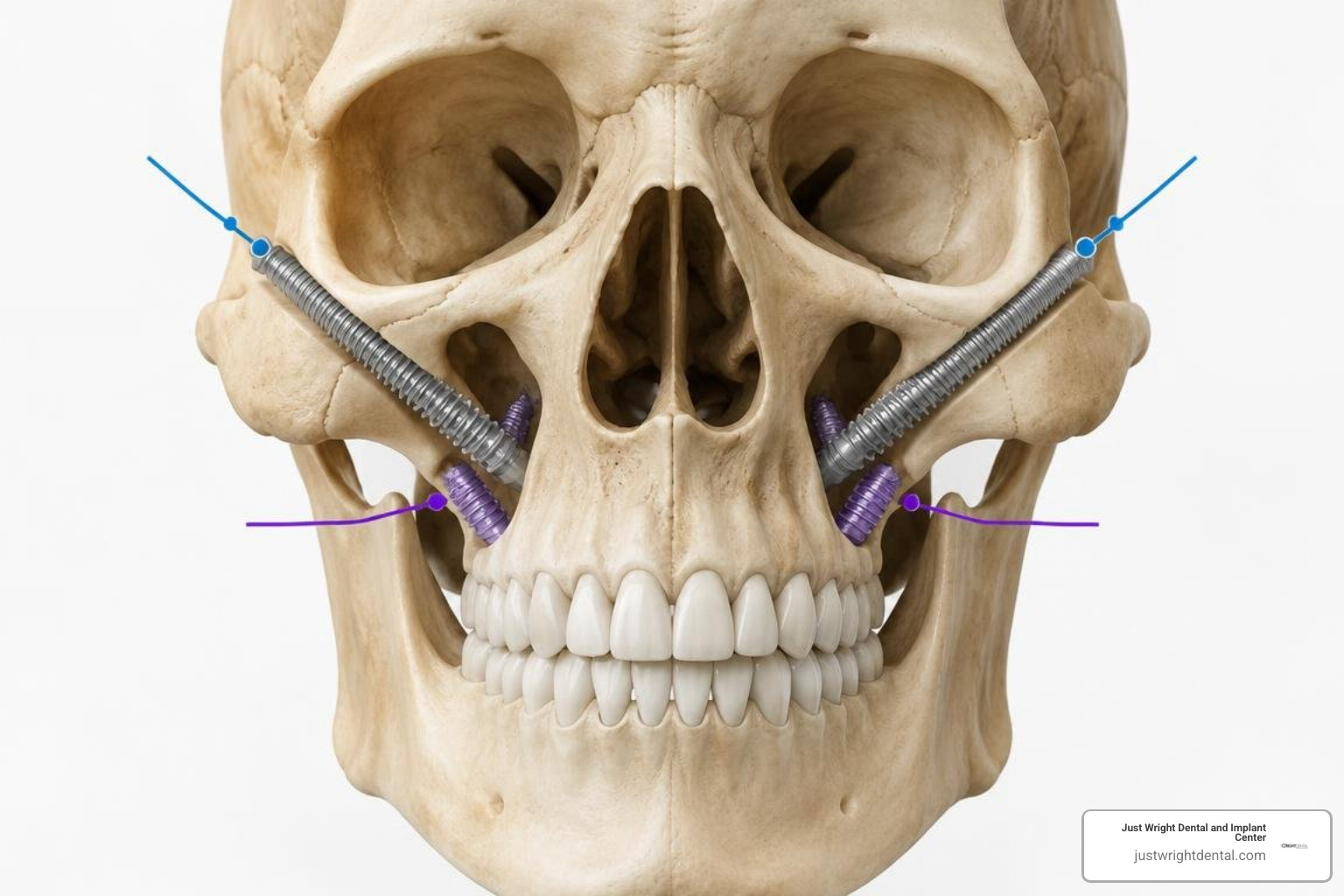
Instead of undergoing extensive block grafting or multiple surgeries, we utilize remote-anchorage implants:
Zygomatic Implants: Longer implants anchored securely into the dense cheekbone (zygoma), completely bypassing depleted maxillary jawbone.
Pterygoid Implants: Implants placed into the stable pterygomaxillary plate behind the upper molar region.
Transsinus and Transnasal Anchorage: Strategic positioning that engages dense cortical bone near the nasal floor and sinus pillars.
These advanced methods allow us to provide stable, fixed teeth for patients with severe upper jaw bone loss without requiring lengthy bone reconstruction.
Full-Arch Options: Do I Need a Bone Graft for an Implant?
When replacing an entire arch of missing teeth, full-arch reconstruction often avoids the need for extensive bone grafting.
Using the All-on-X approach, we strategically tilt the posterior implants at specific angles. This angled placement maximizes contact with existing, dense anterior bone while steering clear of the sinus cavities above and nerve canals below.
Combined with our in-house digital workflow—utilizing facial scanning, 12 CAD/CAM mills, and 4 3D printers—we frequently fabricate and deliver a fixed, same day full arch provisional restoration directly to the patient during a single visit.
What Happens If You Skip a Needed Bone Graft?
Skipping a necessary bone graft when standard implants are placed into insufficient bone invites structural instability. Without adequate bone encasing the titanium post, the implant cannot undergo complete osseointegration.
Over time, biting pressures can cause the thin bone walls to resorb further. This leads to thread exposure, gum recession, and bacterial colonization, which can contribute to dental implant rejection signs or premature failure.
Stability Risks and Structural Complications
When an implant is placed without a sound foundation, several biomechanical complications can occur:
Implant Loosening: Inadequate bone support prevents the implant from distributing chewing forces evenly.
Sinus Perforation or Nerve Contact: Placing an implant without adequate vertical clearance or a sinus lift risks impinging upon adjacent anatomy.
Aesthetic Defects: Gum tissue recedes around exposed metal collars, leading to visible dark lines along the smile line.
Costly Revision Treatments: Repairing a failed implant often requires removing the fixture, clearing infection, and undergoing complex reconstructive surgery to rebuild the damaged ridge. We routinely assist patients in recognizing botched dental implants from other providers and rebuilding their oral health from the ground up.
Recovery Timeline and What to Expect During Healing
Recovery after a routine bone graft is typically straightforward. Most patients experience mild swelling and tenderness for a few days, which is well-managed with standard post-treatment instructions.
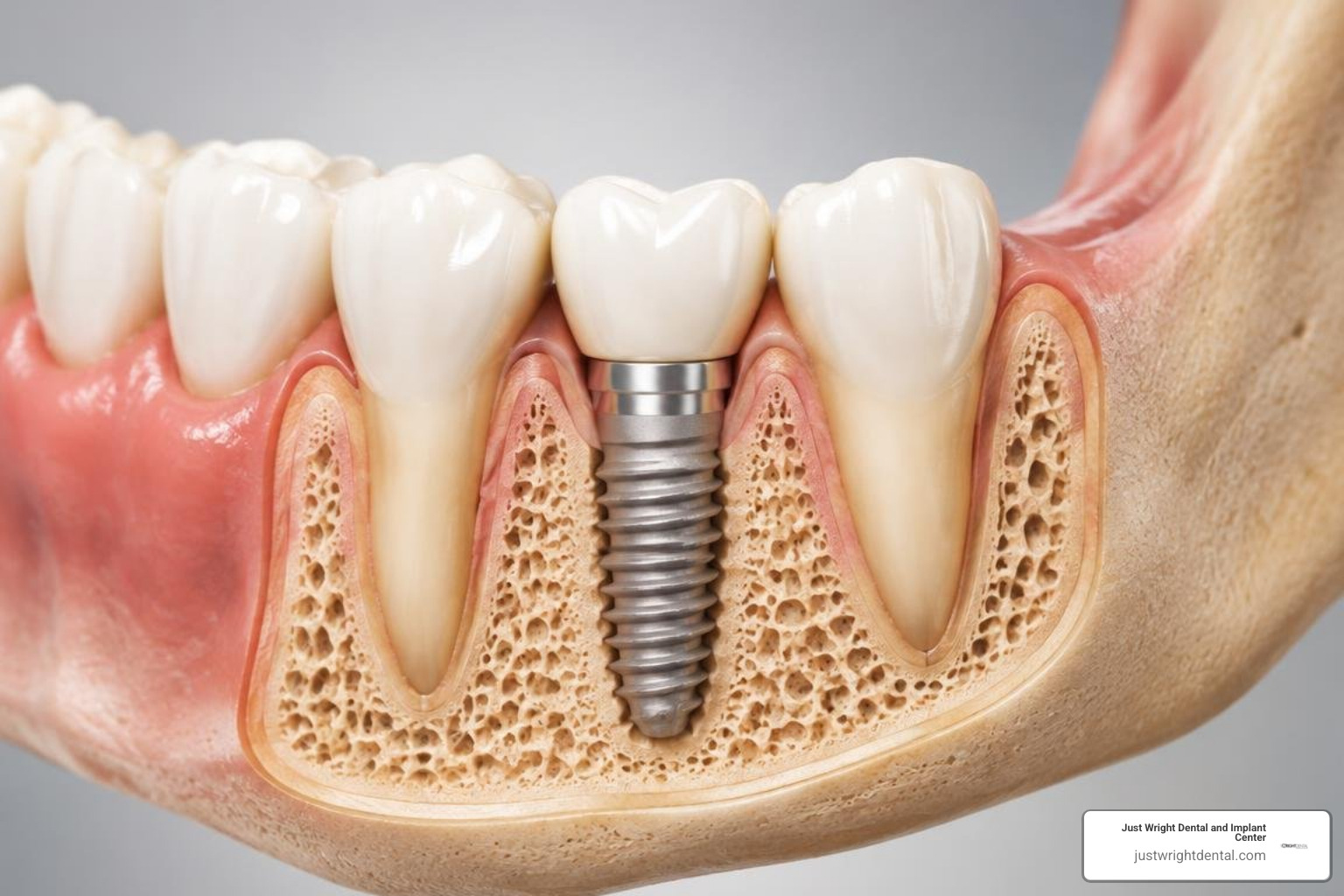
During healing:
First 48 to 72 Hours: Manage swelling with cold compresses and stick to a soft-food diet. Avoid vigorous rinsing or using straws, which could disturb the clot.
Weeks 1 to 2: Gums heal over the graft site. Sutures dissolve or are removed.
Months 3 to 6+: Beneath the surface, cellular remodeling occurs as your body vascularizes the scaffold and deposits new bone minerals. Once this process reaches maturity, the site is fully prepared to support your definitive restoration.
Frequently Asked Questions About Dental Bone Grafts
How painful is a dental bone grafting procedure?
The procedure itself is comfortable because the area is completely numbed with local numbing medication. For nervous patients or those undergoing larger treatments, we also offer full sedation up to general anesthesia with our on-staff board-certified anesthesiologist. Post-treatment soreness is typically mild to moderate and easily managed with prescribed or over-the-counter medication for a few days.
How long do you have to wait for an implant after a bone graft?
If a minor graft is placed simultaneously with the implant, no extra waiting time is needed beyond standard implant integration (usually 3 to 4 months). For larger staged grafts, such as a major sinus lift or ridge reconstruction, healing typically takes between 4 and 9 months before placing the implant.
Can severe bone loss disqualify someone from getting implants?
Severe bone loss rarely disqualifies you from receiving fixed teeth when treated with advanced techniques. While some traditional practices turn away patients with low bone volume, remote-anchorage options like zygomatic and pterygoid implants allow us to anchor new teeth in dense facial bone without relying on standard jaw ridges.
Will medical insurance cover my dental bone graft?
In certain situations, medical insurance may cover portions of bone grafting, particularly if bone loss resulted from facial trauma, disease, or severe atrophy impacting oral function. Our dedicated on-staff Medical Insurance Coordinator works directly with carriers like Blue Cross Blue Shield to handle preauthorizations and claims on your behalf.
What should I eat after receiving a bone graft?
Stick to soft, nutrient-rich foods like smoothies (eaten with a spoon, never a straw), scrambled eggs, yogurt, warm soups, and mashed potatoes for the first week. Avoid crunchy, hard, or spicy foods that could lodge in the surgical site or irritate the healing gum tissue.
Conclusion
Determining whether you need a bone graft is not a matter of guesswork—it comes down to evaluating your unique bone dimensions and choosing the right clinical path for your smile. Whether your situation calls for a simple socket preservation graft, a full-arch solution, or remote-anchorage implants that bypass grafting altogether, an accurate 3D assessment is the first step.
Investing a few minutes in a comprehensive 3D evaluation allows us to map your bone structure and design a personalized, predictable plan. If you are ready to explore your options, book an appointment with our team at Just Wright Dental and Implant Center in Corsicana, Texas. We welcome patients traveling in from Waxahachie, Ennis, Midlothian, Waco, and across the country to experience advanced, judgment-free care.