
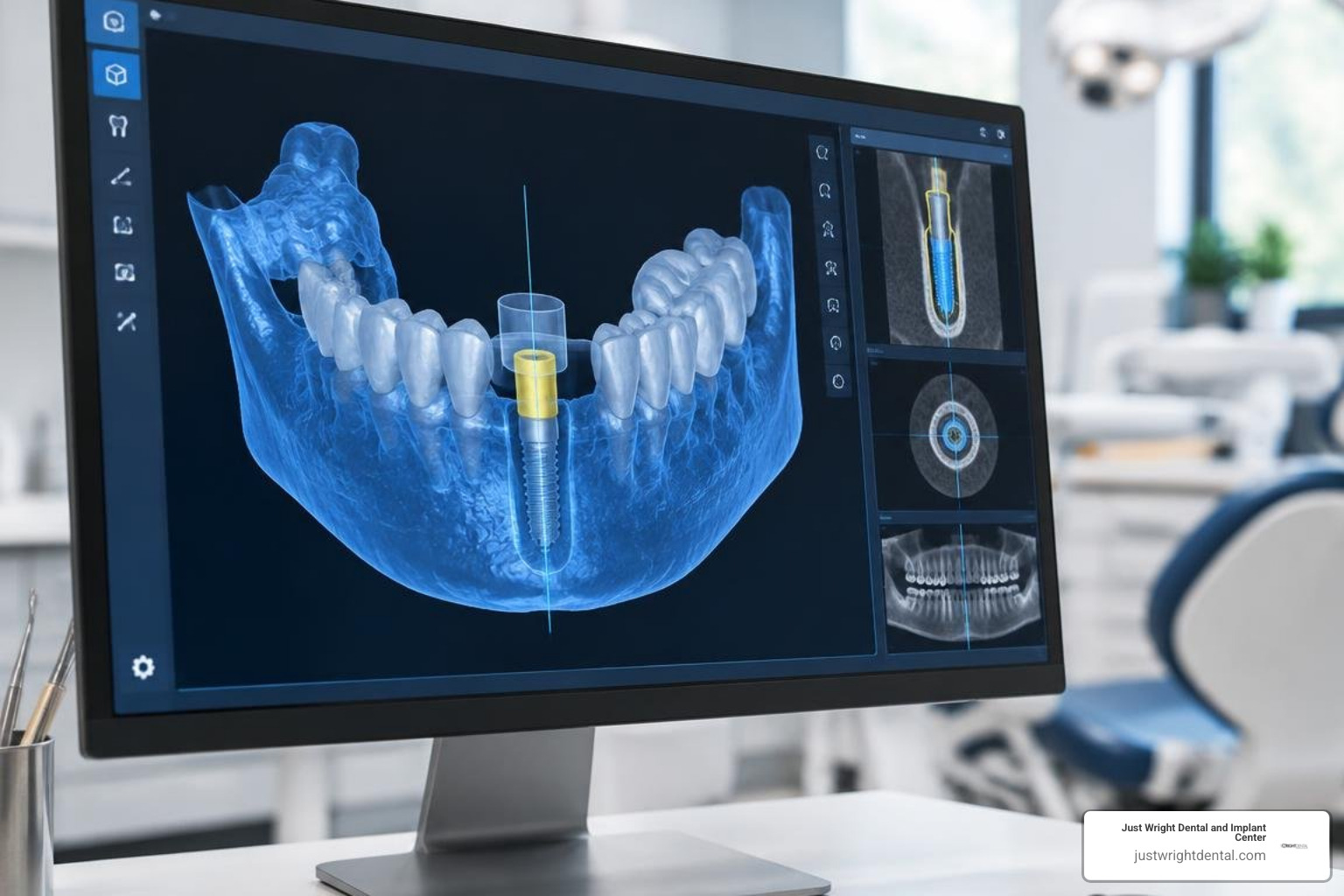
How to Remove a Broken Implant Screw Safely
Safe Broken Implant Screw Removal Starts With a Careful, Stepwise Plan
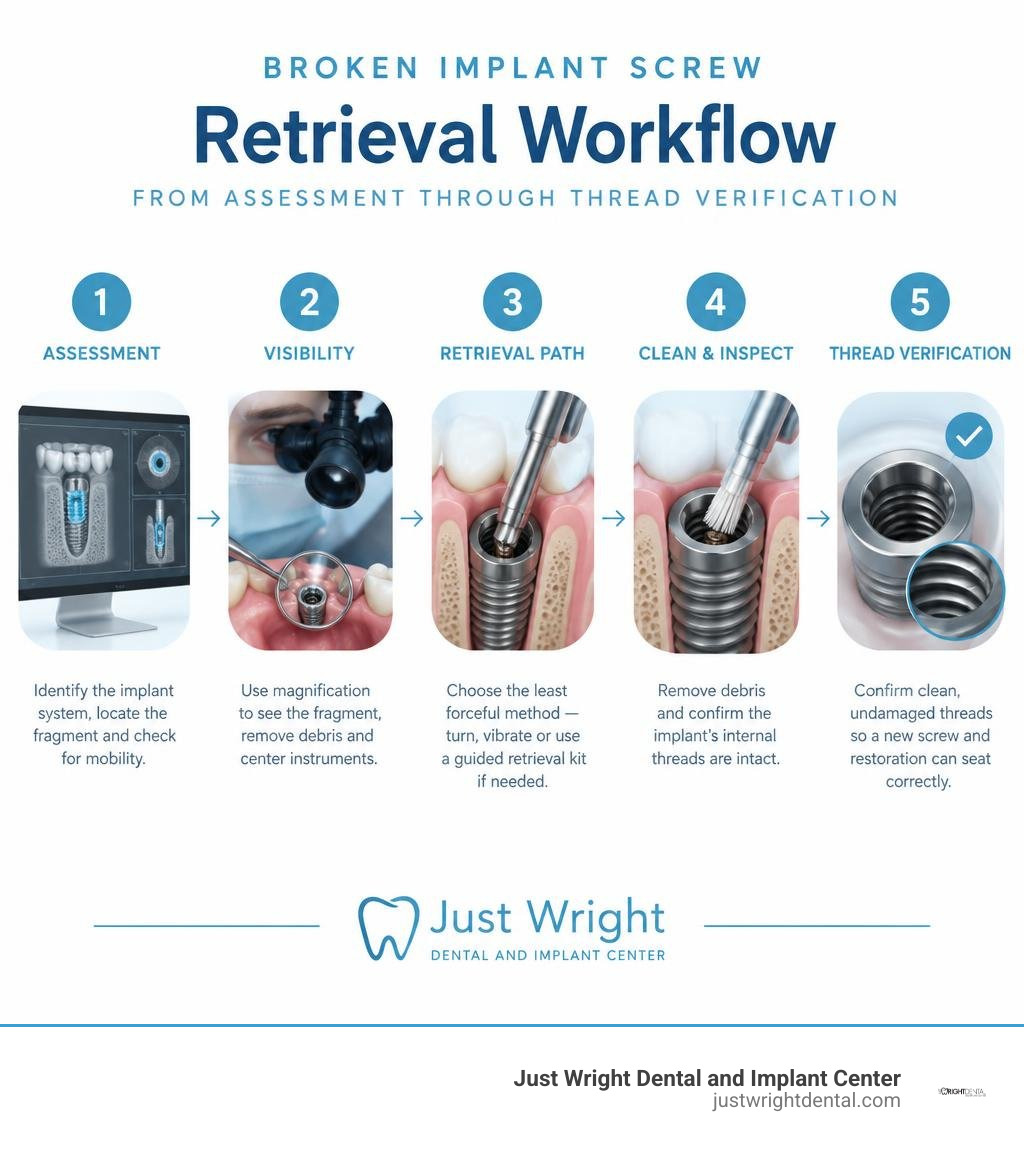
Broken implant screw removal should begin with visibility and the least forceful method. I first identify the implant system, locate the fragment, and check whether it can move. A loose or shallow fragment may be turned out counterclockwise with a fine explorer, scaler, or ultrasonic vibration. If it is deep or locked in place, a guided retrieval kit may be needed to keep the implant's internal threads protected.
The key is not to rush. The implant fixture is often still usable, but its internal threads and connection must be preserved so a new screw and restoration can seat correctly afterward.
Screw fracture is an uncommon complication across clinical implant practice. It often follows a screw that had loosened without being noticed, repeated chewing overload, an imperfect fit in a multi-implant restoration, or torque that did not match the component manufacturer's instructions. The fracture commonly occurs where the screw narrows between its head and threaded body.
Magnification matters. Loupes or an operating microscope can help me see the edge of the fragment, remove debris, and center instruments before trying to turn it. That added control can reduce unnecessary contact with the inside of the implant.
I am Dr. Justin Wright, DDS, and over 18 years in practice I have placed more than 10,000 implants and managed complex revision cases, including broken implant screw removal when previous restorations have failed. In the sections ahead, I will explain how clinicians assess the fragment, choose the safest retrieval path, and verify that the implant can support a new restoration.
What Causes Abutment Screws to Loosen and Fracture?
Abutment screw fracture occurs primarily when undetected screw loosening creates cyclic bending forces that exceed the metal's fatigue threshold. When an abutment screw loses its initial clamping force (preload), the micro-gap between the prosthetic component and the implant fixture widens, transferring chewing forces directly across the narrow neck of the screw rather than distributing them evenly through the implant connection.
When patients ask why their restoration suddenly shifted, the underlying mechanical causes usually fall into several predictable categories:
Undetected Screw Loosening: A loose screw allows microscopic rocking during daily chewing, subjecting the metal shank to continuous fatigue until it snaps.
Improper Torque Protocols: Under-torquing fails to create the elastic tension needed to hold components tightly together, while over-torquing stretches the metal beyond its yield point, introducing microscopic stress fractures.
Non-Passive Framework Fit: In multi-unit bridges or full-arch frameworks, microscopic discrepancies in the bridge structure put continuous static tension on individual screws before chewing forces are even applied.
Heavy Occlusal Forces and Parafunction: Nighttime grinding (bruxism) and unfavorable chewing angles place severe lateral forces on dental implants, multiplying mechanical stress on the connection.
Connection Architecture: As documented in clinical evaluations on the retrieval of fractured implant abutment screws, internal conical connections provide exceptional seal and stability, but their deep chambers make fragment retrieval more intricate compared to older external-hex platforms.
Addressing these issues early prevents minor loosening from turning into a complex mechanical fracture.
How Are Broken Implant Screws Removed Step-by-Step?
Safe broken implant screw removal requires a structured, conservative-to-advanced clinical sequence that protects internal fixture threads at every stage. I begin by stabilizing the working area, applying local numbing medication to ensure total patient comfort, placing high-magnification optics over the field, and gently clearing saliva or soft tissue from the implant opening.
Before choosing a mechanical tool, I carefully assess two key variables:
Depth of the Fragment: Is the broken piece resting above the fixture platform, within the anti-rotational chamber, or buried deep in the threaded apical chamber?
Mobility of the Fragment: Is the fragment loose and spinning, or is it cross-threaded and jammed tightly against the internal walls?
Conservative Methods for Broken Implant Screw Removal
Conservative retrieval techniques use delicate manual hand instruments to tease out mobile fragments without touching rotary power tools. Because the tension in the screw is released the moment its head snaps off, many fragments sit passively inside the threaded chamber.
I start by gently placing the sharp tip of an endodontic explorer or a Montana Jack scaler against a rough edge or irregularity on top of the broken metal piece. By applying gentle, deliberate counter-clockwise pressure, the fragment can often be spun out smoothly along its existing track.
When a smooth, flat fracture surface prevents standard dental instruments from catching, clinicians can employ creative chairside tools. As demonstrated in published research on the rapid retrieval of fractured implant abutment screws with a custom-made screwdriver, an altered 18-gauge needle with tiny notched claws can securely grip and turn out mobile screw remnants in just a few minutes (Lee et al., 2023).

Ultrasonic and Rotary Protocols in Broken Implant Screw Removal
When a broken screw fragment is wedged or bound tightly, ultrasonic vibration or a guided mechanical extractor kit provides controlled dislodgement. Ultrasonic energy breaks friction without cutting into the delicate internal titanium walls of the implant (Chen & Chang, 2022).
I place a fine piezoelectric ultrasonic tip against the outer edge of the fragment, applying low power in a counter-clockwise direction under continuous saline wash. The rapid harmonic micro-vibrations loosen the jammed threads and float the piece upward.
If the fragment remains unyielding, I transition to a dedicated screw retrieval kit rather than attempting freehand drilling:
Centering Guide Sleeve: A custom-fitted prosthetic sleeve locks over the implant platform, directing rotary instrumentation safely down the center of the broken screw.
Reverse Pilot Preparation: Operating at low speeds in reverse, a tiny reverse-cutting bur creates a shallow central indentation in the broken fragment.
Reverse Extraction Tap: A tapered, reverse-threaded extractor tap engages the indentation at ultra-low speeds. As the reverse tap bites into the metal, it naturally unscrews the fragment from the implant fixture.
Retrieval Method | Clinical Indication | Primary Advantage | Risk Level to Fixture Threads | Typical Speed |
|---|---|---|---|---|
Manual Explorer / Scaler | Mobile fragments, shallow depth | Non-destructive, zero friction heat | Lowest | Moderate |
Custom Needle Driver | Flat, mobile horizontal fractures | Inexpensive, excellent tactile grip | Minimal | Fast |
Piezoelectric Ultrasonic | Bound, jammed, or oxidized fragments | Uses harmonic vibration, preserves metal | Low | Moderate |
Guided Extraction Kit | Deep, tightly seized or stripped fragments | Centered alignment, predictable grip | Low (with guide) / High (unguided) | Fast |
Can an Implant Be Saved if the Screw Cannot Be Removed?
Yes, an implant fixture can often be saved even if a broken screw fragment cannot be removed, provided that enough clean internal threads remain intact above the blockage. When an apical fragment is firmly lodged, clinicians evaluate whether a modified, shortened abutment screw can achieve adequate mechanical engagement rather than surgically removing the entire titanium post.
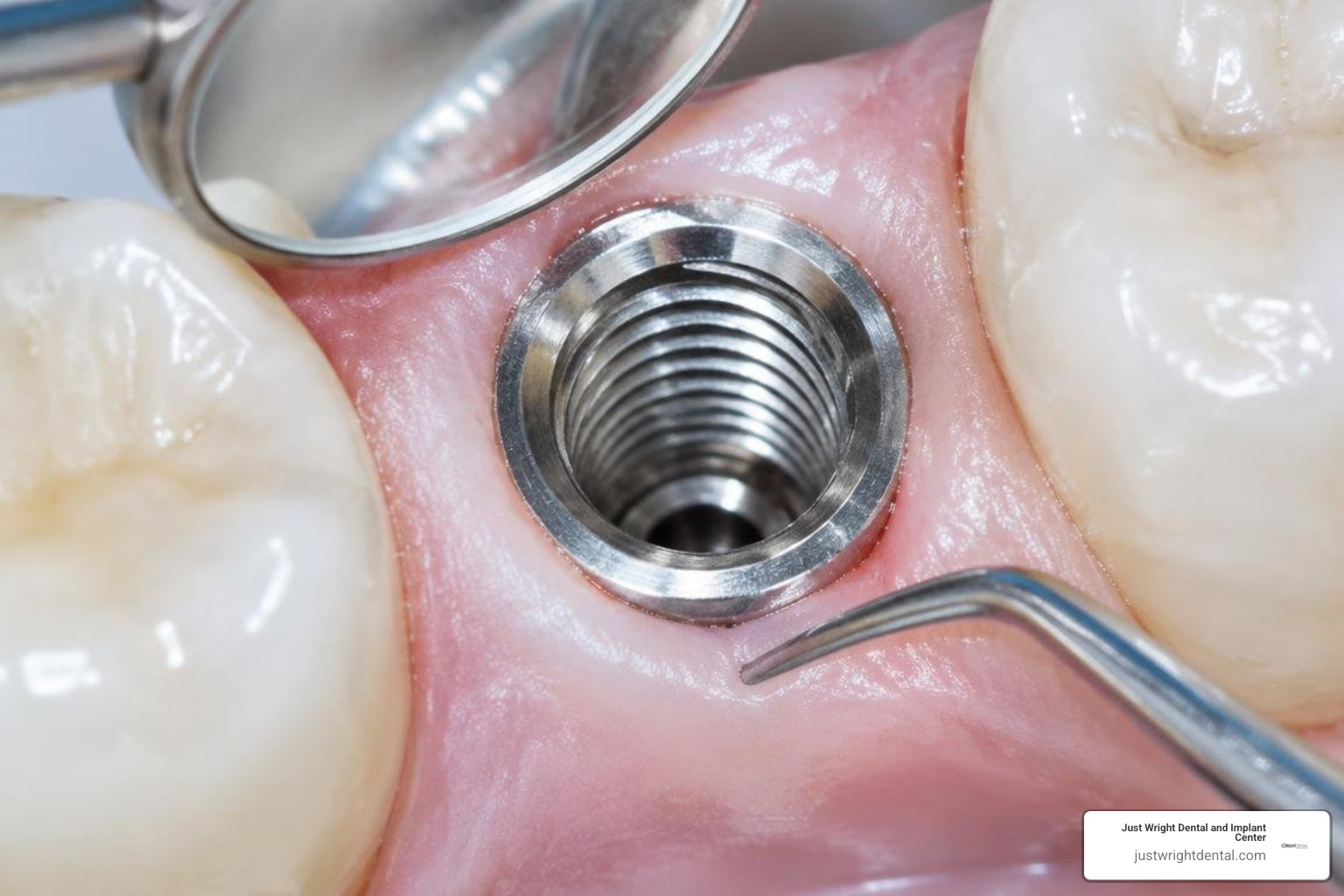
To confirm that the internal architecture is completely sound after retrieval attempts, I gently hand-tighten a new guide pin or test screw. The screw should glide smoothly down the accessible depth of the chamber without binding, catching, or showing lateral play.
When an apical fragment cannot be safely retrieved without risking perforation of the implant body, surgical removal of the entire implant is not always necessary. As outlined in a documented alternative approach to salvaging an implant with a fractured screw fragment, an implant can often be salvaged if enough coronal threads remain intact.
Biomechanically, a modified, shortened abutment screw can provide stable support for occlusal chewing forces as long as at least 3.5 clean threads remain engaged above the jammed fragment. Patients can learn more about how implant mechanics work through our Smile Education Center - Dental Implants resource library.
If the internal threads were stripped by previous unguided drilling attempts elsewhere, we can evaluate advanced revision options, including replacing the fixture or utilizing remote-anchorage implants to restore full chewing function.
Safe Implant Restoration and Precision Salvage at Just Wright Dental
Managing a broken implant screw requires patience, specialized instrumentation, and high-precision restorative engineering. At Just Wright Dental and Implant Center in Corsicana, Texas, we combine advanced 3D imaging, surgical magnification, and on-site restorative technology to repair, restore, and rebuild complex implant cases that other offices turn away.
Whether you are dealing with a loose crown, a broken abutment screw, or failing implant work completed elsewhere, our team provides judgment-free, concierge-level care. Everything from diagnostic CBCT imaging to custom restorative components is designed, milled, and printed in-house, supporting a precise fit and long-term durability.
If you suspect an issue with your implant restoration or need a second opinion on a complex case, book an appointment with us today to discuss your health investment and protect your smile.
Frequently Asked Questions About Implant Screw Retrieval
What should I do immediately if my implant screw breaks?
If your implant crown or bridge feels loose or detaches, remove the prosthetic piece from your mouth to avoid swallowing or choking on it, and place it in a clean, dry container. Avoid chewing on that side of your mouth, stick to a soft diet, and schedule an evaluation with an emergency dental provider right away. Never attempt to superglue the crown back in place or probe inside the implant opening with household objects, as this can introduce bacteria or damage internal threads.
Can a fractured abutment screw damage the dental implant fixture?
The fracture itself rarely damages the surrounding titanium implant fixture, as the screw is engineered to be the weaker, sacrificial link under excessive mechanical stress. However, improper retrieval attempts using unguided instruments or excessive force can strip the internal threads or perforate the implant wall. When performed using dedicated centering guides, magnification, and conservative techniques, screw retrieval preserves the implant fixture.
Can a broken implant screw be removed without surgery?
Yes, the vast majority of broken implant screw retrievals are non-surgical and performed entirely through the top opening of the crown or the exposed gumline. Because the procedure accesses only the internal hollow chamber of the titanium post, the surrounding bone and gum tissue are left completely undisturbed. Local numbing medication is provided so you remain completely relaxed and comfortable throughout the appointment.
Why do dental implant screws loosen over time?
Implant screws typically loosen due to micro-movements caused by everyday chewing stresses, nighttime teeth grinding, or slight inaccuracies in how the crown fits the implant base. If a screw was tightened without a calibrated torque wrench during initial placement, it may lack the ideal tension required to keep the parts locked together. Regular dental checkups allow your dentist to detect and tighten loose screws before they progress to a fracture.
What happens if a broken screw fragment cannot be removed?
If a deeply lodged fragment cannot be safely turned out, we evaluate whether enough usable threads remain above the fragment to secure a modified, shortened abutment screw safely. If the internal chamber is completely blocked or the threads are severely stripped, we discuss gentle fixture removal followed by bone grafting or advanced remote-anchorage solutions to give you a secure, long-lasting replacement.
References
Chen WC, Chang YC. "Removal of fractured implant screw under the microscope and transformation of cemented-type crown into screw-retained crown simultaneously: A clinical report.." Journal of dental sciences, 2022. PMCID PMC8739246. Lee MS, Chiang CP, Tseng WY, Ho CJ. "Rapid retrieval of fractured implant abutment screws with a custom-made screwdriver.." Journal of dental sciences, 2023. PMCID PMC10547980.