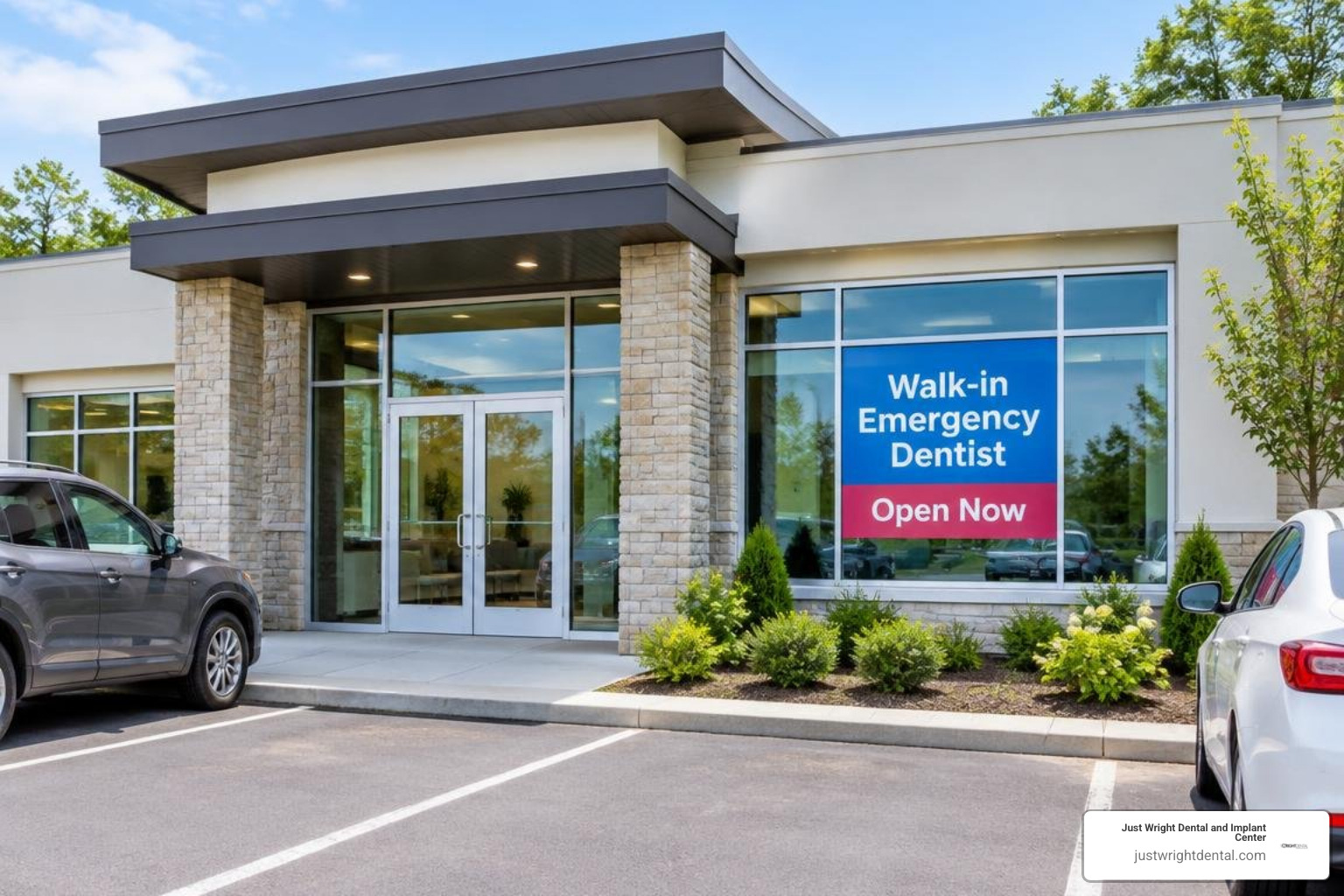
Is there a walk-in emergency dentist near me open now?
How to Find a Walk-In Emergency Dentist Open Now
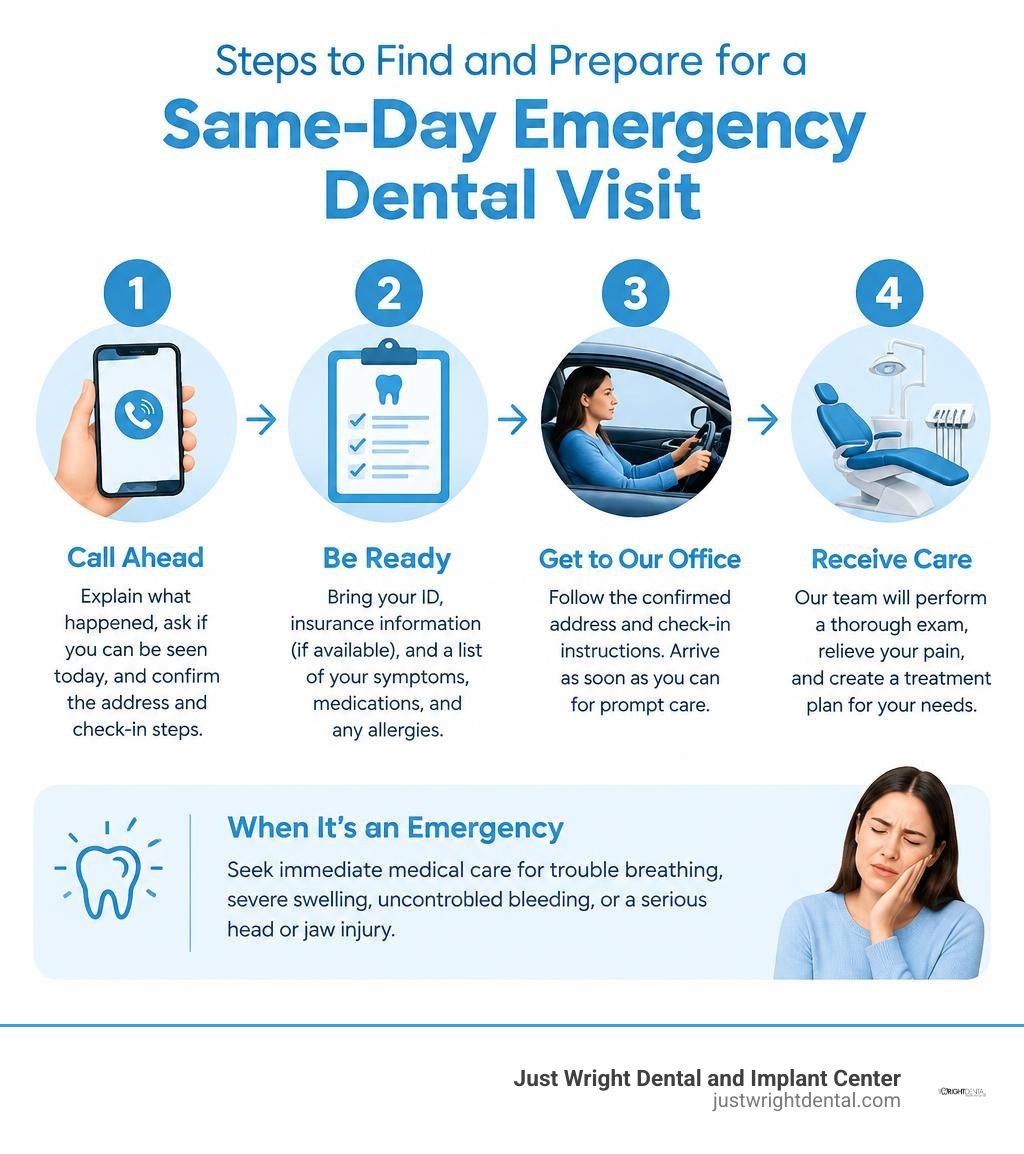
If you need a walk-in emergency dentist near me open now, call the office before you leave. Describe what happened, ask if the team can see you today, and confirm the address and check-in steps. Calling ahead can help us prepare for urgent needs such as severe tooth pain, swelling, a broken tooth, bleeding, or a tooth that has been knocked out.
A dental emergency may need same-day evaluation, especially when pain is intense or there is a risk of infection or tooth loss. If you have trouble breathing, severe facial swelling, uncontrolled bleeding, or a serious head or jaw injury, seek emergency medical care first.

I'm Justin Wright, DDS, founder of Just Wright Dental and Implant Center in Corsicana, Texas, and I've spent more than 18 years helping people understand urgent dental problems without judgment. In this guide, I'll explain how to find a walk-in emergency dentist near me open now and how to prepare for your visit.
What Qualifies as a Dental Emergency Requiring Immediate Care?
You're likely wondering whether your tooth issue is something that needs attention today or if it can wait. Any issue involving sudden trauma, persistent swelling, continuous bleeding, or severe pain that keeps you from sleeping qualifies as a dental emergency. Getting an in-person exam lets us diagnose the root cause quickly and keep minor damage from turning into a complex infection.
Here's a breakdown of common urgent dental conditions:
Traumatic Dental Injury: A blow to the face that results in a loose, cracked, broken, or knocked-out permanent tooth.
Persistent Swelling or Abscess: Visible puffiness along your jawline, gums, or cheek, which often signals an active bacterial infection.
Uncontrolled Bleeding: Bleeding from the gums or tongue after an injury that doesn't slow down after applying gentle pressure.
Severe Toothache: Deep, throbbing pain that doesn't subside with over-the-counter pain relievers.
Compromised Restorations: A broken bridge, loose crown, or damaged denture that exposes raw nerve tissue or prevents normal chewing.
How to Handle a Knocked-Out or Broken Tooth Before You Arrive
If your tooth just broke or was knocked completely out of your mouth, acting quickly can make all the difference. For a knocked-out permanent tooth, gently pick it up by the crown (the white chewing surface) without touching the sensitive root tissues. If you need urgent same-day dental assistance, taking the right steps at home protects the delicate root cells while you're on your way.
Rinse gently if dirty: If the tooth fell on the ground, rinse it gently with milk or clean water. Never scrub it or use harsh soaps.
Attempt to reinsert it: If possible, place the tooth back into its empty socket facing the correct direction and bite down gently on a clean piece of gauze or cloth to hold it in place.
Store it in liquid: If reinserting isn't possible, place the tooth immediately into a small cup of whole milk, saline, or your own saliva.
Preserve broken pieces: If you have a chipped or fractured tooth, gather the fragments, rinse them in water, and store them in milk.
Apply a cold compress: Place a cold pack or chilled cloth against your cheek for 10 to 15 minutes at a time to keep swelling down and ease discomfort.

Severe Toothaches, Swelling, and Signs of Serious Infection
A severe, throbbing toothache that wakes you up at night is your body's alarm system telling you that the inner nerve is irritated or infected. Deep tooth decay or a cracked tooth allows bacteria to enter the dental pulp (the nerve center of the tooth), causing inflammation known as pulpitis. When left untreated, this pressure builds up inside the root canal system and can form a dental abscess—a pocket of infection at the tip of the root.
Signs of an advancing dental infection include:
Noticeable swelling along the gumline, cheek, or under your jaw
A small, pimple-like bump on your gums that drains bad-tasting fluid
Heightened sensitivity to hot foods and liquids that lingers long after contact
Discomfort when chewing, tapping, or putting light pressure on the tooth
A mild fever accompanied by general fatigue
If you notice swelling spreading down your neck or up toward your eye, seek immediate evaluation so we can determine whether antibiotic therapy, nerve relief, or drainage is necessary to protect your overall health.
How to Find a Walk-In Emergency Dentist Near Me Open Now
When you're dealing with sudden pain, finding an open clinic right away is your top priority. You can locate open practices by checking online search engines, mapping apps, and dental directories, but always call the office directly before driving over. Calling ahead lets our team verify immediate chair availability, provide first-aid advice, and prepare our surgical suite for your arrival.
If you're in Navarro County, Ellis County, or nearby communities like Ennis, Waxahachie, or Midlothian, we provide dedicated walk-in emergency dental care at our Corsicana office.
Do You Need an Appointment or Can You Walk Right In?
You might worry that showing up without a booked time slot means you'll be turned away. While walk-in patients are welcomed for urgent pain and trauma, calling while you're on the road helps us triage your condition and minimizes your time in the waiting room.
When you arrive at our practice:
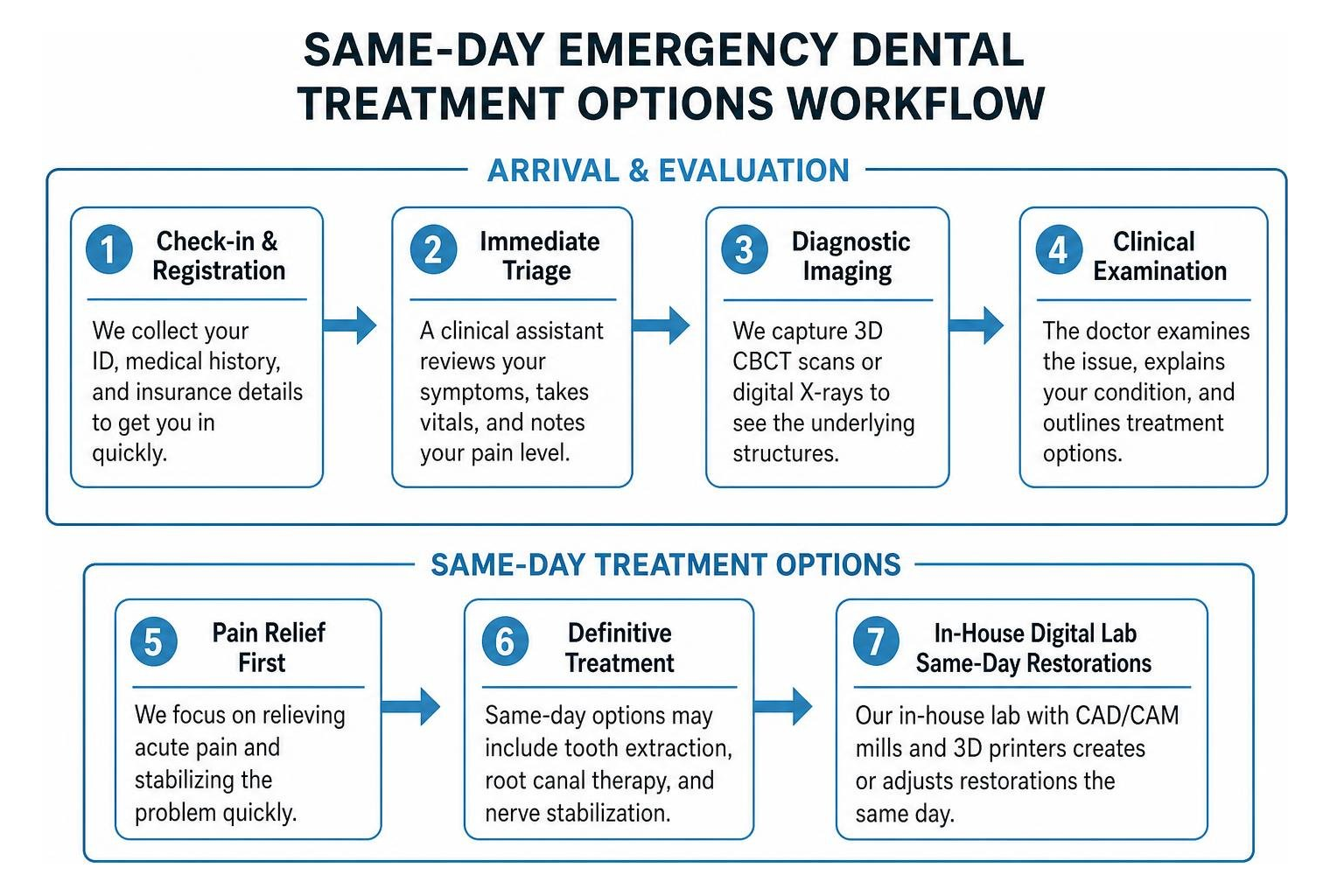
Check-in and Registration: Our front desk team collects your identification, medical history, and insurance details to get you into the system rapidly.
Immediate Triage: A clinical assistant reviews your primary symptoms, takes your vital signs, and notes your pain levels.
Diagnostic Imaging: We capture 3D CBCT scans or digital X-rays to see the underlying bone, nerve canals, and tooth structure.
Clinical Examination: I'll personally examine the affected area, explain what's happening in clear language, and outline your treatment options.
Steps to Locate a Walk-In Emergency Dentist Near Me Open Now During Weekday Hours
Finding same-day relief during standard business hours is straightforward when you follow a structured approach:
Search your immediate area: Use your phone to search for clinics in your town or along primary travel corridors like I-45, US-287, or Hwy 31.
Verify current operating hours: Confirm the practice is actively open today and offers urgent services.
Call the front desk: Explain your situation clearly, such as a knocked-out tooth, sudden swelling, or severe pain.
Inquire about same-day treatment: Ask if the doctor can perform definitive treatments like tooth removal or nerve stabilization during the initial visit.
Head to the clinic: Bring your essential items and follow any immediate first-aid instructions given over the phone.
What Same-Day Treatments Can an Emergency Dentist Provide?
You might wonder if an emergency visit only results in a temporary prescription or if your problem can actually be resolved today. While our first goal is always to relieve acute pain, our modern facility allows us to perform definitive, comprehensive restorative solutions during your emergency appointment.
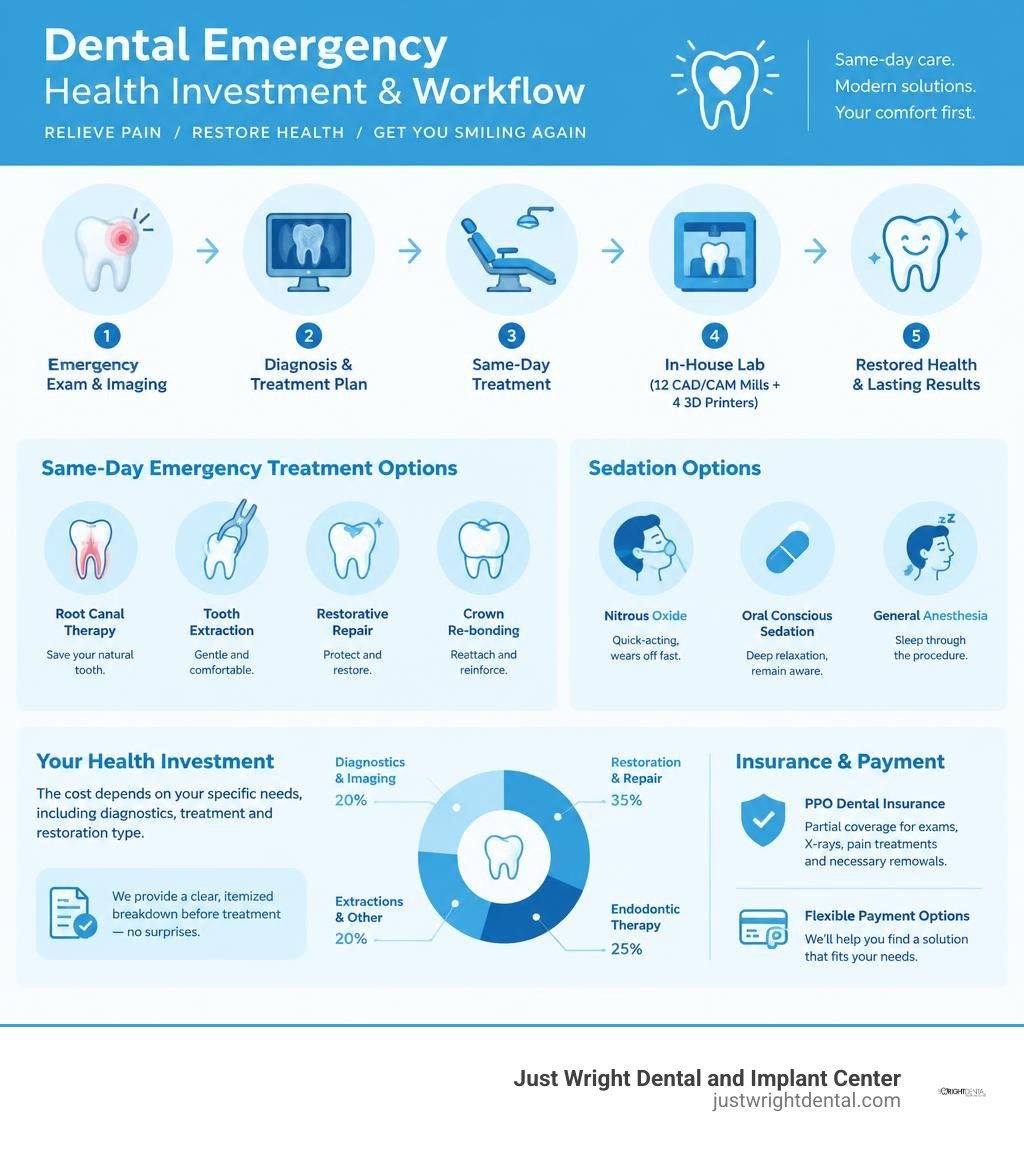
Because we have an in-house digital laboratory with 12 CAD/CAM mills and 4 3D printers, we don't rely on outside labs. If you need a restoration adjusted or remade, we can reprint or remill custom dental components in our own lab in minutes to a couple of days, rather than making you wait weeks with a temporary piece.
Same-Day Tooth Extractions, Root Canals, and Pain Relief Options
When an exam shows that a tooth is severely damaged or infected, we focus on removing the source of the pain while preserving as much healthy tissue as possible.
Pulpectomy and Root Canal Therapy: If the tooth structure can be saved, we gently remove the inflamed nerve tissue from inside the root canals. This eliminates the source of the infection, relieves throbbing pain, and allows you to keep your natural tooth.
Gentle Tooth Removal: If a tooth is fractured below the gumline or damaged beyond repair, single tooth removal may be the healthiest path forward. We use gentle numbing medication to ensure you remain comfortable throughout the process.
Restorative Repair: For chipped enamel or lost fillings, we can place durable composite resin bonding to protect exposed nerves.
Crown Re-bonding: If a dental crown has detached but the underlying tooth remains healthy, we can clean, disinfect, and recement the restoration.
Sedation Options for Urgent and High-Anxiety Dental Procedures
Facing an urgent dental procedure when you're already in pain can feel overwhelming. We believe dental care should always be judgment-free, calm, and tailored to your personal comfort level. Depending on your medical history, anxiety level, and the complexity of your urgent treatment, several sedation options can be discussed:
Nitrous Oxide: A mild, inhaled calming agent that takes effect quickly and wears off within minutes after treatment, allowing you to drive home safely.
Oral Conscious Sedation: A prescribed pill taken before your appointment that helps you reach a state of deep relaxation while remaining conscious and able to respond to questions.
General Anesthesia: For complex trauma, severe dental phobia, or extensive urgent care, we have a board-certified anesthesiologist on staff to monitor you closely while you sleep through the entire appointment. We also provide pediatric sedation when young patients experience oral trauma.
How Much Does Emergency Dental Care Cost and What Are Your Payment Options?
You're probably concerned about what an unexpected emergency visit will require in terms of health investment. The exact investment for urgent care depends on what we discover during your diagnostic evaluation, the specific imaging needed, and whether your tooth requires restoration, endodontic therapy, or removal.
We believe in complete financial transparency. We explain all clinical findings and review an itemized breakdown of recommended options before beginning any definitive treatment, so you're always in full control of your decisions.
Dental and Medical Insurance Coverage for Urgent Procedures
Understanding insurance during an emergency can feel confusing, but our experienced administrative team helps you maximize your available benefits:
PPO Dental Insurance: Most dental insurance plans provide partial coverage for diagnostic exams, emergency X-rays, palliative pain treatments, and necessary tooth removals.
Medical Insurance Billing: Medical insurance sometimes covers the dental implants themselves, and it can cover removal of infection, bone grafting, reconstruction, functional deficit, and TMJ disorders, especially with periodontal disease.
In-House Coordination: We have a full-time Medical Insurance Coordinator on staff who handles medical preauthorization, claims, appeals, and audits directly in-house, saving you from managing complicated paperwork on your own.
Financing Plans and Self-Pay Options for Emergency Visits
If you don't have dental insurance or your plan doesn't cover the full scope of treatment, you still have options to manage your health investment comfortably.
Third-Party Healthcare Financing: We work with reputable healthcare lenders that offer flexible monthly payment arrangements, often with low- or zero-interest promotional terms for qualified applicants.
Major Credit Cards and Flexible Spending Accounts: We accept all major credit cards, as well as Health Savings Accounts (HSA) and Flexible Spending Accounts (FSA).
Phased Treatment Planning: When possible, we can address acute pain and stabilize your tooth today, then schedule any final cosmetic or long-term restorative treatments over a timeline that works for you.
Emergency Dentist vs. Hospital ER: Where Should You Go?
When an unexpected oral injury occurs, it can be hard to know whether you should drive to an emergency room or find a dental practice. While hospital emergency rooms are vital for life-threatening medical trauma, they rarely have dentists on staff or specialized dental tools to restore broken teeth, perform root canals, or place crowns.

Feature / Service | Walk-In Emergency Dental Clinic | Hospital Emergency Room (ER) |
|---|---|---|
Primary Focus | Tooth salvage, dental nerve pain, oral restorations | Systemic trauma, airway stabilization, vital signs |
Diagnostic Imaging | 3D CBCT scans, targeted digital dental X-rays | General head/neck CT scans, standard medical X-rays |
Definitive Dental Care | Root canals, tooth removal, crown recementing | Prescription pain relievers and antibiotics only |
Specialized Equipment | Dental operatory, in-house CAD/CAM milling | Hospital trauma bays, emergency medicine suites |
Dentist On-Site | Yes, licensed dentists and dental surgeons | Rarely (mostly emergency physicians and nurses) |
When to Visit the Emergency Room for Severe Oral Trauma or Airway Concerns
There are specific situations where you must go to the nearest hospital emergency room or dial 911 immediately:
Compromised Airway: Any swelling in your throat, tongue, or neck that makes it difficult to breathe or swallow.
Severe, Uncontrolled Hemorrhaging: Continuous bleeding from the mouth or face that doesn't slow after 15 to 20 minutes of firm, direct pressure.
Suspected Jaw Fractures: Inability to open or close your mouth, severe asymmetry in your jawline, or a sensation that your bite is severely shifted following major trauma.
High Fever and Systemic Symptoms: High fever, confusion, dizziness, or nausea accompanying acute facial swelling.
Choosing a Walk-In Emergency Dentist Near Me Open Now for Dental-Specific Care
If your symptoms are confined to your teeth, gums, or supporting jawbone and your breathing is completely unobstructed, visiting an emergency dentist is generally the most efficient path to long-term relief. An emergency dental clinic can treat the root mechanical or bacterial cause of your discomfort right away, rather than simply writing a temporary prescription for symptoms that will return once the medication wears off.
Frequently Asked Questions About Walk-In Emergency Dental Care
Can an emergency dentist fix a loose crown or filling the same day?
In many cases, yes. If the underlying tooth structure remains free of new decay, we can clean, sanitize, and rebond your existing crown during your visit. If the tooth has developed new decay or the old restoration is damaged, we can place a temporary filling or scan your tooth to mill a brand-new custom crown in our in-house digital laboratory.
What should I bring with me to an emergency dental visit?
You should bring a valid government-issued photo ID, your dental and medical insurance cards, and a comprehensive list of all prescription medications and supplements you currently take. If you have broken tooth fragments, a lost crown, or a knocked-out tooth, bring those items stored safely in a small container of whole milk or saline solution.
What should I do if a dental emergency happens after normal office hours?
If you experience severe tooth discomfort outside of standard business hours, rinse your mouth gently with warm saltwater, use a cold compress on your cheek to reduce swelling, and take over-the-counter pain medication as directed. Avoid chewing on the affected side, and contact our office first thing the following morning so our team can fit you into our schedule for evaluation.
Can children be treated at a walk-in emergency dental practice?
Yes, we provide gentle, compassionate emergency care for pediatric dental trauma and toothaches. If your child chips a tooth, knocks out a baby tooth, or complains of severe pain, we can perform a gentle diagnostic exam and discuss pediatric sedation options when needed to keep them completely calm and comfortable.
Conclusion
Dealing with sudden tooth pain, an unexpected fracture, or facial swelling can feel stressful, but you don't have to face it alone. Seeking prompt professional attention allows us to address acute discomfort, eliminate infection, and protect your natural smile for the future. From simple restorative repairs to complex surgical care, our team is committed to providing calm, personalized treatment without pressure.
Let's talk about what's right for your smile. Text or call our Smile Transformation Coordinator at 903-602-3439, or call our office at 903-872-8422 to schedule an urgent evaluation.
Author Bio
Dr. Justin Wright, DDS, is the founder and clinical director of Just Wright Dental and Implant Center in Corsicana, Texas.