The Ins and Outs of Comparing All-on-Four Costs and Outcomes
Quick answer: All-on-4 dentures are a full arch of fixed teeth anchored by four implants, two straight in front and two angled in back to use the strongest bone. Unlike regular dentures, they do not slip, cover the roof of the mouth or need adhesive. Most patients leave with temporary fixed teeth the same day and receive final teeth after healing.
All on Four Dentures: A Fixed Alternative to Compare
All on four dentures are a full set of fixed replacement teeth supported by four dental implants in one jaw. Unlike traditional dentures, they do not rest on the gums or rely on adhesive. Unlike snap-on dentures, the bridge is secured in place and is not removed at home.
When comparing your options, focus on these questions:
Do you want teeth that stay in place while you eat and speak?
Is there enough healthy jawbone for implants, or are angled implants an option?
Can you follow the healing diet and daily cleaning routine needed for a fixed bridge?
Does a removable or fixed solution better fit your health goals and long-term investment?
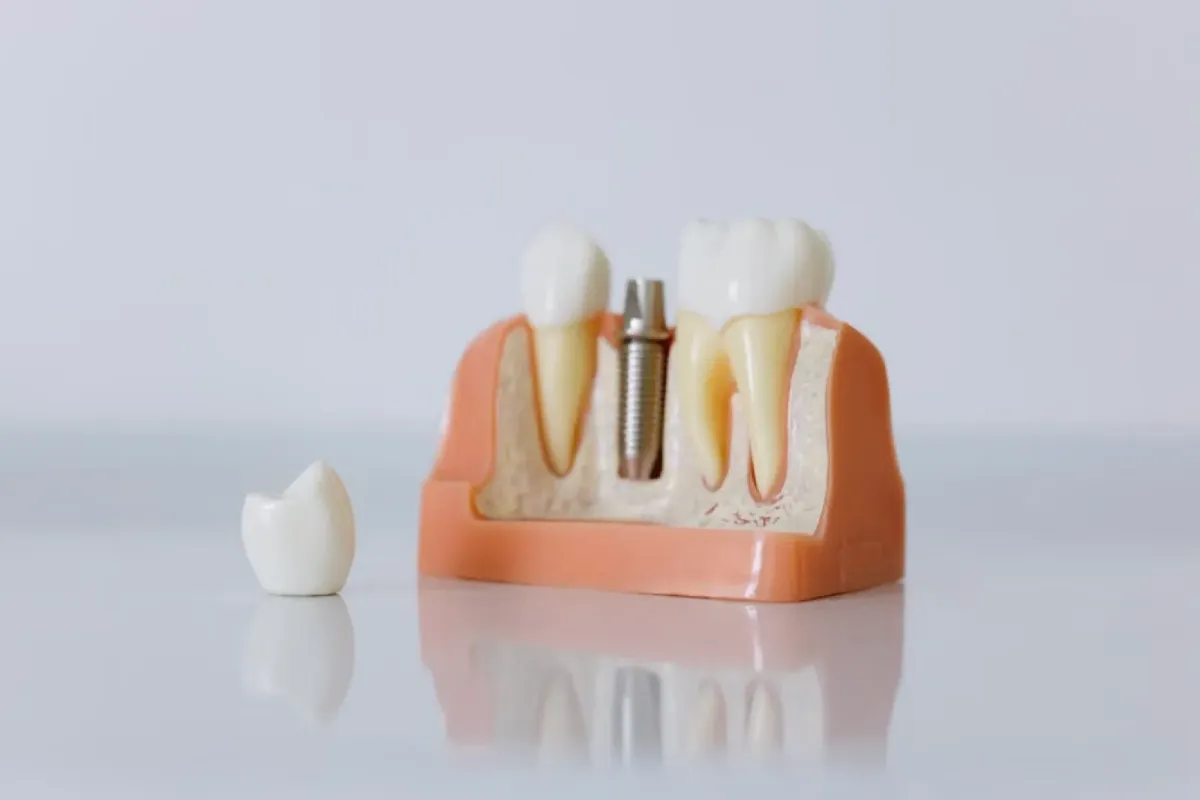
The All-on-4 treatment concept uses two implants near the front of the jaw and two angled implants toward the back. This approach can make better use of available bone, avoid areas such as the sinus or lower-jaw nerve, and reduce the need for bone grafting in many cases. A temporary fixed bridge may be placed on treatment day when the implants achieve strong initial stability; the final bridge comes after the implants have healed into the bone.
I am Justin Wright, DDS, founder and clinical director of Just Wright Dental and Implant Center in Corsicana, where our team has placed more than 10,000 implants and completes about 200 full-arch cases each year, including all on four dentures. Founded in 2010, our practice uses an in-house digital workflow with CBCT imaging, facial smile design, 12 CAD/CAM mills, and 4 3D printers, with Smile-in-a-Day options and sedation through general anesthesia supported by an on-staff board-certified anesthesiologist.
Understanding All on Four Dentures and How the Protocol Works
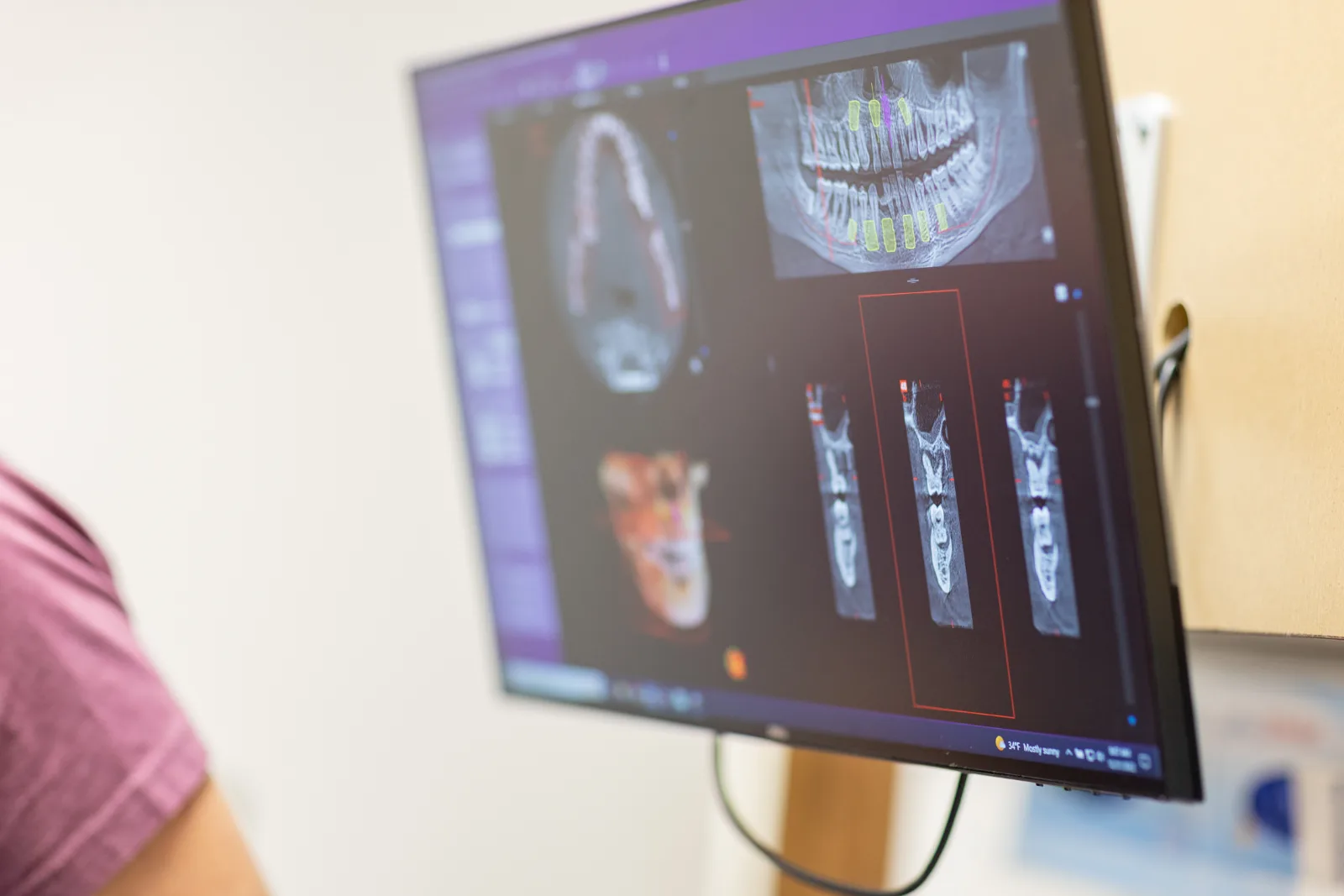
Navigating tooth loss can feel overwhelming, but modern restorative dentistry provides permanent, predictable pathways to restore your smile and chewing function. When someone experiences significant tooth loss or severe periodontal breakdown, we look beyond short-term fixes to evaluate full-arch rehabilitation. The goal is to recreate a stable, natural-looking smile while maintaining the underlying health of your jaw.
At the heart of fixed full-arch therapy is the engineering principle of immediate stability. Rather than placing a single implant for every missing tooth—which historically required eight to ten implants per arch along with extensive bone grafting—the All-on-4 protocol establishes a sturdy foundation with four strategically positioned implants (Taruna et al., 2014). These implants act as artificial roots, distributing functional chewing forces into the jawbone while supporting a solid, screw-retained bridge.
Mechanics and Science of All on Four Dentures
The science behind this approach relies on a blend of biology and physics. We place two vertical implants in the anterior (front) region where natural bone density is typically highest, paired with two posterior (back) implants tilted at an angle between 30 and 45 degrees.
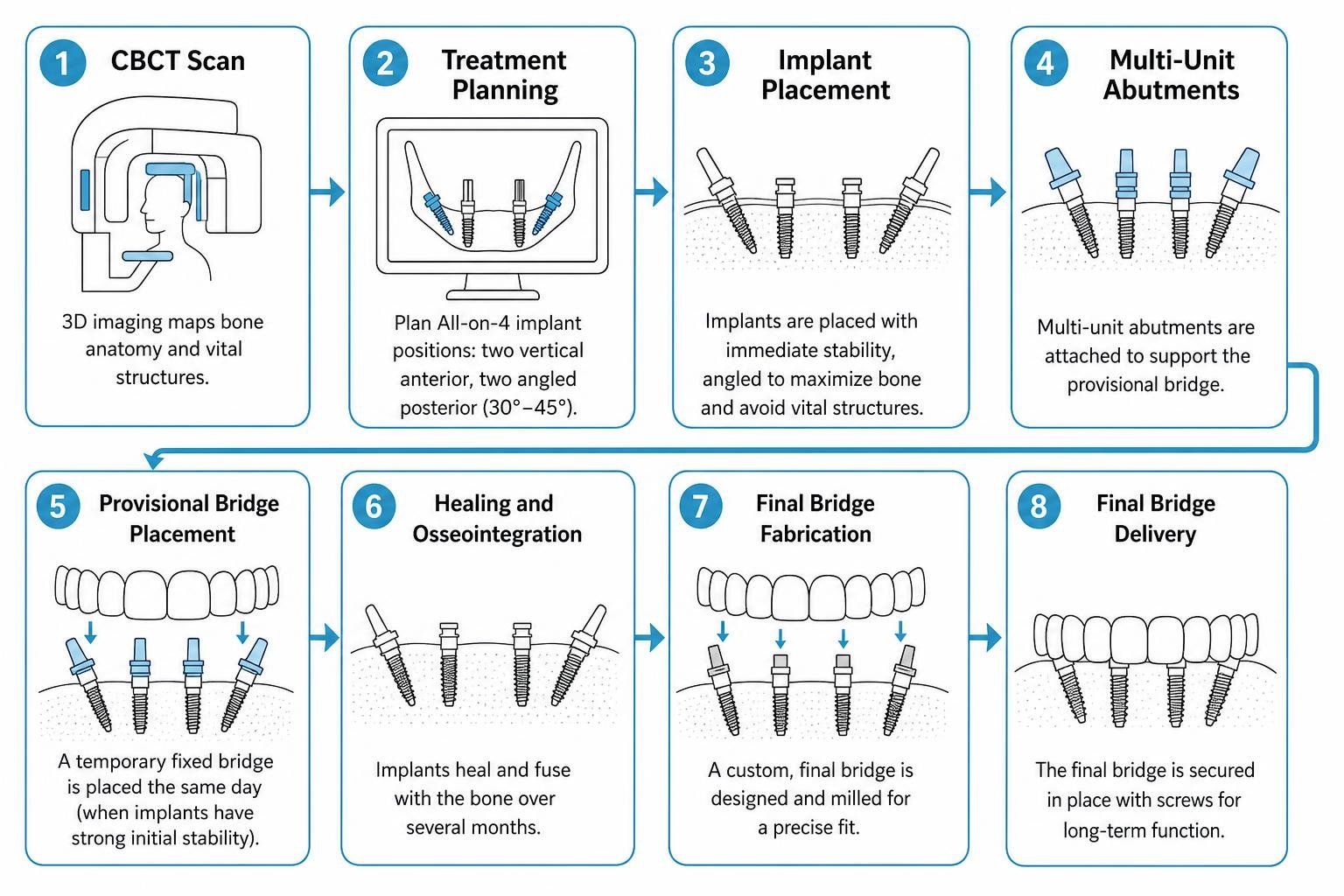
Angling the posterior implants accomplishes three critical clinical goals:
Maximizes Available Bone: It allows us to anchor longer implants into dense native bone without disturbing sensitive anatomical boundaries, such as the maxillary sinus cavity in the upper jaw or the mental nerve canal in the lower jaw.
Increases Anteroposterior (A-P) Spread: By extending the base of support further back in the mouth, we create a wide, stable foundation that prevents tipping forces during chewing.
Minimizes Cantilevers: Tilting the fixtures allows the prosthetic bridge to extend smoothly toward the molars without creating an unsupported lever arm that could strain the hardware.
According to established All-on-4 clinical guidelines, when these implants achieve an insertion torque of 35 to 45 Ncm during placement, they possess enough initial stability to support an immediate provisional bridge on the very same day (Taruna et al., 2014). This allows you to walk out with fixed teeth right away while the bone securely integrates around the titanium posts.
Comparing Fixed All on Four Dentures to Removable Options
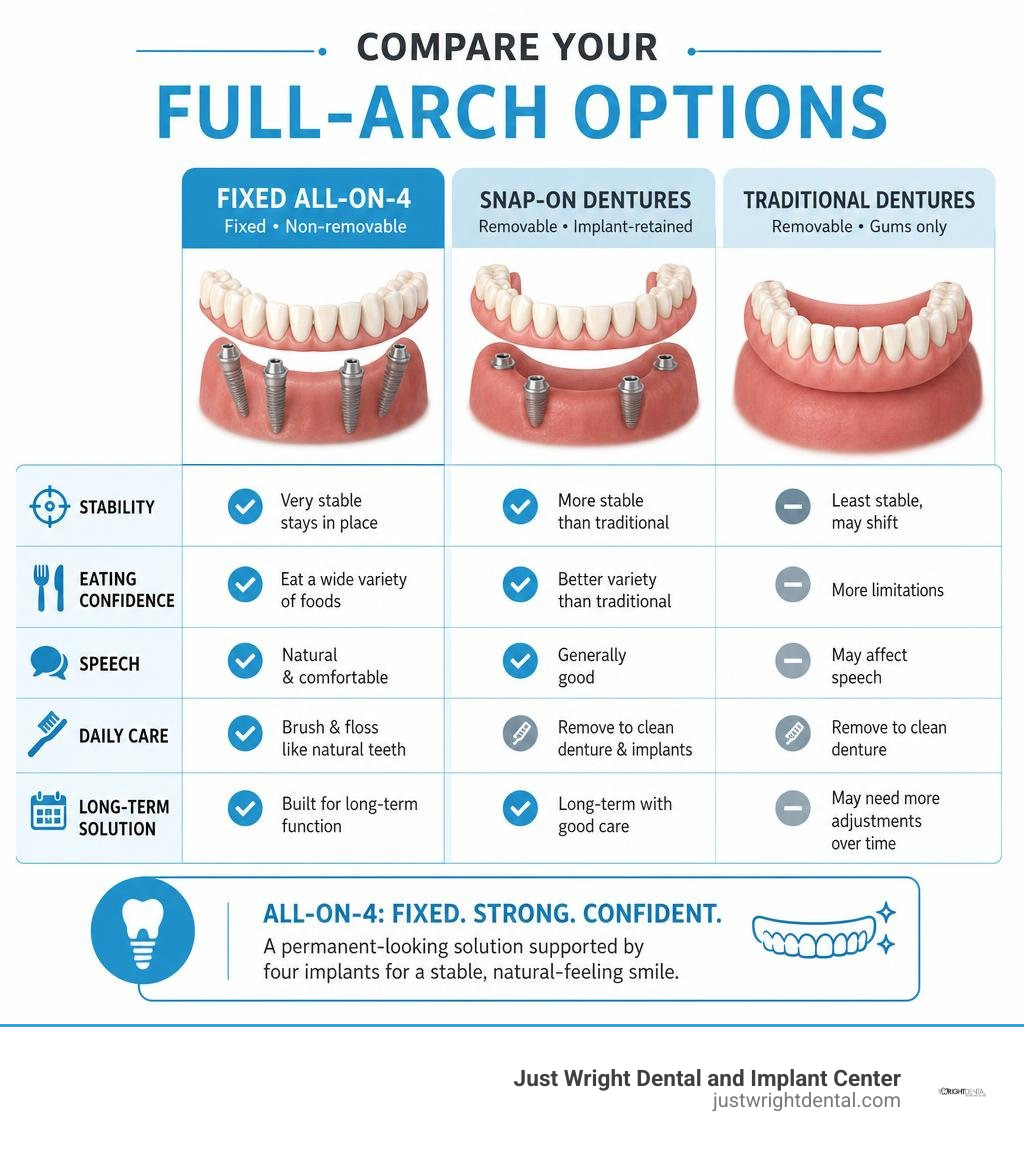
To understand why so many patients transition to fixed full-arch options, it helps to compare them side-by-side with removable solutions:
Traditional Removable Dentures: Conventional dentures rest directly on the gum tissue and rely on suction or messy adhesives for retention. Because they place continuous pressure on the alveolar ridge without stimulating the bone underneath, they can accelerate jawbone resorption over time. In addition, an upper conventional denture completely covers the roof of your mouth (palate), which can dull your sense of taste and create a bulkier sensation during speech.
Removable Snap-On Overdentures: Snap-on systems use two to four dental implants with locator attachments. While they offer superior retention compared to standard plates, they remain removable appliances that must be taken out each night for cleaning. The nylon locator caps wear down with routine use and require periodic replacement to maintain their snap fit.
Fixed All-on-4 Restorations: A fixed full-arch bridge is firmly screwed into multi-unit abutments attached to the implants. It does not move, shift, or rub against your gums. The upper design is completely palate-free, leaving the roof of your mouth uncovered so you can taste your food and speak naturally.
Long-Term Clinical Outcomes and Bone Preservation
Long-term clinical studies demonstrate that full-arch restorations have an outstanding track record. The protocol has a strong long-term track record in published follow-up studies (Taruna et al., 2014). Because the implants integrate directly with the bone (osseointegration), they preserve the natural facial architecture and vertical dimension that often collapse following tooth loss.
Traditional removable dentures contribute to ongoing bone loss over time because they compress the gums without stimulating the deeper skeletal tissue. By contrast, dental implants transmit mechanical chewing stimulation deep into the bone, helping maintain your bone density and supporting your facial contours over the long term.
Biomechanics, Tilted Implants, and Bite Force
The physics of tilted implants provide measurable biomechanical advantages. Engineering analysis shows that tilting the distal implant meaningfully reduces stress on the surrounding bone compared to using vertical implants with excessive prosthetic cantilevers (Taruna et al., 2014).
This stable load distribution has a direct impact on your everyday quality of life:
Bite Force Restored: Traditional denture wearers often retain only a fraction of their natural biting force, which can force them to avoid fibrous meats, crisp fruits, and dense vegetables.
Restored Chewing Power: Patients with fixed full-arch implant restorations regain much of their natural bite force once their final bridge is delivered, allowing them to return to a balanced, unrestricted diet.
By engineering a balanced bite that distributes contact evenly across your premolars and canines, we protect the underlying bone and ensure the longevity of your bridge (Taruna et al., 2014).
Solutions for Complex Anatomy and Severe Bone Resorption
A common concern we hear from patients is: "My previous dentist told me I don't have enough bone for implants." While severe ridge resorption can rule out conventional vertical implants without extensive bone grafting, specialized treatment approaches can provide reliable alternatives.
When the upper jaw exhibits severe bone loss, we utilize remote-anchorage techniques, including zygomatic, pterygoid, transsinus, and transnasal implants. Zygomatic implants anchor securely into the dense cheekbone (zygoma), completely bypassing the maxillary sinus. Pterygoid implants anchor into the strong pterygomaxillary plate behind the upper jaw. These advanced techniques provide rigid stability for immediate bridge delivery even in the most challenging anatomical situations, eliminating the need for months of preliminary sinus lifts or bone grafting.
Financial Breakdown: Upfront Investment vs. Lifetime Value
When evaluating full-arch replacement options, it is helpful to look past the initial treatment fee and consider the total lifetime health investment. While conventional removable dentures have a lower initial entry point, their ongoing maintenance, periodic relines, replacement sets every 5 to 7 years, and daily adhesive products add up over time.
Evaluation Metric | Traditional Removable Dentures | Fixed Full-Arch Implant Restorations |
|---|---|---|
Initial Treatment Scope | Surface prosthetic resting on gum tissue | 4–6 titanium implants integrated into native jawbone |
10-Year Maintenance Cycle | Requires periodic professional relines, adjustments, and replacement sets | Minimal hardware maintenance; routine cleanings and checkups |
Consumable Products | Adhesives, specialized cleansers, and soaking cups | Standard non-abrasive toothpaste, water flossers, and bridge floss |
Bone Health Impact | Progressive bone loss over time | Preserves native bone density through functional stimulation |
Bite Force Efficiency | Retains a fraction of natural chewing capacity | Restores much of natural chewing capacity |
Palate Design | Full acrylic plate covering the roof of the mouth | Open, slim horseshoe framework with zero palate coverage |
Investing in a fixed restoration provides structural longevity and preserves your jawbone, offering a lasting solution that functions just like natural teeth.
The Treatment and Healing Journey
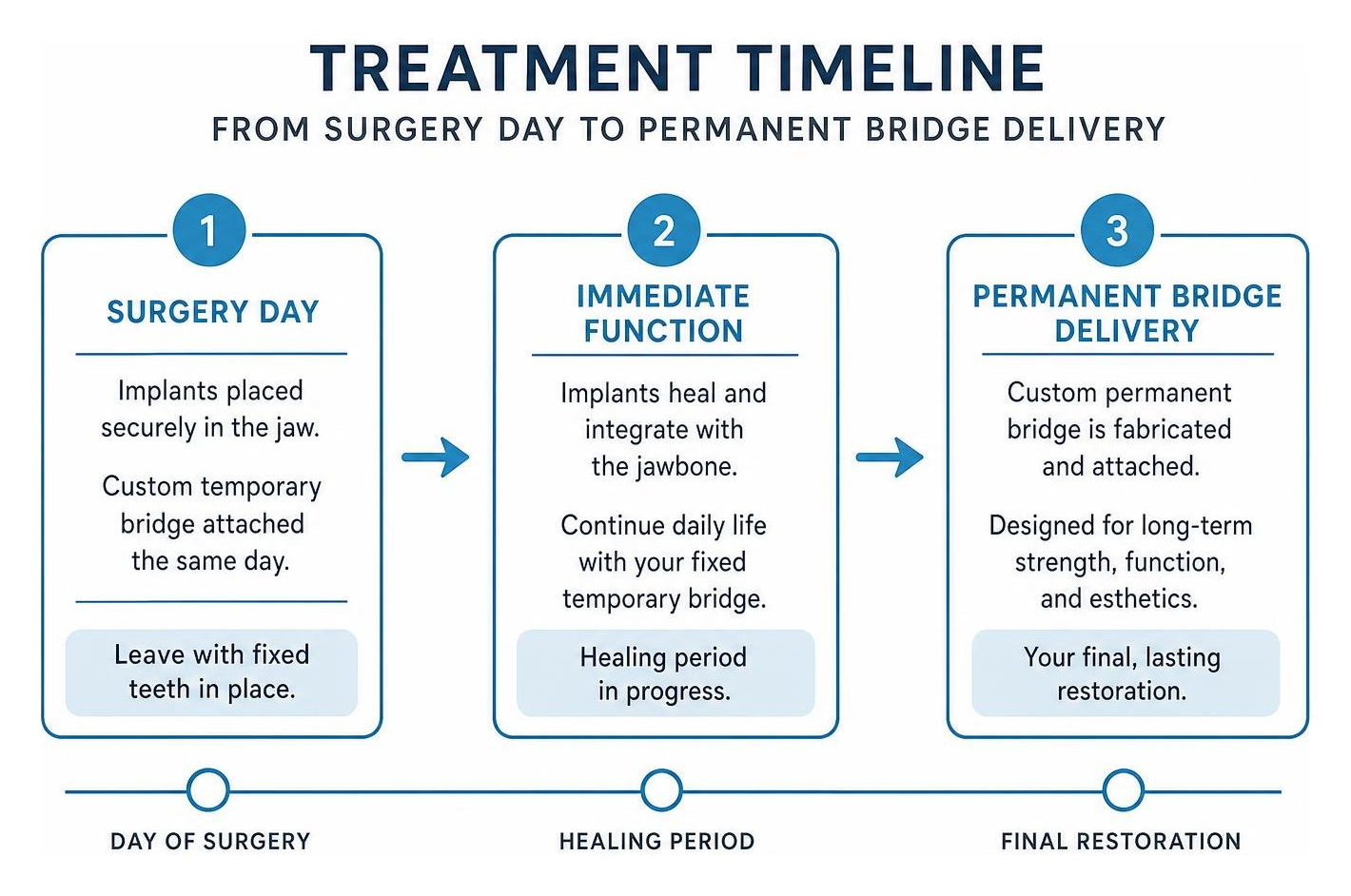
Understanding the treatment timeline helps demystify the experience. Every step of your care is planned digitally before your appointment to ensure optimal accuracy, safety, and comfort.
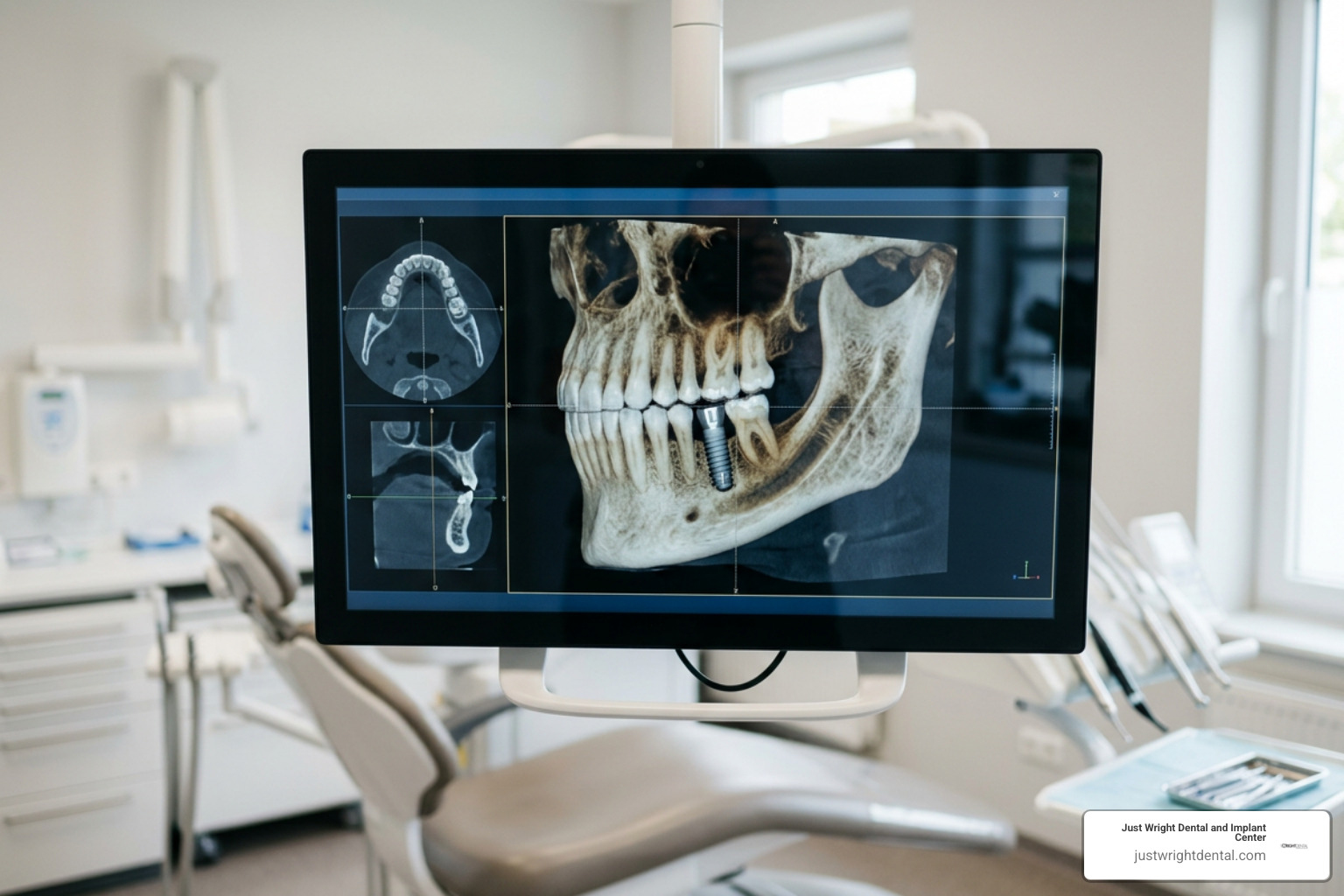
Digital Design, Surgery Day, and Immediate Function
Your transformation begins with high-resolution 3D cone-beam computed tomography (CBCT) imaging and 3D facial scanning. Rather than using generic, one-size-fits-all tooth arrangements, our digital workflow analyzes your unique facial proportions, lip line, and jaw movements to custom-design your new smile.
On your treatment day:
Sedation and Comfort: We administer customized sedation to keep you relaxed and comfortable throughout the visit. We provide options ranging from IV sedation to general anesthesia supervised by an on-staff board-certified anesthesiologist.
Implant Placement: The implants are placed using precision-milled placement guides that direct exact depth and angulation. If any failing teeth remain, they are gently removed during the same appointment.
Same-Day Smile Delivery: Once the implants achieve strong primary stability, your custom provisional bridge is attached directly to the multi-unit abutments. You leave our office with a fixed, functional set of teeth on day one.
You can explore real patient outcomes in our before and after smile transformation gallery.
Following your appointment, any minor swelling or tenderness typically peaks within 48 to 72 hours and resolves steadily over the following week. During the initial 6 to 12 weeks of bone healing, you will follow a soft-food diet (anything easily cut with a fork, such as flaky fish, eggs, pasta, and soft vegetables) to allow the implants to integrate undisturbed.
Prosthetic Materials and Maintenance Protocols
The materials used in your restoration determine both its cosmetic appeal and structural durability:
Provisional Bridge (Phase 1): On treatment day, we place a high-impact, lightweight PMMA (acrylic) bridge. This material absorbs bite forces smoothly during the initial bone-healing phase.
Definitive Permanent Bridge (Phase 2): After 3 to 6 months of healing, we transition you to your final restoration. Monolithic zirconia supported by a custom CAD/CAM milled titanium framework represents the gold standard in restorative dentistry. Zirconia is exceptionally strong, resists chipping and staining, and reflects light just like natural tooth enamel.
Daily hygiene for a fixed bridge is straightforward:
Clean along the gumline twice daily using a soft-bristle toothbrush and non-abrasive toothpaste.
Use a water flosser paired with specialized bridge floss (such as superfloss or threaders) to clear away food particles underneath the prosthetic transition zone.
Visit us for routine checkups and cleanings, where we inspect your hardware and polish your bridge. If you tend to grind your teeth at night, wearing a custom night guard will protect your investment for years to come.
Frequently Asked Questions About Full-Arch Restorations
Can you switch from traditional dentures to fixed implant bridges after years of wear?
Yes. Many patients who have worn traditional dentures for years—or even decades—are excellent candidates for full-arch fixed bridges. While long-term denture wear does lead to bone loss, the All-on-4 technique utilizes tilted posterior implants to anchor into remaining dense bone in the front of the jaw. If you have been told in the past that you lack sufficient bone, advanced remote-anchorage options (such as zygomatic or pterygoid implants) can often restore your smile without complex bone grafting. You can schedule a free smile assessment to evaluate your bone health with our 3D imaging team.
How long does the healing process take before resuming a normal diet?
Initial soft-tissue healing occurs within the first 1 to 2 weeks, allowing you to return to work and light daily activities within just a few days. However, the biological process of osseointegration—where the bone fuses firmly to the titanium implants—takes approximately 3 to 6 months. During this healing time, you will maintain a soft, non-chewy diet to avoid placing heavy lateral forces on the healing implants. Once your permanent monolithic zirconia bridge is secured, you can comfortably reintroduce crunchy, firm, and chewy foods.
Are full-arch implant restorations suitable for older adults with bone loss?
Chronological age is rarely a barrier to receiving full-arch dental implants. Candidacy depends primarily on your overall systemic health rather than your date of birth. We frequently treat active adults in their 70s, 80s, and beyond who want to eliminate denture slippage and eat comfortably again. With comprehensive medical screening, coordinated clearances, and gentle, customized sedation options, full-arch restorations can be completed safely and predictably at virtually any stage of life.
Conclusion
Full-arch fixed implant restorations provide a dependable, long-term alternative to traditional removable dentures. By combining angled implant engineering with durable, natural-looking materials, this modern approach restores chewing power, preserves underlying jawbone health, and renews your confidence.
At Just Wright Dental and Implant Center in Corsicana, Texas, our 18-to-20-member team is dedicated to treating the whole patient, not just the teeth. Founded in 2010, our practice features an entirely in-house digital workflow—utilizing advanced 3D CBCT imaging, customized facial smile design, 12 CAD/CAM milling machines, and 4 precision 3D printers. By designing and manufacturing every component on-site with zero outside lab dependencies, we maintain full control over your care and deliver predictable, same-day Smile-in-a-Day results.
Whether you reside in Corsicana, Navarro County, Mildred, Eureka, Ennis, Fairfield, the broader Dallas-Fort Worth and Waco regions, or are traveling to us from across the country, we are here to support your oral health. When you are ready to explore your options and make a lasting investment in your smile, book an appointment with our team to get started.
References
Taruna M, Chittaranjan B, Sudheer N, Tella S, Abusaad M. "Prosthodontic perspective to all-on-4® concept for dental implants.." Journal of clinical and diagnostic research : JCDR, 2014. PMCID PMC4253293.
Keep reading: affordable denture options in Corsicana · emergency dentist near Corsicana · teeth whitening before and after
More Patient Guides
Emergency Dentist Guide · Before and After Gallery · What Causes Bone Loss Around Implants · Broken Implant Screw Removal · Do I Need a Bone Graft? · How to Fix Jaw Bone Loss · Implants With Gum Disease · Crooked Teeth Before and After · Signs of Implant Rejection · Teeth Whitening Before and After · Denture Options Explained · All-on-X Implants · Same-Day Full Arch · Denture Smile Makeover · Walk-In Emergency Dentist · Recognizing Failed Implant Work · Blue Cross Blue Shield and Implants
Explore Our Care
Dental Implants · Smile Transformations · Dentures · Cosmetic Dentistry · Emergency Dental Care · General Dentistry · Smile Gallery · About Dr. Wright · Free Smile Assessment · Book an Appointment