How Long Do Dental Implants Last? Implant Longevity Explained
How Long Do Dental Implants Last?
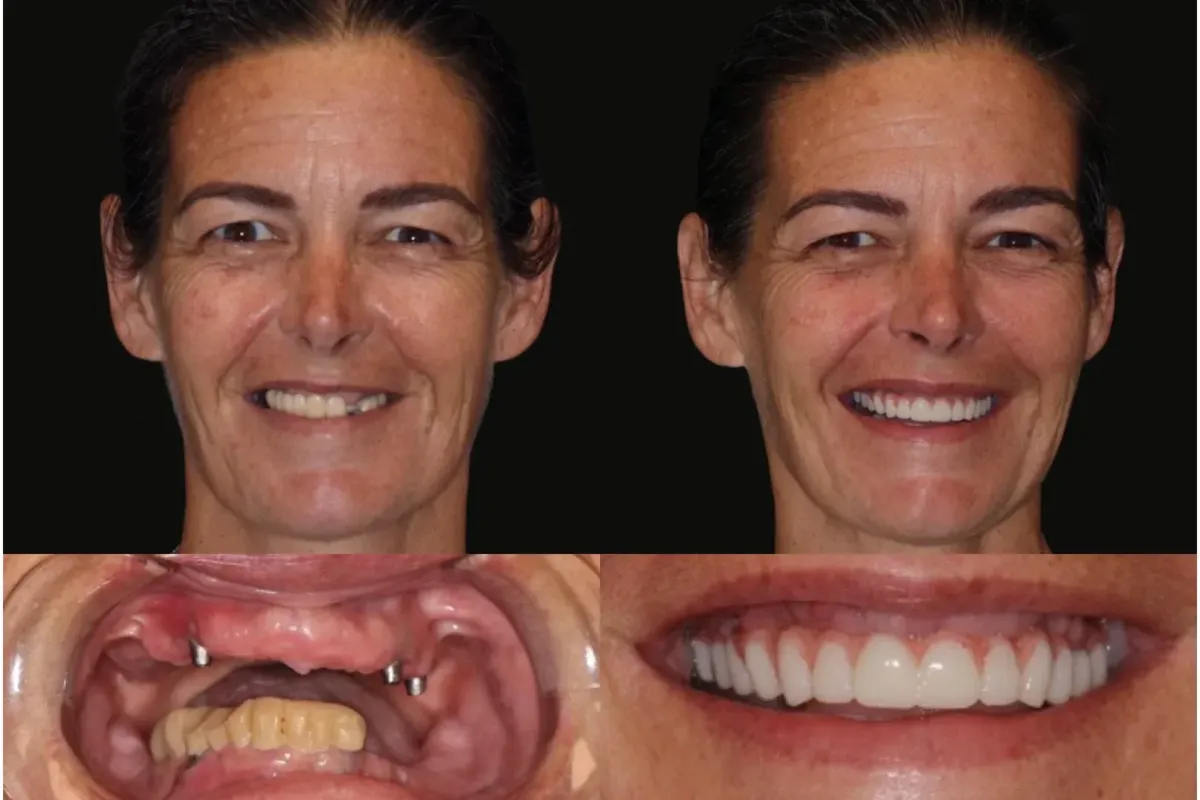
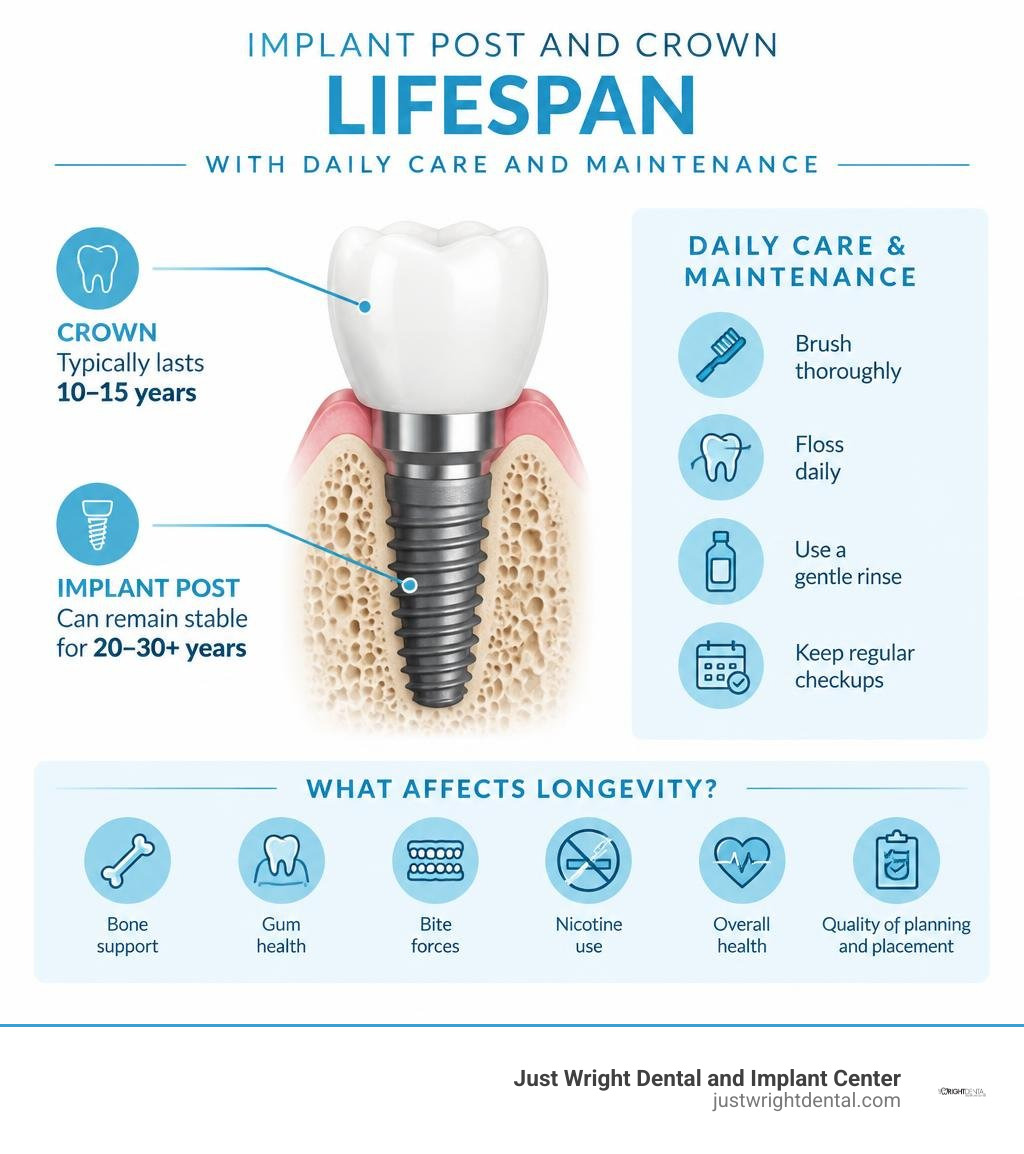
Dental implants can often function for 20 to 30 years or longer when the implant is well planned, the surrounding bone and gums stay healthy, and you keep up with daily cleaning and professional maintenance. The implant post may remain stable for decades, while the visible crown commonly needs repair or replacement sooner, often after about 10 to 15 years of normal chewing wear.
Think of it like a house foundation and roof: the post is the foundation in the jawbone, and the crown is the part that takes daily wear. Implant longevity depends on your bone support, gum health, bite forces, nicotine use, overall health, and the quality of planning and placement.
I'm Justin Wright, DDS, and I've spent more than 18 years placing and restoring dental implants, including more than 10,000 implants and over 1,000 full-mouth implant cases. In this guide, I'll explain what affects implant longevity and what you can do to protect your health investment over time.
When you look into dental implants, you want to know whether you're choosing a true long-term solution or something that will require constant attention. A dental implant functions much like a natural tooth root. Because it fuses directly with your living jawbone, it provides solid biomechanical support for everyday biting and chewing.
How long your implant stays strong depends on distinct structural components, your oral hygiene habits, and regular clinical evaluations. Let's look at the individual parts that make up your restoration.
Post vs Crown: Understanding Implant Longevity by Component
You might assume that if an implant runs into trouble, the entire assembly needs replacement. In reality, a dental implant consists of three separate pieces: the titanium implant post anchored in the bone, the abutment connector, and the prosthetic crown or bridge on top.
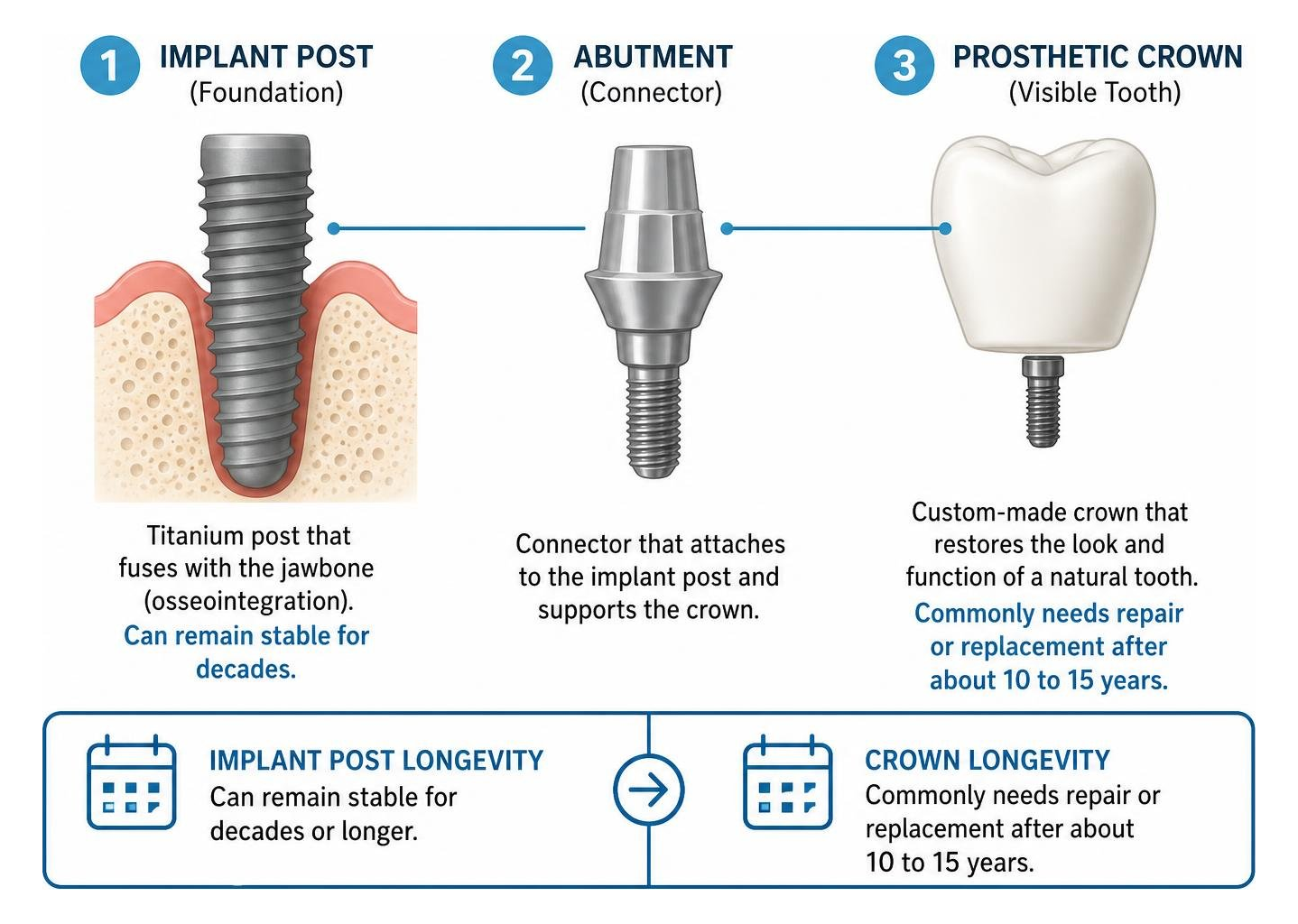
The post is made of biocompatible medical-grade titanium or zirconia. Once osseointegration occurs—meaning your living bone cells attach directly to the microscopic texture of the post—that foundation becomes a stable part of your jaw. The post itself can remain stable for decades without needing adjustment.
The crown, however, absorbs continuous chewing friction, grinding forces, and temperature shifts. Just like tires on a well-built truck, the prosthetic crown experiences physical wear. You may find that the ceramic or zirconia restoration needs polishing, screw tightening, or replacement after 10 to 15 years, even while the post underneath remains rock solid in your jaw.
20-Year Longevity: Implants and Other Tooth-Replacement Options
When deciding how to replace missing teeth, you want to know how implants compare to conventional dental bridges or removable partial and full dentures. The difference lies in how each option interacts with your jawbone and surrounding teeth.
According to a comprehensive 20-year meta-analysis on dental implant survival by P.种植 researchers published in Clinical Oral Investigations (2024), dental implants demonstrate strong long-term durability over two decades of clinical follow-up. While conventional bridges often rely on grinding down healthy neighboring teeth and removable dentures sit on top of the gums, dental implants stimulate the jawbone directly to help prevent bone resorption.
Tooth Replacement Option | Expected Restoration Lifespan | Impact on Surrounding Natural Teeth | Jawbone Preservation |
|---|---|---|---|
Dental Implant Post | Decades to a lifetime with healthy tissues | None; preserves adjacent tooth structure | Stimulates and maintains native bone density |
Implant Crown / Bridge | Often 10 to 15+ years before maintenance | None | Maintained by underlying implant post |
Traditional Fixed Bridge | Often 5 to 15 years before replacement | Requires reshaping adjacent natural enamel | Bone beneath the missing tooth slowly recedes |
Removable Dentures | Often 5 to 8 years before reline or remake | Clasp wear on anchor teeth; gum pressure | Accelerated ridge resorption under daily pressure |
What Factors Influence Dental Implant Longevity?
You might wonder why some implants stay healthy for thirty years while others experience issues much sooner. The answer comes down to biological support, clinical accuracy, and how you care for your smile each day.

Long-term stability requires enough healthy bone, precise surgical planning, sound prosthetic design, and balanced bite forces. If any of these elements is compromised, the implant experiences unnecessary stress.
At Just Wright Dental and Implant Center, we use 3D cone beam computed tomography (CBCT) imaging and digital facial scanning to plan the exact depth, angle, and diameter of every implant before treatment begins. When we design and mill restorations in our in-house lab using our 12 CAD/CAM mills and 4 3D printers, we can evaluate and adjust the fit immediately rather than sending files off to a third-party lab for weeks.
How Do Bone Density and Osseointegration Affect Implant Longevity?
If you've been told you have thin bone, you might worry that an implant simply won't hold. Bone density and volume are critical because they provide primary mechanical stability on day one and allow osseointegration to take place over the following months.
During planning, clinicians follow anatomical guidelines such as the 3/2 rule, which involves maintaining roughly 3 mm of bone on the facial aspect and at least 2 mm of healthy space between adjacent implants or natural roots. This spacing preserves vascular blood supply to the bone and gum tissue.
If you've experienced bone loss from missing teeth or gum disease, you can read our guide on how to fix jaw bone loss to understand how we rebuild volume. When bone volume is limited, a patient may ask, "do I need bone graft for implant stability?" In many cases, targeted grafting or using remote-anchorage sites can provide the strong structural foundation needed for lasting function.
How Do Medical Conditions, Smoking, and Systemic Health Affect Longevity?
Your body's ability to heal and fight off bacteria plays a major role in how long an implant stays healthy. Systemic conditions that alter blood flow or immune response can change how bone integrates around titanium.
In a long-term cohort study of 10,871 dental implants published in Clinical Implant Dentistry and Related Research, researchers tracked implant outcomes over 22 years and identified cigarette smoking and unmanaged diabetes mellitus as key factors that influence healing and long-term tissue stability. Nicotine constricts microvascular blood vessels in the gums, limiting oxygen and nutrient delivery to healing bone.
Unmanaged blood sugar levels can also impair immune defense against oral bacteria. If you take medications for osteoporosis, such as antiresorptive bisphosphonates, or manage an autoimmune condition, we coordinate closely with your physician to create a treatment plan tailored to your health profile.
Why Do Dental Implants Fail and How Can You Prevent It?
You might worry that an implant could fail without warning years down the road. The reality is that implant complications develop gradually, and almost all of them give early warning signs that can be managed if caught early.
True implant complications generally fall into two categories: biological infections that affect the bone and gum, or mechanical stresses that overload the components. Recognizing these challenges early lets us protect your investment.
How Can Peri-Implantitis and Progressive Bone Loss Affect an Implant?
If you notice bleeding when brushing around an implant, you might be seeing the first signs of peri-implant mucositis, an early surface inflammation of the gums. If bacteria linger, that inflammation can progress to peri-implantitis, where plaque biofilms cause the bone supporting the implant post to recede.
Understanding what causes bone loss around dental implants is essential for prevention. When patients ask can you get dental implants if you have periodontal disease, the answer is yes, provided active gum infections are treated and eliminated first.
Routine cleanings, specialized non-metal hygiene instruments, and daily plaque removal keep harmful bacteria from gathering at the gumline.
How Do Structural Problems, Bruxism, and Surgical Errors Affect Durability?
If an implant feels loose or clicks when you bite down, the issue is often mechanical rather than a failure of the bone. Heavy clenching or nighttime teeth grinding (bruxism) exerts severe lateral force on implant screws and porcelain crowns.

Without a custom nightguard to absorb those forces, screws can loosen or ceramic can chip over time. In rare cases, improper initial angulation or poor prosthetic fit causes uneven stress distribution.
Our guide on recognizing botched dental implants details what happens when implants are placed without 3D guided technology. When components loosen, prompt evaluation allows us to retorque or replace the prosthetic screw before deeper structural damage occurs.
How Does Implant Design and Placement Strategy Impact Durability?
You might wonder whether the specific style of implant or the surgical approach makes a meaningful difference in how long your new teeth last. The choice of implant fixture, connection type, and placement technique directly influences how chewing forces travel into your jaw.
Using computerized planning, we select implant dimensions and thread profiles matched to your unique bone density.

How Do Endosteal and Remote-Anchorage Implants Support Durability?
Standard endosteal implants are root-shaped titanium cylinders placed directly into the alveolar jawbone ridge. They remain the gold standard for single-tooth and multi-tooth restorations when bone height and width are plentiful.
For patients who have experienced severe bone resorption and have been told elsewhere that they have "no bone" for implants, remote-anchorage options offer a stable alternative. By placing specialized implants into denser structural bone beyond standard jaw sites—such as the zygomatic arch (cheekbone) or pterygoid plates—we can achieve firm stability without requiring extensive, multi-stage bone grafting.
How Can Full-Arch and All-on-X Planning Maximize Implant Longevity?
If you need to replace an entire arch of missing or failing teeth, you want reassurance that a full bridge can handle daily eating without shifting or cracking. Full-arch strategies distribute chewing pressure across strategically tilted implants, reducing strain on any single point in the jaw.
Our All On X protocols, refined All-on-Four dentures, and same day full arch restorations rely on high-strength monolithic zirconia. Because we mill these complete bridges in our in-house lab, we calibrate the bite to match your exact jaw joint movements, protecting both the implants and the prosthetic teeth from premature wear.

How Can You Protect Your Investment and Prolong Implant Life?
You want straightforward, actionable steps you can take at home to keep your implants clean, functional, and trouble-free for the long haul. Protecting your implants does not require complex routines, but it does require daily consistency.
Because dental implants attach to the gum tissue through a delicate seal rather than the periodontal ligament found around natural teeth, maintaining clean gum margins is essential.
What Daily Oral Hygiene and Preventive Maintenance Do Implants Need?
Caring for implants is straightforward once you have the right tools in your bathroom. Because implant surfaces and restorative materials differ from natural enamel, your daily routine should focus on gentle, thorough plaque removal around the gumline.
Soft-Bristled or Sonic Toothbrush: Clean along the gum margins twice a day using gentle circular motions.
Low-Abrasive Toothpaste: Avoid abrasive whitening pastes that contain baking soda or gritty silicas that could scratch ceramic or titanium surfaces.
Water Flosser: Use an oral irrigator on a medium setting to flush out food particles and biofilm beneath full-arch bridges and around individual crowns.
Implant-Specific Floss or Interdental Brushes: Use plastic-coated interdental brushes or spongy implant floss to clean the sides of the abutment without scratching the metal.
Custom Occlusal Nightguard: If you clench or grind your teeth while sleeping, wear a protective nightguard to buffer heavy bite forces.
Routine Professional Cleanings: Visit our office every six months so our hygienists can evaluate bone stability with digital imaging and clean around restorations using implant-safe instruments.
What Are the Early Signs of Implant Complications?
You should know what changes warrant a quick check-in at our office so small adjustments can prevent bigger issues. An implant restoration should feel just as comfortable, solid, and quiet as a healthy natural tooth.
Reviewing dental implant rejection signs helps you distinguish normal post-treatment healing from signs of tissue inflammation. If you notice any of the following symptoms, schedule an evaluation:
Redness, puffy swelling, or bleeding along the gumline when brushing
A feeling of looseness, shifting, or clicking when chewing
Persistent dull soreness or throbbing deep in the jaw
A bad taste or noticeable discharge near the implant base
Receding gum tissue that exposes the metal collar of the implant post
Frequently Asked Questions About Implant Longevity
Can a dental implant really last a lifetime?
The titanium implant post can remain functional for decades, and many patients keep their original implants for the rest of their lives. However, no medical treatment carries an unconditional guarantee. Long-term durability depends on keeping your gums free of infection, maintaining bone support, managing systemic health conditions, and wearing a nightguard if you clench your teeth.
How often will an implant crown need replacement?
Implant crowns and full-arch bridges often last between 10 and 15 years before normal chewing friction, material fatigue, or minor chipping requires repair or replacement. In contrast, the underlying titanium post integrated into your jawbone typically remains undisturbed when a crown is refreshed.
What is the 3/2 rule for implant placement?
The 3/2 rule is a surgical guideline used during 3D treatment planning to protect blood supply and bone volume. It calls for maintaining approximately 3 mm of healthy bone on the outer (facial) wall of the implant and roughly 2 mm of space between the implant and neighboring teeth or adjacent implants.
How long does bone integration take after surgery?
Initial soft-tissue healing around the gumline takes about one to two weeks, while true osseointegration—where bone cells lock securely into the implant surface—typically takes three to six months. We assess your bone density using digital scans before attaching the final, permanent restoration.
What are the earliest symptoms of peri-implant disease?
The earliest indicator of trouble is bleeding during brushing or flossing, accompanied by mild redness and tenderness in the surrounding gum tissue. Catching inflammation at this early stage allows us to eliminate bacterial buildup before it causes bone loss around the implant post.
Conclusion
Making a lasting health investment in your smile comes down to precise digital planning, healthy bone and gum support, custom-milled restorations, and consistent daily care. With modern 3D imaging, in-house CAD/CAM milling, and attentive maintenance, dental implants remain one of the most reliable, durable tooth-replacement options available today.
If you have questions about your implant options or want a personalized evaluation of your bone health, I invite you to take the next step.
Text or call our Smile Transformation Coordinator at 903-602-3439, or call our office at 903-872-8422 to schedule a smile assessment. Let's talk about what's right for your smile.
Author Bio

Dr. Justin Wright, DDS is the founder and clinical director of Just Wright Dental and Implant Center in Corsicana, Texas. With more than 18 years of clinical experience, Dr. Wright has placed over 10,000 dental implants and completed more than 1,000 full-mouth reconstructions. He utilizes an advanced, 100% in-house digital workflow featuring 3D CBCT guided surgery, face-driven digital smile design, 12 CAD/CAM mills, and 4 3D printers to deliver precise, long-lasting implant restorations for patients across Texas and the United States.