A Quick Start Guide to Full-Arch Dental Implants: Costs & Options
Full-Arch Dental Implants: What Shapes Your Options and Cost?
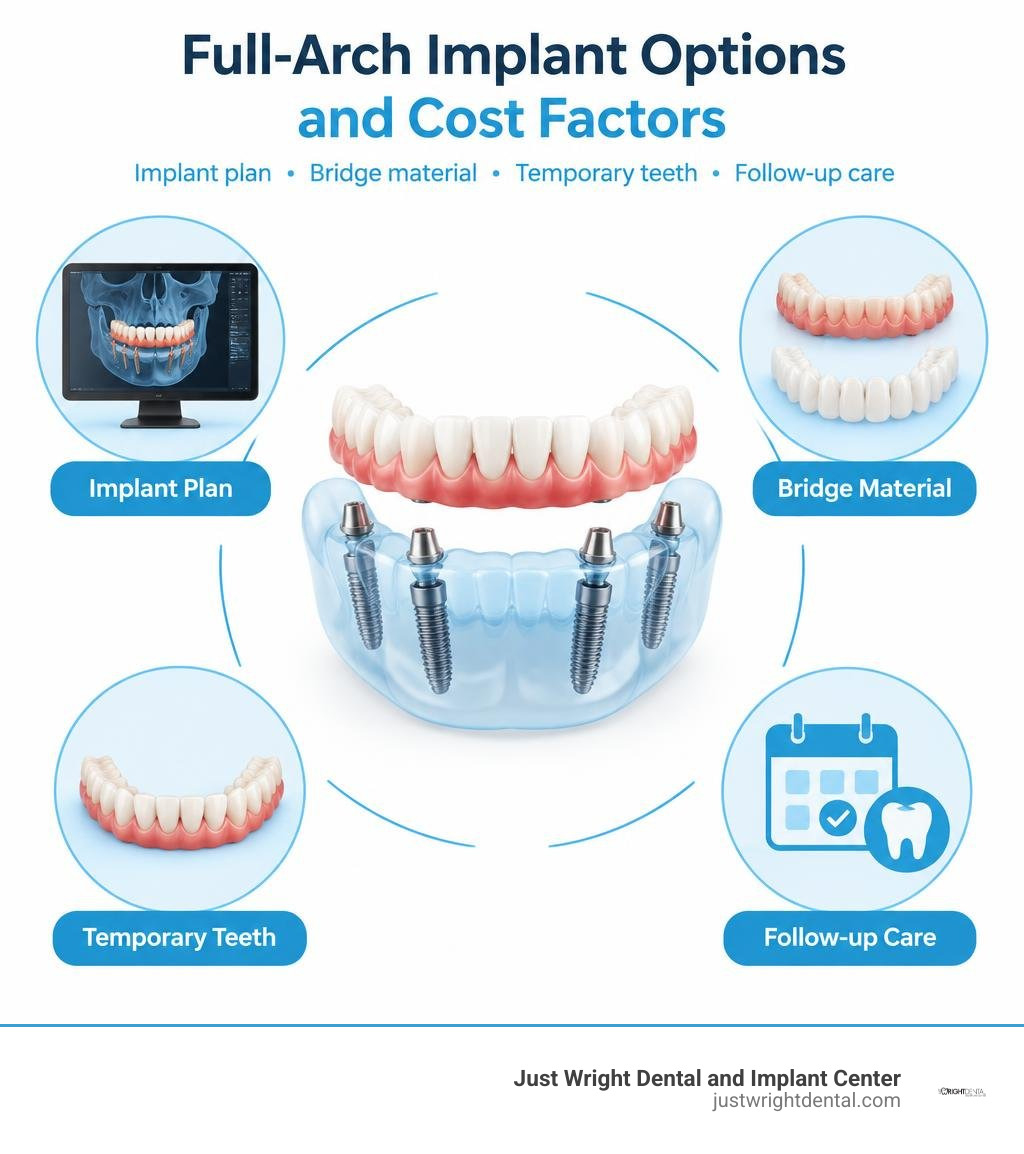
Full-Arch Dental Implants replace a full row of teeth with a bridge supported by implants in your jaw. Your options may include an acrylic hybrid or zirconia bridge. The right plan, and your overall investment, depend on your bone, the implants you need, your bridge material, and whether temporary teeth can be placed on surgery day.
When you compare plans, ask what’s included: 3D scans, surgery, temporary teeth, the final bridge, and follow-up care. At our Corsicana office, we design your smile around your face and make your teeth in-house.

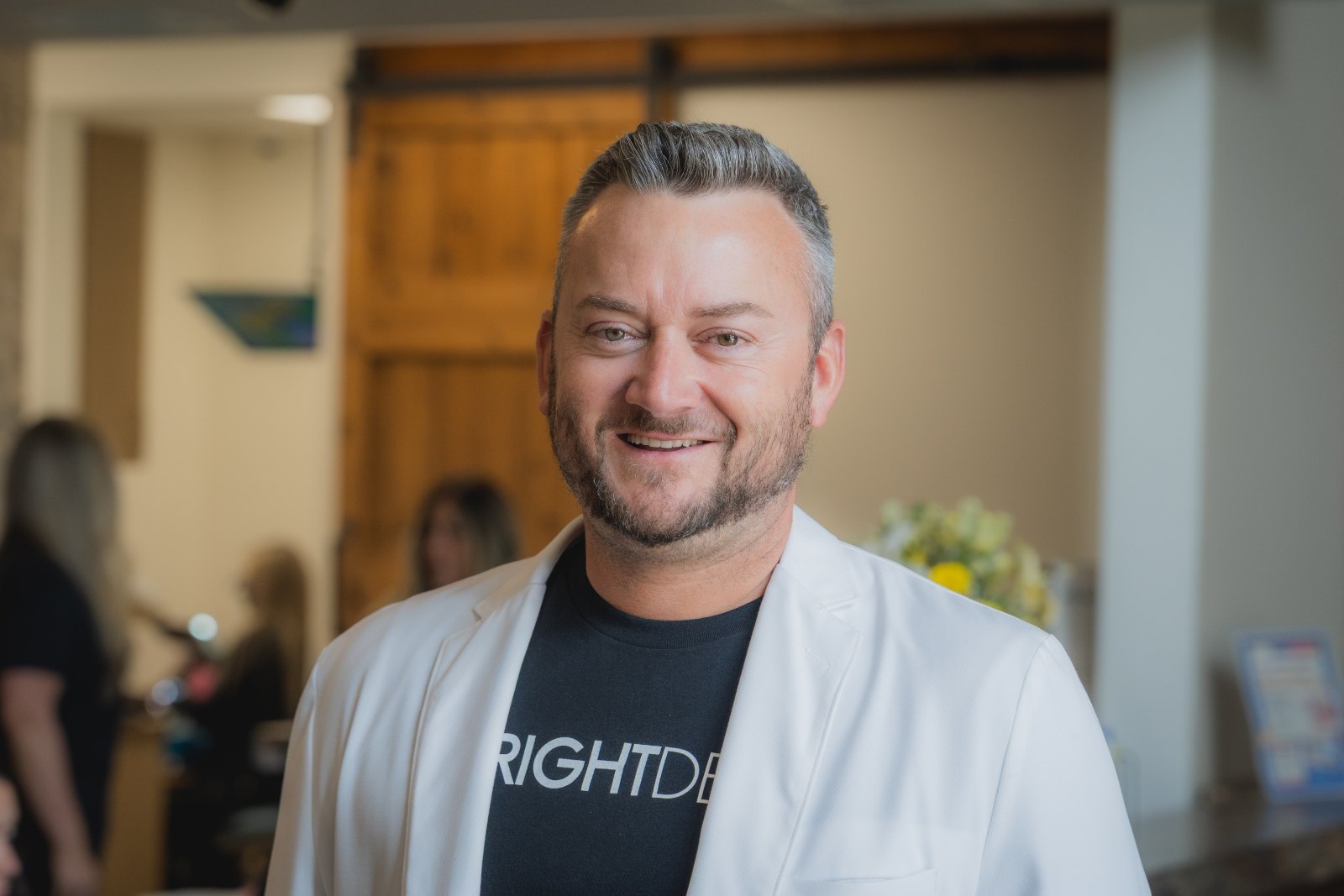
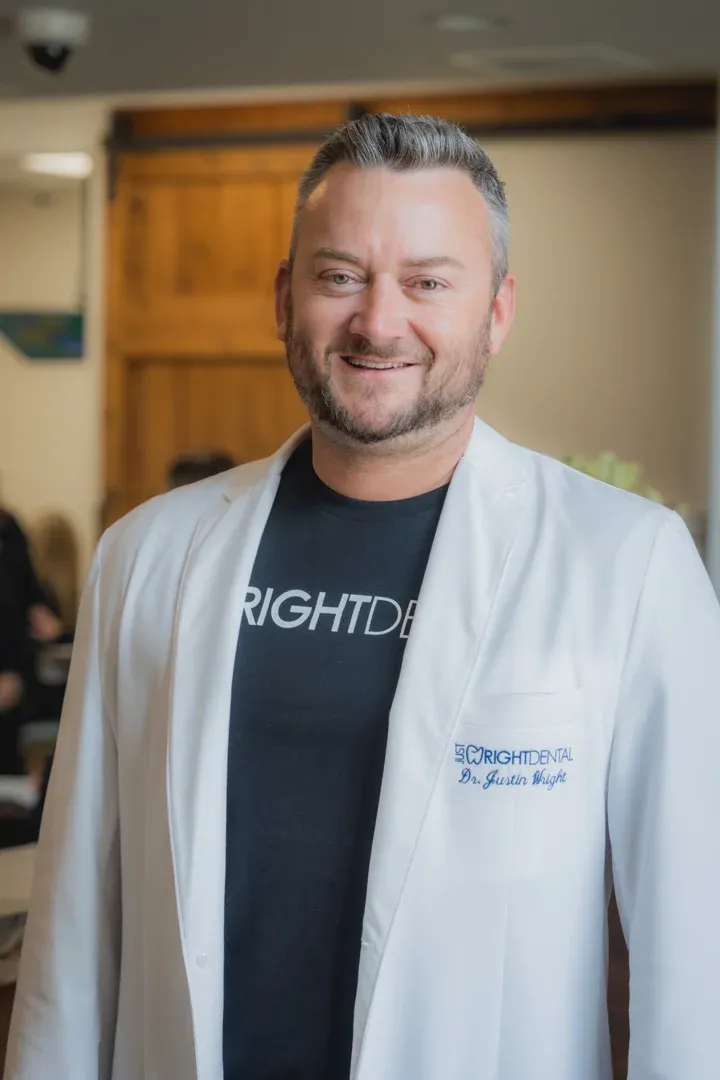
I’m Justin Wright, DDS. I’ve spent years placing implants and rebuilding full smiles, including for people with severe bone loss, and I’ll help you weigh Full-Arch Dental Implants against your needs.
What Are Full-Arch Dental Implants and How Do They Work?
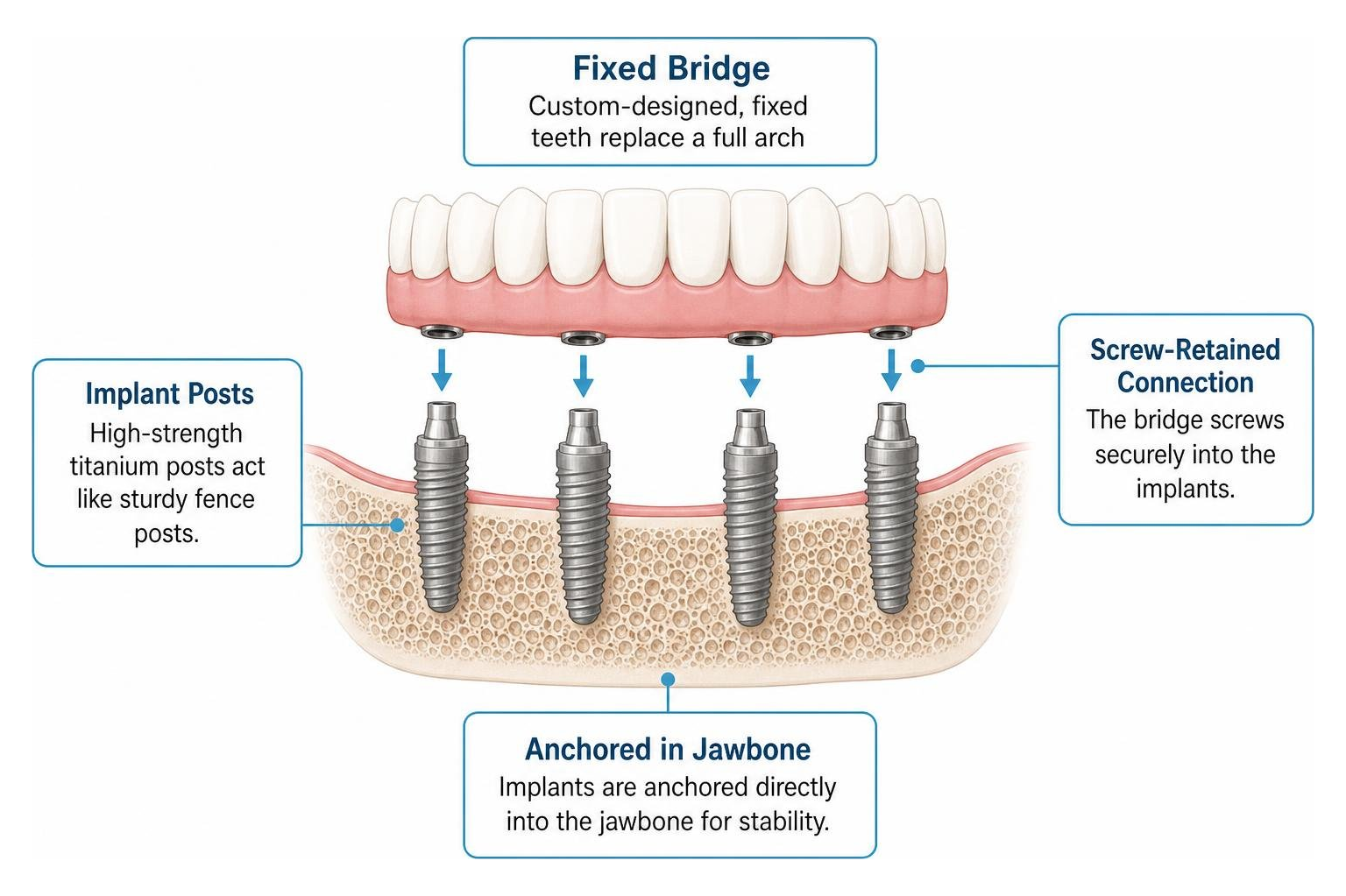
Full-arch restorations replace an entire upper or lower row of missing or failing teeth using strategically placed titanium implants anchored directly into the jawbone. Instead of placing a single post for every individual tooth, a full-arch system uses several high-strength posts that act like sturdy fence posts supporting a custom-designed, fixed bridge (Siadat et al., 2018).
When complete edentulism (total tooth loss) or severe dental breakdown happens, loose, ill-fitting removable options often slip, pinch, and restrict what you can eat. Full-arch dental implants eliminate those issues by anchoring your new teeth securely to your jaw. This restores strong bite force, helps preserve your facial structure, and lets you speak and laugh naturally without worrying about a loose appliance.
How Do Different Fixed Full-Arch Implant Restorations Compare?
Fixed full-arch restorations generally come down to two primary bridge materials: acrylic hybrid bridges reinforced with a metal framework, and monolithic zirconia bridges. Both options screw securely into the underlying implants, leaving the roof of your mouth completely uncovered for a palate-free, natural feel.
Feature | Acrylic Hybrid Bridge | Monolithic Zirconia Bridge |
|---|---|---|
Primary Material | PMMA acrylic with titanium bar | Solid, high-strength zirconia ceramic |
Palate Coverage | Completely palate-free | Completely palate-free |
Wear Resistance | Moderate; may show resin wear over time | Exceptional; highly resistant to chipping |
Stain Resistance | Good; requires careful cleaning | Superior; non-porous ceramic surface |
Maintenance Profile | Teeth can be repaired or replaced on the bar | Monolithic build requires rare, specialized adjustments |
Monolithic zirconia has become a gold standard in modern reconstructive dentistry because it doesn't chip easily and resists stains far better than traditional acrylic resins. Acrylic hybrids remain a viable choice in specific scenarios, but zirconia provides exceptional durability and lifelike translucency that mimics natural enamel.
How Many Implants Are Used in Full-Arch Dental Implants?
A full-arch restoration typically relies on four to six implants per jaw, a concept widely known as All On X or All-on-Four Dentures. In a standard configuration, two straight (axial) implants go into the front of the jaw where bone is naturally thicker, while two posterior implants are tilted at angles up to 45 degrees.
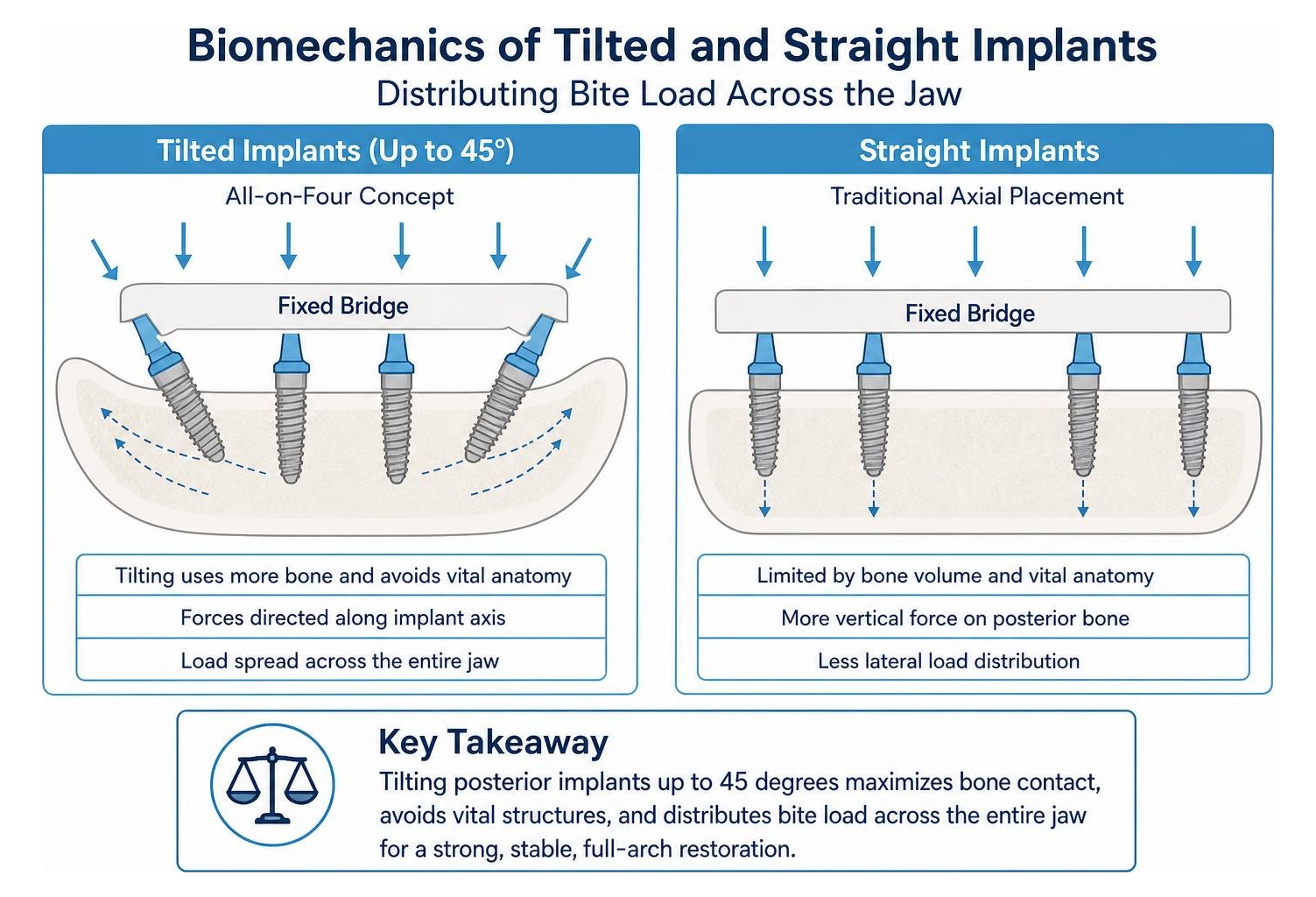
These tilted implants maximize contact with available bone and avoid vital anatomy like the sinus cavities or nerve canals. Special connectors called multi-unit abutments attach to the top of each implant, leveling the connection points so that your fixed bridge sits evenly and distributes chewing forces across your entire jaw.
What Determines the Cost and Treatment Options for Full-Arch Dental Implants?
Your overall financial investment for full-arch therapy depends on the materials you choose, your underlying bone volume, and whether specialized surgical preparation is needed. Custom monolithic zirconia milled in an advanced lab naturally involves a different investment level than standard acrylic hybrids, but it delivers greater long-term durability.
Other factors that shape your treatment plan include whether you need preparatory procedures. While tilting implants helps many patients avoid extra surgery, some individuals explore whether they need bone graft for implant support or require remote-anchorage fixtures. Medical and dental insurance sometimes cover implants or related reconstructive steps, such as removing chronic infection, reconstructing jaw defects, or managing functional trauma.
What Steps Are Involved in the Full-Arch Dental Implants Procedure?
The full-arch process begins with high-resolution 3D CBCT imaging and facial scanning to map your nerve pathways, jaw density, and facial proportions. Using these digital files, I plan the exact depth and angle of every implant before surgery even begins, creating precision surgical navigation templates to guide placement.
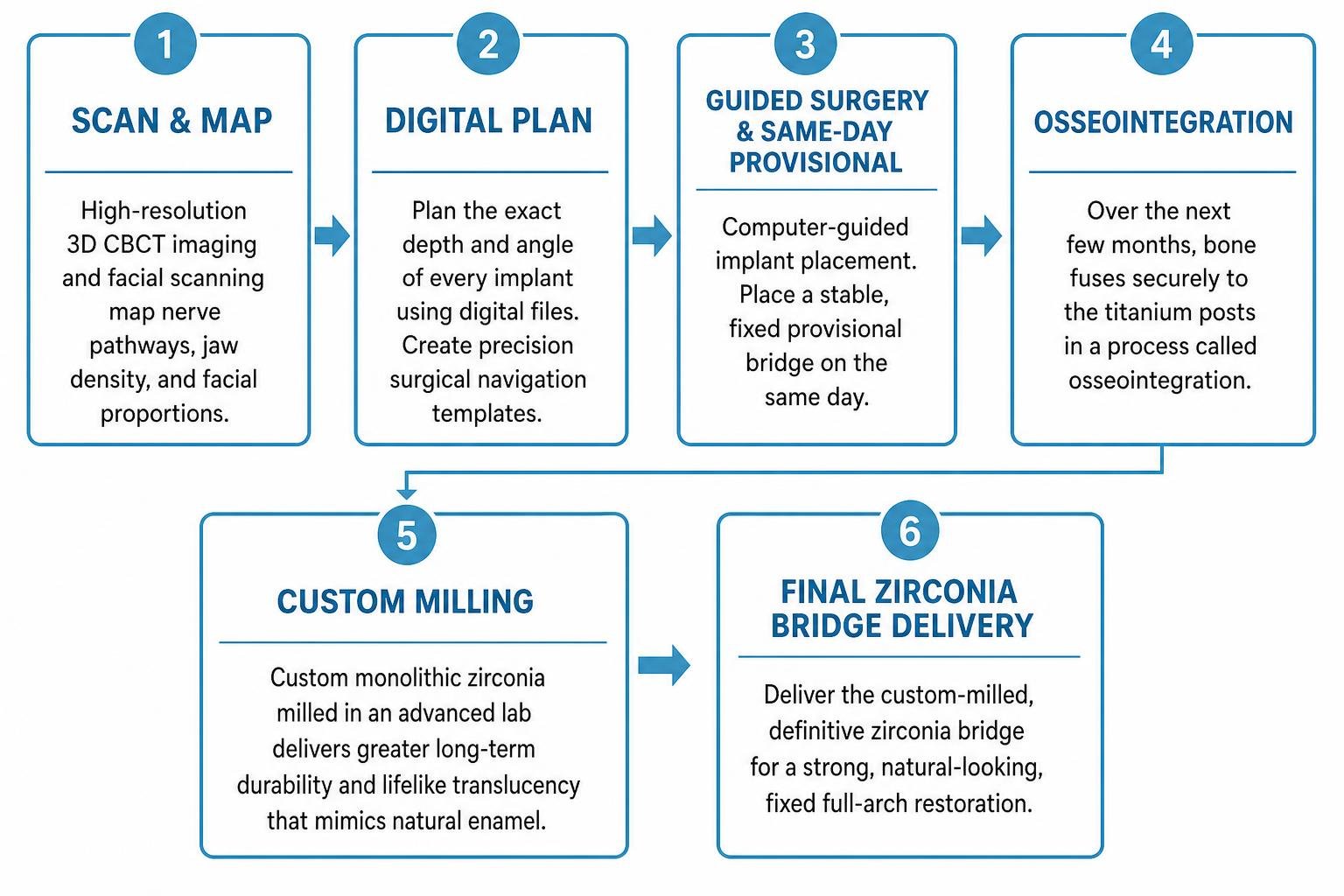
On surgery day, we can often place a stable, fixed provisional bridge through a streamlined Same-Day Full Arch protocol. In a 12-year clinical study on guided full-arch immediate function, researchers documented that computer-guided placement provides reliable stability while helping patients maintain comfortable function during the healing phase. Over the next few months, your bone fuses securely to the titanium posts in a process called osseointegration, after which we deliver your custom-milled, definitive bridge.
Who Is a Good Candidate for Full-Arch Restoration?
An ideal candidate for full-arch implants is someone struggling with failing teeth, widespread decay, severe gum disease, or an uncomfortable removable appliance. Even if you've been dealing with advanced periodontal issues, you can learn more about how we evaluate options when you have periodontal disease by treating active infections before placing new foundations.
Patients who've experienced severe bone resorption are also frequently candidates. In our bone loss dental implants guide, we explain how remote-anchorage implants (zygomatic, pterygoid, transsinus, and transnasal) anchor into dense cheekbone or upper cranial structures. This allows us to help individuals who were told elsewhere that they had "no bone" left for implants. While uncontrolled systemic health conditions and heavy smoking require careful management, most adults in reasonable health can move forward safely.
How Do You Maintain Longevity and Prevent Complications?
Maintaining your new smile requires good daily hygiene and routine professional cleanings to protect the gum tissue surrounding your multi-unit abutments. Using a water flosser, specialized interdental brushes, and non-abrasive mouth rinses prevents bacterial buildup and helps maintain overall implant longevity.
Watching for early dental implant rejection signs or learning what causes bone loss around dental implants—such as peri-implant inflammation or untreated teeth grinding—lets us address minor concerns before they grow. Wearing a custom nightguard protects your bridge from heavy bite forces, and working with experienced surgical teams helps you avoid the pitfalls of poorly placed dental implants.
Frequently Asked Questions About Full-Arch Restorations
Can full-arch implants be placed if I have severe bone loss?
Yes, full-arch restorations are often possible even with extensive bone loss. By utilizing angled implants or remote-anchorage implants placed into denser zygomatic or pterygoid bone, we can provide stable anchors without needing massive bone graft procedures.
How long does recovery take after full-arch surgery?
Most patients manage initial soft-tissue tenderness within a few days using mild pain relief and ice packs. While you'll follow a modified soft-food diet for a few months while the implants fuse with your bone, you can usually return to light daily activities within two to three days.
Does dental or medical insurance cover full-arch restorations?
Dental and medical insurance plans sometimes cover portions of full-arch treatment or related surgical procedures. Benefits may apply toward diagnostic 3D imaging, surgical extractions, bone repair, or treatment related to underlying functional deficiencies and trauma.
Can I take my full-arch bridge out at night?
No, a fixed full-arch bridge is secured firmly to your implants using specialized screws and can only be removed by your dentist during maintenance visits. This gives you the feeling, security, and function of natural, permanent teeth.
Transforming Your Smile with Lasting Full-Arch Solutions
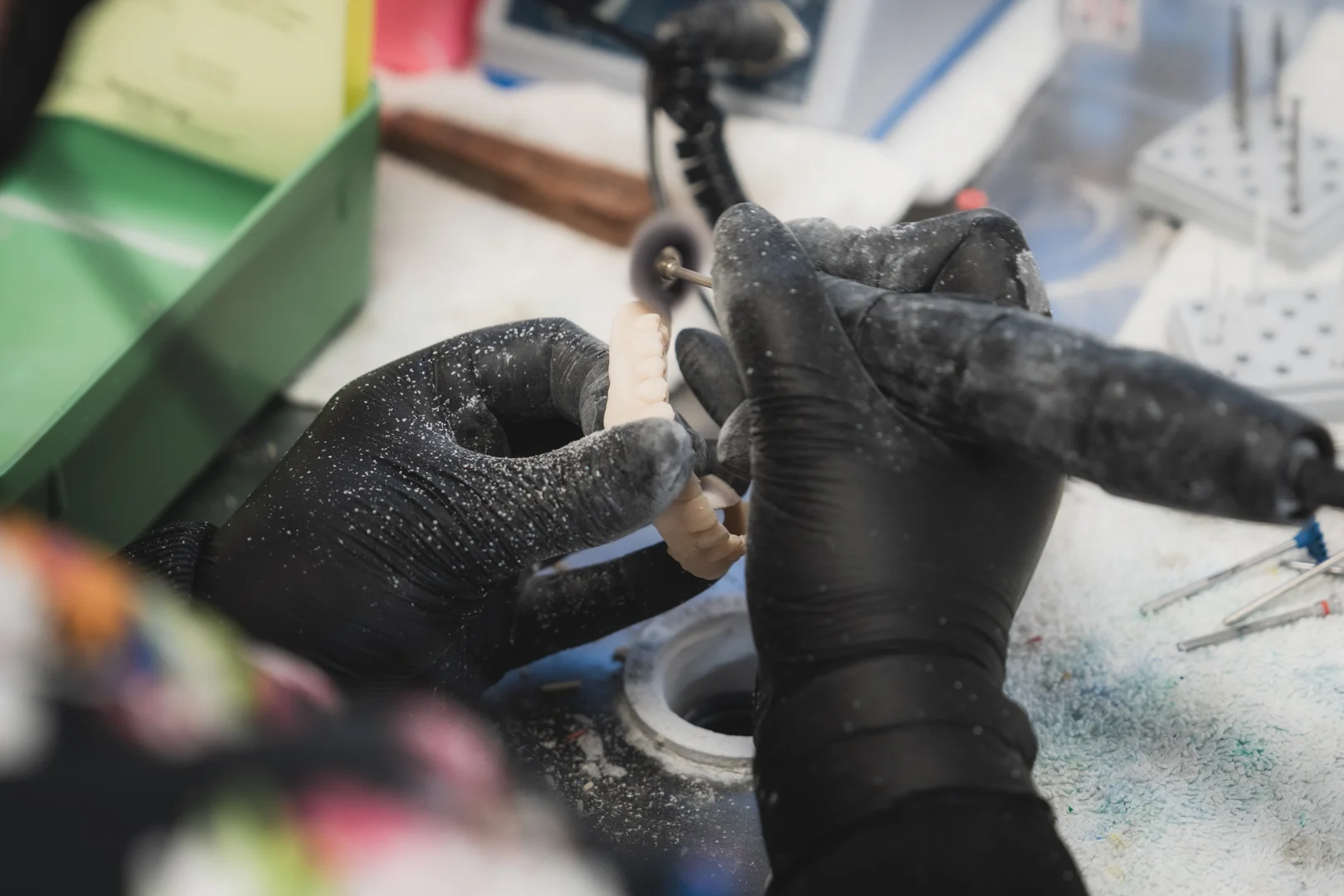
At Just Wright Dental and Implant Center in Corsicana, Texas, we believe rebuilding your smile should be an uplifting, judgment-free experience. We design every restoration directly from your natural facial scans using our in-house 3D printers and precision CAD/CAM milling machines, giving you custom-crafted teeth without relying on outside commercial labs.
If you're visiting us from Navarro County, Waxahachie, or Ennis, or traveling in from across the country, we're here to give you personalized, concierge care under one roof at our Corsicana office. Take a look at our Smile Transformations gallery to see real patient results, Book an Appointment today, or BOOK YOUR FREE SMILE ASSESSMENT to begin your path toward a complete, confident smile.
Text or call our Smile Transformation Coordinator at 903-602-3439, or call our office at 903-872-8422.
About Dr. Justin Wright
Dr. Justin Wright, DDS is the founder and clinical director of Just Wright Dental and Implant Center in Corsicana, Texas. With 18+ years in practice, more than 10,000 implants placed, more than 1,000 full-mouth implant cases completed, and over 1,000 five-star Google reviews, he specializes in advanced full-arch rehabilitation, complex bone-loss restorations, and custom in-house digital smile design.
Siadat H, Rokn A, Beyabanaki E. "Full Arch All-on-4 Fixed Implant-Supported Prostheses with 8.5 Years of Follow-Up: A Case Report.." Journal of dentistry (Tehran, Iran), 2018. PMCID PMC6218463.