What Causes Bone Loss Around Dental Implants?
The Main Reasons Bone Loss Happens Around Dental Implants
If you’ve been told there’s bone loss around an implant, you’re probably wondering whether the implant can still be saved. I’ll tell you plainly: the cause is often treatable when we find it early, but waiting can allow a small problem to take away more support.
The most common cause is peri-implantitis, which is inflammation and infection caused by plaque collecting around the implant. I also look for bite pressure, an implant or crown that’s hard to clean, smoking, diabetes that isn’t well controlled, thin starting bone, or healing problems.
Some remodeling can happen while your jaw adjusts after implant placement. But ongoing bone loss is different, and I’d rather you hear that from me now than find it out later, because an exam can show whether the implant is stable or needs treatment.
Here’s what I look for first:
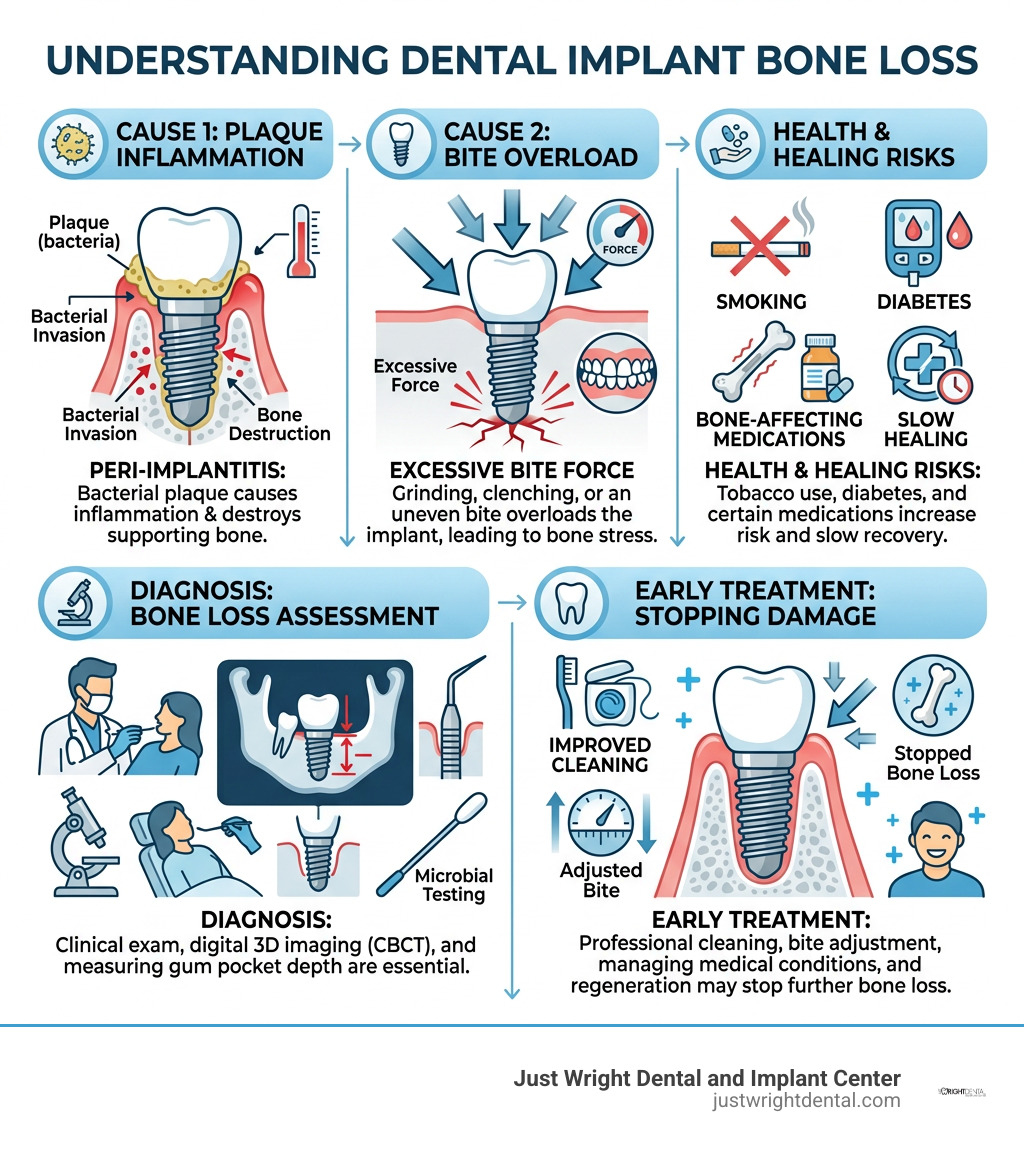
Peri-implantitis: Plaque below the gumline can inflame the tissues and break down the bone holding the implant.
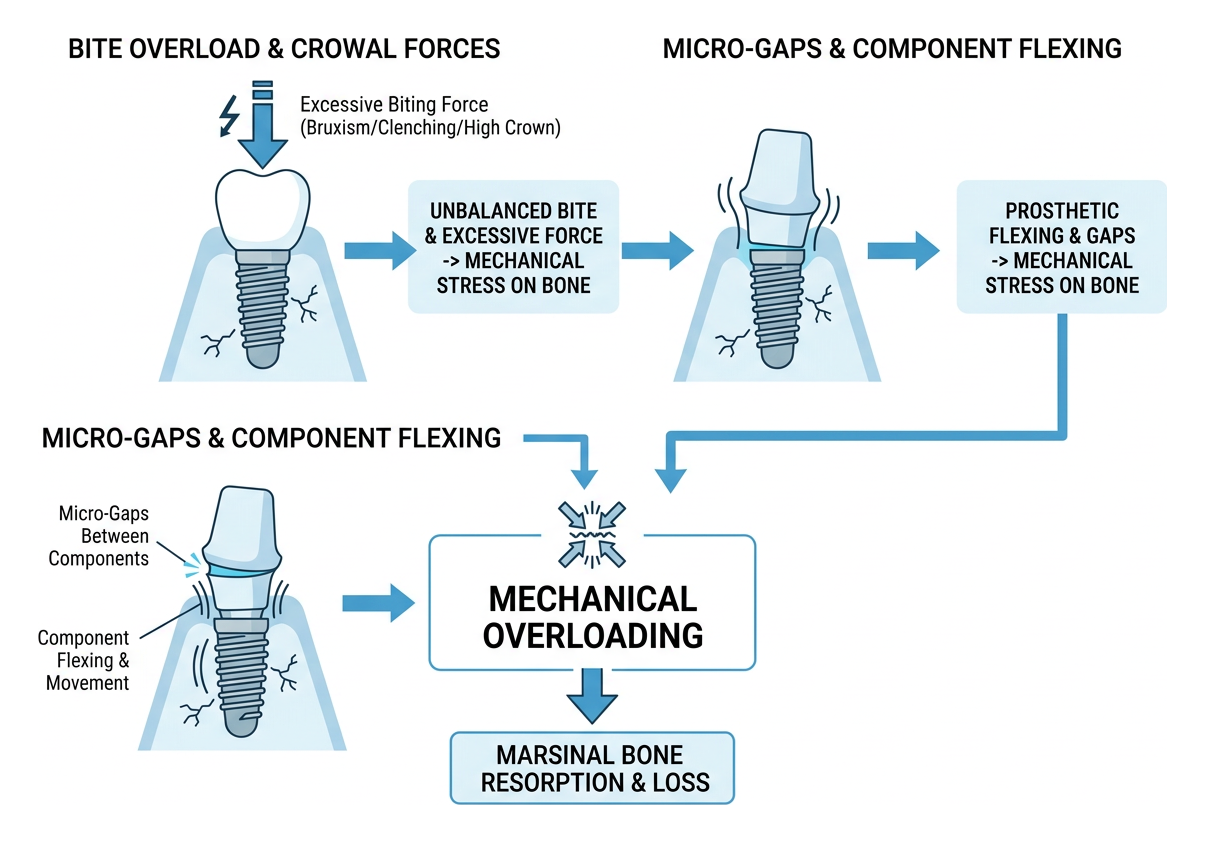
Too much force: Clenching, grinding, or an uneven bite can overload an implant like a fence post taking pressure from the wrong direction.
Placement or crown problems: Exposed threads, leftover cement, poor crown contours, or a difficult-to-clean position can trap bacteria or add strain.
Health and healing factors: Tobacco use, uncontrolled diabetes, some bone-affecting medications, and low bone density can make healing harder.
Material-related irritation: Tiny titanium particles or corrosion may add to inflammation, especially alongside plaque and heavy bite pressure.
I’ve placed more than 10,000 implants over 18 years, and I’ve also helped rebuild implant work that went wrong elsewhere. In the sections ahead, I’ll show you how I sort out the cause, measure the bone change, and talk through the treatment that fits what’s actually happening around your implant.
What Causes Bone Loss Around Dental Implants?
If the bone around your implant is shrinking, you want a straight answer—not a textbook explanation. In my experience, bone loss usually comes from inflammation, too much bite pressure, a design issue that makes cleaning difficult, or several of those problems working together.
Your implant bonds to your jawbone through osseointegration, meaning bone grows tightly against the implant surface. A small amount of early remodeling can happen as the area heals, but continued bone loss is a warning that something is irritating or overloading the support around it.
Here’s what I want to know first: did the bone change start during healing, or did it show up after the implant had been stable for a while? That timing helps me narrow down the likely cause before I recommend treatment.
Factor Category | Early Bone Loss (During Initial Healing) | Late Bone Loss (After Full Integration) |
|---|---|---|
Primary Cause | Heat during placement, poor initial stability, or an implant placed at the wrong depth | Peri-implantitis, heavy bite forces, or a crown or component problem |
Bite & Mechanics | Early loading before the bone has settled around the implant | Grinding, clenching, or a high bite contact left unadjusted |
Tissue Health | Limited bone volume or thin gum tissue from the start | Deep plaque pockets, bleeding gums, or gum recession |
Restoration Design | A temporary tooth that places too much leverage on the implant | A bulky crown or cement trapped below the gums |
Primary Biological Triggers of Peri-Implantitis
If your gums are bleeding or sore around an implant, I’m concerned about peri-implantitis first. It’s an inflammatory condition where bacterial biofilm, the sticky layer of bacteria that builds up around teeth and implants, starts breaking down the soft tissue and bone around the implant.
An implant doesn’t have the same shock-absorbing ligament as a natural tooth, so its seal with the surrounding tissue can be easier to overwhelm. The benefit of catching inflammation early is that we may be able to control it before more bone is lost; the tradeoff is that it takes consistent home care and follow-up visits to keep the area clean.
I watch for redness, tenderness, bleeding with brushing, or a new bad taste around the implant. Early dental implant rejection signs can overlap with other implant problems, so I don’t rely on symptoms alone—I compare them with your exam and imaging.
What Causes Bone Loss Around Dental Implants from Surgical or Mechanical Stress?
If your implant feels sore when you bite or you know you grind your teeth, I look closely at mechanical stress. An implant can take a lot of chewing force, but repeated force in the wrong spot can act like rocking a fence post back and forth in the ground.
Grinding, clenching, or a crown that hits first can put strain directly into the bone around the implant. I also check the implant angle, component fit, and crown shape, because a small design problem can create a larger cleaning or force problem over time.
A nightguard or bite adjustment can reduce overload, and that’s often a simple place to start. But the honest tradeoff is that it won’t remove an existing infection or rebuild lost bone, so I still need to identify every cause before I call the plan complete.
People who come to me for a second opinion often need help recognizing signs of poorly planned implant work, including poor angles or difficult-to-clean restorations. This guide to recognizing botched dental implants explains several warning signs I review during those visits.
Host Factors and Systemic Issues: What Causes Bone Loss Around Dental Implants?
If you’re doing your best with brushing but bone loss is still showing up, I look beyond the implant itself. Your blood sugar, tobacco use, medications, bone health, and immune response can all affect how your body handles inflammation and healing.
Research on immunological foreign-body responses describes how implants exist alongside the body’s immune system rather than outside it. That doesn’t mean your implant is being “rejected,” but it does mean inflammation can become harder to settle when other risk factors are in the mix.
Here are a few factors I review with you:
Uncontrolled diabetes: High blood sugar can slow healing and make gum inflammation harder to control.
Tobacco use: Smoking and vaping can reduce blood flow to the gums and weaken your body’s defense against bacteria.
Medication and bone health: Some medicines and lower bone density may affect bone metabolism, so I review your medical history before planning treatment.
Titanium particles: Microscopic wear particles may add to local irritation in some cases, particularly if plaque and heavy bite forces are also present.
The benefit of finding these factors is that we can build a more complete plan instead of treating only the visible bone loss. The tradeoff is that your medical or lifestyle factors may need attention alongside dental treatment, and I’ll be direct with you about that from the start.
How Do Clinicians Diagnose and Measure Bone Loss Around Dental Implants?
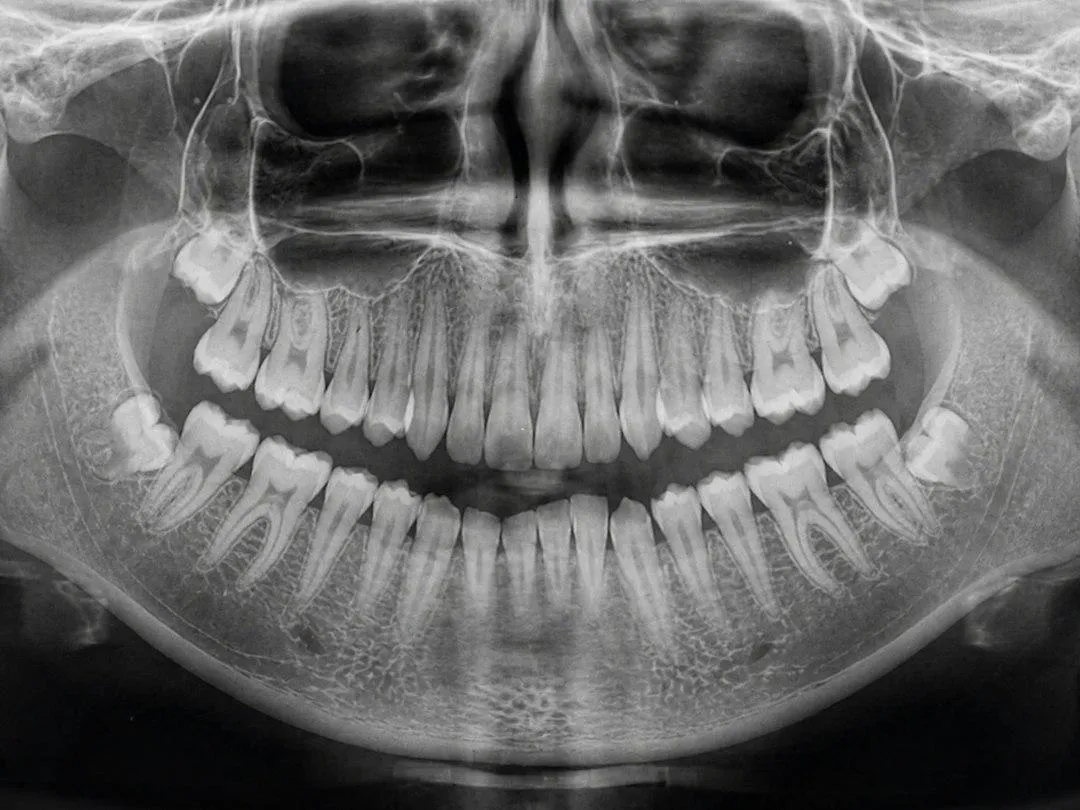
If you’ve been told you have bone loss, you deserve more than a quick look at one x-ray. Here’s what I look for: I compare careful measurements, your symptoms, and 3D imaging so I can tell whether the change is stable, active, or severe enough to threaten the implant.
I use digital periapical x-rays, gentle probing around the implant, and CBCT imaging when I need a three-dimensional view. The benefit of detailed imaging is that it can show bone on sides a regular x-ray may miss; the tradeoff is that I only recommend a CBCT scan when the added detail will change how we plan your care.
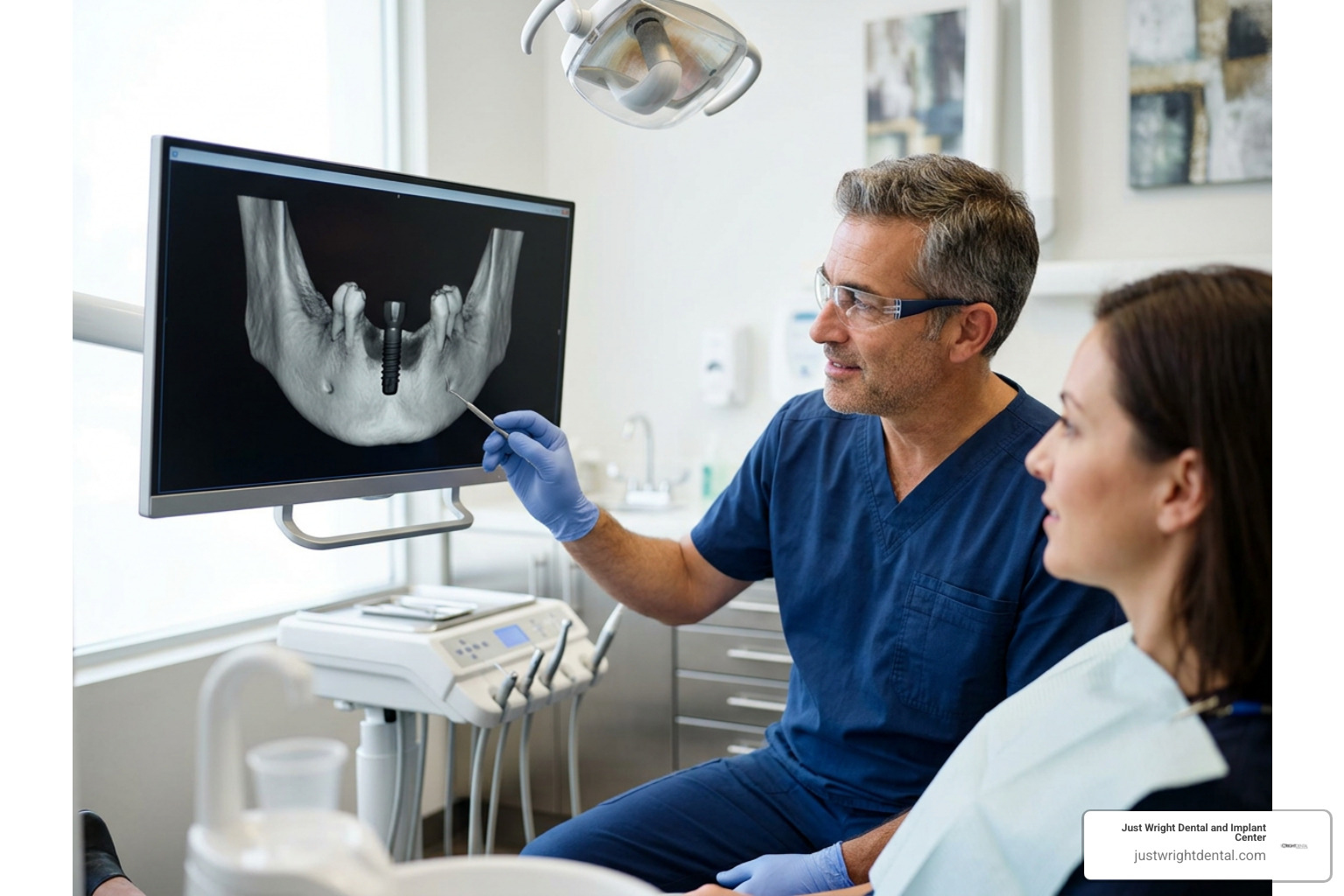
Research on measuring crestal bone loss supports using consistent imaging rather than guessing from appearance alone. I compare your current images with earlier records whenever they’re available, because a single image is a snapshot while a comparison shows the direction of change.
Radiographic Assessment and Baseline Calibration
If you’re worried that one image could be misleading, you’re right to ask how it’s measured. I use the same reference points whenever possible, much like measuring a wall from the same floor line instead of starting from a different spot each time.
3D CBCT scans: These scans show the shape, contour, and amount of bone around all sides of an implant.
Parallel periapical x-rays: These focused images show the implant threads clearly when the sensor and x-ray beam are lined up correctly.
Consistent comparison: Digital calibration helps me separate a true bone change from a minor difference in image angle.
The benefit of a baseline image is that it gives me something solid to compare against. The tradeoff is that if no baseline exists, I may need repeat images over time before I can judge the pace of change with confidence.
Clinical Symptoms and Warning Signs
If your implant is bleeding, tender, or starting to feel different when you chew, don’t brush that off. I take those symptoms seriously, even though some implant bone loss can develop quietly without much discomfort.
I check for bleeding during gentle probing, drainage, gum recession, exposed threads, tenderness, and changes in how your teeth meet. An implant that moves is a late warning sign, and I’ll tell you plainly that it needs prompt evaluation rather than watchful waiting.
The benefit of acting on early signs is that there may be more treatment choices available. The tradeoff is that treatment can require more than a cleaning if imaging shows the problem has already reached the supporting bone.
What Are the Most Effective Treatments for Peri-Implant Bone Loss?
If you’re afraid bone loss means your implant has to come out, I don’t make that call from a single symptom or image. I first look at the amount and shape of bone loss, the implant’s stability, the health of the gums, and whether I can remove the cause that started the problem.
Treatment can range from careful cleaning and bite adjustment to surgical cleaning with bone grafting. The benefit of treating early is that the plan may be less involved; the tradeoff is that advanced defects can need a more detailed treatment plan and healing time.
When I treat bone loss, I’m working toward two goals: reduce the bacterial irritation around the implant and rebuild support when the defect gives us a reasonable place to graft. I’ll be honest about the limits, because not every implant has enough remaining support for the same approach.
Non-Surgical Decontamination and Maintenance
If I’m seeing early inflammation with limited bone change, I may start with non-surgical care. That can include specialized cleaning around the implant, antimicrobial rinses, and bite adjustments if force is part of the problem.
The benefit is that this approach is less involved and can help bring inflammation under control. But the tradeoff is important: non-surgical care can’t reliably rebuild a deeper bone defect, so I’ll monitor your response closely instead of pretending a simple cleaning solves every case.
Guided Bone Regeneration and Regenerative Surgery
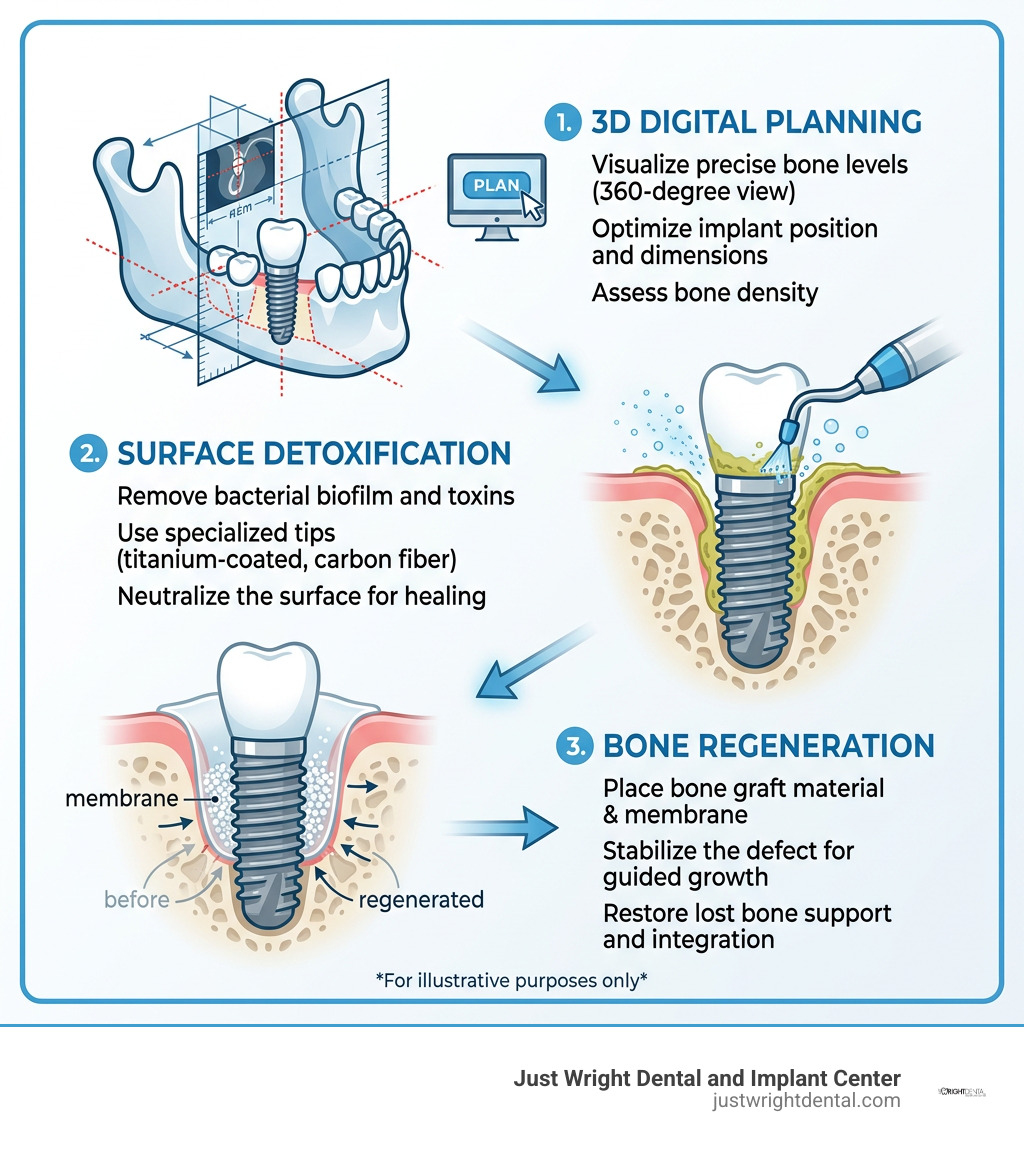
If imaging shows a contained defect around a stable implant, grafting may be worth discussing. I clean the exposed implant surface, place graft material where the bone has been lost, and may use a collagen barrier to protect that space while healing occurs.
Surface decontamination: I remove bacterial deposits and other irritants from the exposed implant surface.
Bone grafting: I place graft material into a defect that can hold it, helping support new bone growth in the right conditions.
Barrier membranes: A resorbable membrane can keep fast-growing gum tissue out of the grafted space while slower bone-forming cells move in.
Soft-tissue grafting: Adding thicker gum tissue may improve the protective seal and make daily cleaning easier.
The benefit of regenerative treatment is that it may help preserve an implant with repairable bone loss. The tradeoff is that grafting isn’t right for every defect, and I’ll tell you if the implant position, bone pattern, or stability makes another path more sensible.
For more complex reconstructions, including full-arch All On X treatment, we use 3D planning and our in-house laboratory to shape restorations that are easier to clean around. Our team designs and mills those restorations with 12 CAD/CAM mills and 4 3D printers, but I still remind you that good design works best when it’s paired with daily home care and regular maintenance.
How Can Patients Prevent Bone Resorption and Protect Their Implants?
If you’re worried about losing more bone around an implant, the most useful step is keeping plaque and bite stress under control before they grow into a bigger problem. I tell you the same thing I tell people in my chair: implants need steady care, much like keeping the foundation around a fence post firm and clean.
Daily cleaning, professional maintenance, a nightguard when you grind, and attention to health conditions like blood sugar can all help reduce risk. The benefit is that those habits support long-term implant health; the tradeoff is that there isn’t a one-time fix—you have to keep up with them.
You can find more implant-care resources in our Smile Education Center - Dental Implants library. I also use your follow-up visits to catch small changes before they have time to become more serious.

Here are the habits I most often recommend:
Clean between the implant and neighboring teeth: Use soft interdental brushes, implant-safe floss, or a water flosser as directed by your dental team.
Wear a custom nightguard if you grind: A nightguard can reduce heavy pressure on your implant, but it only helps if you wear it consistently.
Avoid tobacco: Cutting out smoking and vaping can support healthier blood flow and a stronger response to bacteria, though it can take support and time to make that change.
Keep regular checkups: I may recommend visits every three to six months based on your risk factors, because the benefit of close monitoring is early action while the tradeoff is the commitment of more frequent maintenance.
Frequently Asked Questions About Implant Bone Loss
If you still have questions, you’re not alone—bone loss around an implant can feel alarming because you can’t see what’s happening below the gums. I’ve answered the questions I hear most often, and I’ll keep the answers direct.
Can bone loss around a dental implant be reversed?
In many cases, I can stop further bone loss and may be able to rebuild some support with grafting when the defect is suitable. The tradeoff is that regeneration depends on the implant’s stability, the shape of the defect, and your ability to keep inflammation under control during healing.
Does bone loss mean the dental implant has failed?
No, localized bone loss doesn’t automatically mean the implant must be removed. I look at whether it’s stable and whether the source of the problem can be treated, but a loose implant or recurrent infection may leave fewer options.
How quickly does bone loss progress around an implant?
Bone loss can move slowly over years or more quickly when active inflammation is present. I don’t guess at the pace—I compare imaging and clinical findings over time, because implants may not give you much warning through pain alone.
How does my overall health affect bone stability around implants?
Uncontrolled diabetes, tobacco use, some medications, autoimmune conditions, and lower bone density can make healing and inflammation management more difficult. I review those factors with you before treatment, because the benefit of a complete plan is fewer blind spots, while the tradeoff is that you may need support from your medical team too.
Preserving Your Smile with Comprehensive Implant Care
If you’re dealing with bleeding gums, tenderness, or a worrying x-ray around an implant, you don’t have to guess what it means. I’ll look at the implant, your bone support, your bite, and your health history so we can talk about the cause and the next sensible step.
At Just Wright Dental and Implant Center in Corsicana, Texas, we use 3D CBCT diagnostics, facially driven digital design, and in-house CAD/CAM technology to plan care around your actual anatomy. The benefit of that detailed planning is a clearer picture of the problem; the tradeoff is that complex implant concerns sometimes need more than one visit before I can give you a responsible recommendation.
If you’re concerned about bone loss or want a clear evaluation of your implant health, I invite you to schedule a Free Smile Assessment with our team. I’ll help you understand what I’m seeing and what options make sense for your health investment.
Author Bio
Dr. Justin Wright, DDS, is the founder and clinical director of Just Wright Dental and Implant Center in Corsicana, Texas. With 18 years in practice and more than 10,000 implants placed, he focuses on complex full-arch care, bone regeneration, and remote-anchorage implants for people with severe bone loss.