Can Failed Dental Implants Be Repaired?
Can a Failed Dental Implant Be Saved or Does It Need Replacement?
When a patient consults me for help repairing failed implants, I first evaluate whether the titanium post has solid bone support or if it has lost its connection to the jaw. If the post remains firmly anchored and the issue is limited to a fractured screw, loose abutment, or irritated gum tissue, I can often repair the component and care for the soft tissue. Once an implant is failing because it has lost bone support or becomes mobile, I recommend removing it, cleaning the site, and replacing it rather than trying to rebuild bone around it.
Think of a dental implant like a fence post set in solid concrete. If the wooden fence plank attached to the top gets loose or snaps, you don't tear out the post; you simply attach a new board. But if the soil and concrete around the post wash away and the entire post wobbles in the wind, tightening won't stabilize it. The loose post needs to come out so I can clean the site and place a replacement in a stable position.
When you visit me, I assess clinical mobility, measure gum pocket depths, and evaluate bone levels using three-dimensional imaging. Catching problems early matters because ignoring subtle issues can lead to complications seen in recognizing botched dental implants from placement errors elsewhere.
Problem Type | Clinical Scenario | Recommended Treatment Approach |
|---|---|---|
Component Complication | Loose or fractured crown, broken retaining screw, worn snap attachments | Non-surgical repair, screw retrieval, or new prosthetic fabrication |
Superficial Infection | Redness and bleeding confined to gums without bone loss (mucositis) | Soft-tissue care, antimicrobial rinses, and hygiene recalibration |
Moderate Bone Loss | Bone reduction around top threads, but the post remains totally rigid | Remove and replace; polishing the exposed threads can occasionally buy time |
Complete Loss of Integration | Any perceptible mobility of the titanium post within the jawbone | Gentle removal, site cleaning, and replacement planning |
Non-Surgical and Surgical Options for Failed Implants Repair
A loose or failing implant needs replacement, not an attempt to rebuild bone around it. Peri-implantitis is an inflammatory infection around an implant, and once it has damaged the supporting bone, I don't use treatments intended to restore support around a failing implant. If the implant is still rigid, I can occasionally smooth exposed top threads with implantoplasty to buy time, but that only delays replacement.
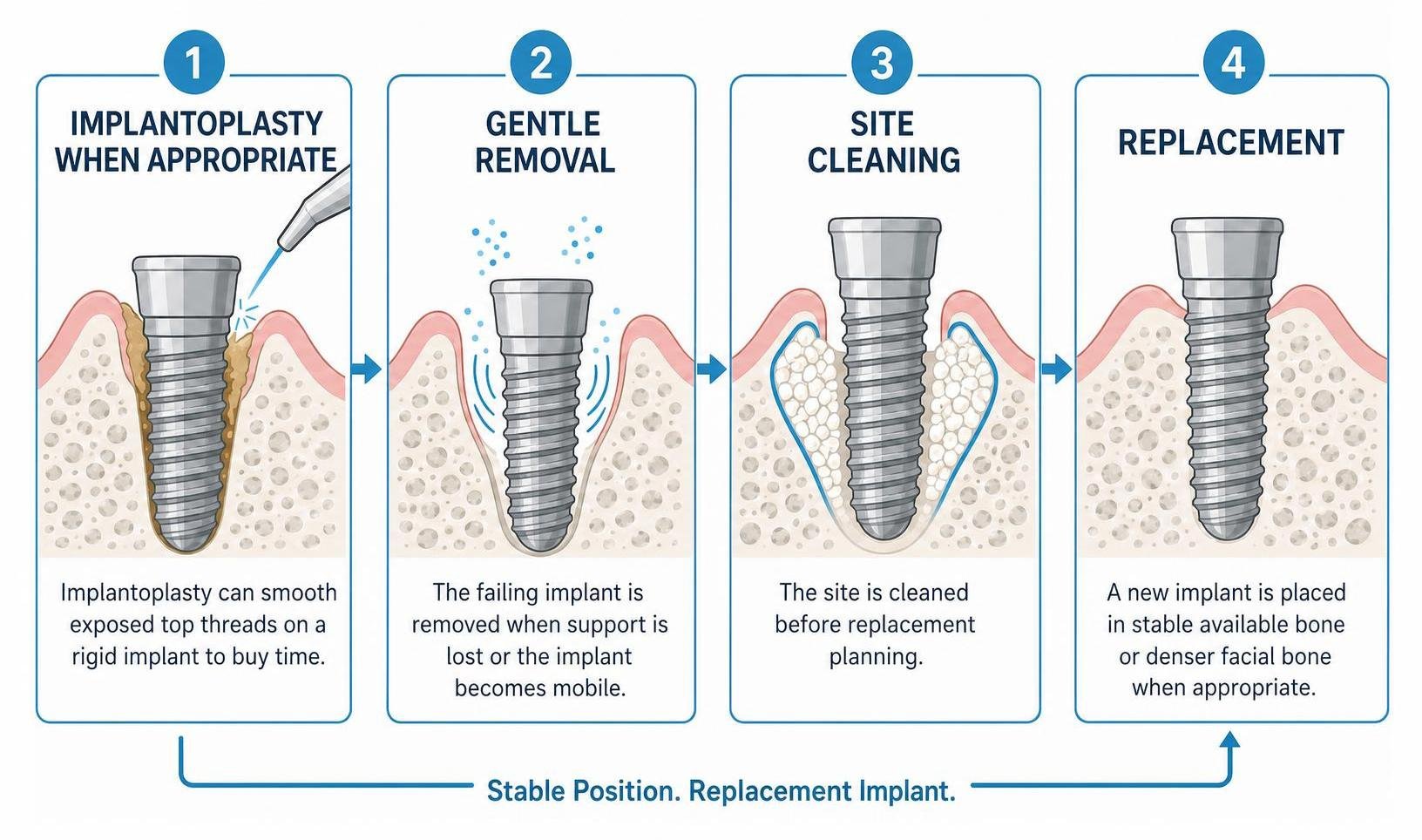
I can use localized antimicrobials and soft-tissue care to help manage gum inflammation around a stable implant, but those steps don't restore lost implant support. Watching for early warning signs, such as those discussed in our guide on dental implant rejection signs, helps us plan treatment before the implant becomes mobile. Research on clinical outcomes of dental reimplantation provides useful background for planning replacement of troubled fixtures.
Managing Mechanical Complications and Broken Hardware
Mechanical complications occur when the physical components above the bone crack, loosen, or wear out. If your crown feels loose, it's often just the prosthetic retaining screw that has backed out due to everyday biting pressure. I simply remove the crown, inspect the internal threads of the implant, replace the screw, and use a calibrated torque wrench to lock it securely.
When a screw snaps off deep inside the post, retrieving it requires high magnification and microscopic tooling. My approach to broken implant screw removal allows me to safely back out fractured metal fragments without damaging internal connection channels. Because we design and mill all restorations using our in-house CAD/CAM mills and 3D printers, we can manufacture a brand-new custom abutment or zirconia crown right here in Corsicana without waiting weeks for an outside lab, which is a key part of how I approach repair for failed implants.
What Causes Early and Late Dental Implant Failure?
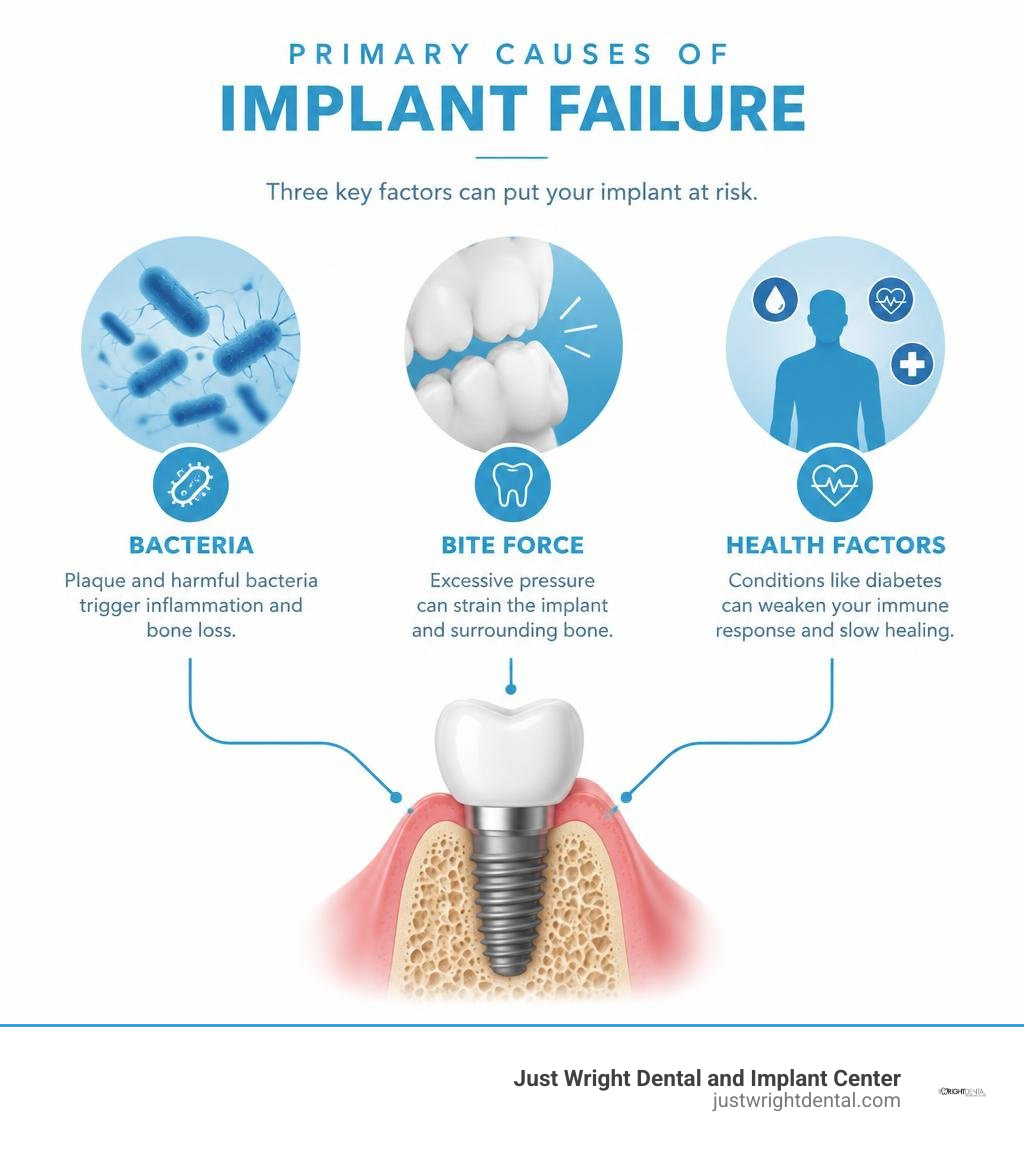
Early implant failure occurs within the first few months when the jawbone fails to grow directly onto the titanium surface. Late failure happens months or years down the road after successful healing, usually triggered by bacterial infections or mechanical overloading. Understanding what causes bone loss around dental implants is the first step in protecting your smile investment.
Several distinct factors drive both early and late implant failure:
Bacterial Infection (Peri-Implantitis): Plaque accumulation harbors destructive bacteria that trigger chronic inflammation, progressively dissolving the bone anchor.
Smoking and Nicotine Use: Nicotine constricts microvascular blood flow, starving healing bone cells of oxygen and vital nutrients during recovery.
Systemic Health Conditions: Uncontrolled diabetes impairs your immune defense and delays bone remodeling, increasing susceptibility to persistent infections.
Occlusal Overload and Bruxism: Heavy nighttime teeth grinding places excessive lateral stress on the post, fatiguing the surrounding bone.
Inadequate Bone Volume or Poor Quality: Placing an implant in soft or thin bone without adequate structural augmentation leads to early micro-movement and fibrous encapsulation.
When a failing implant has caused major bone loss, I don't try to build bone back around that implant. I remove the failed post, clean the area, and plan a replacement in denser available bone when appropriate. This case report on treatment after implant failure offers background on the challenges these cases can present.
How Does the Step-by-Step Failed Implants Repair and Replacement Process Work?
Replacing a failed implant requires a structured, multi-step treatment approach to restore bone health and function. I begin by capturing a high-resolution 3D Cone Beam Computed Tomography (CBCT) scan. This scan gives me a complete view of your remaining bone volume, nearby nerves, and the maxillary sinus cavities.
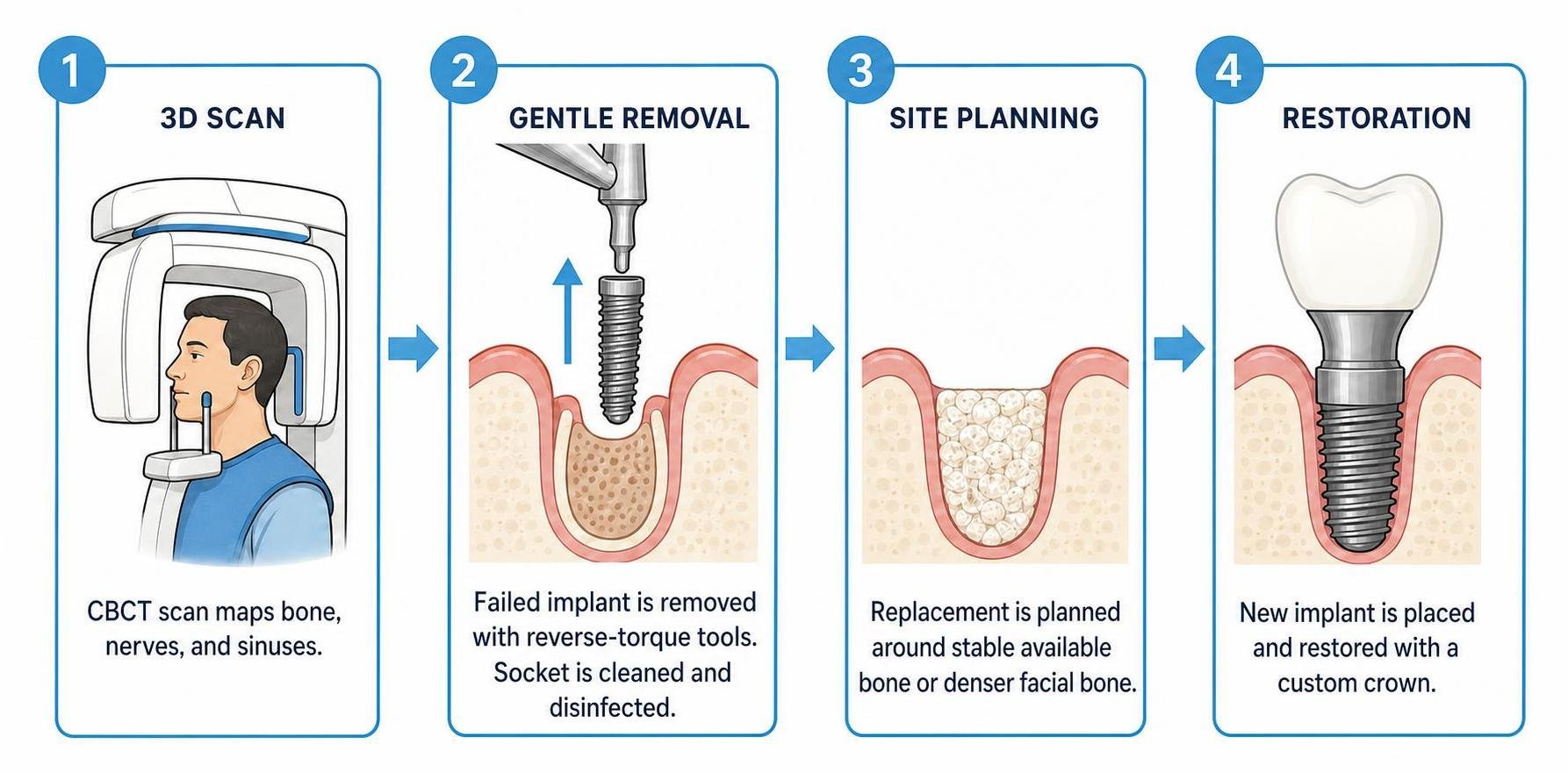
Next, I gently remove the mobile or compromised fixture using specialized reverse-torque extractors. These tools back the post out without cutting away your surrounding natural jawbone. Once the post is out, I thoroughly curette the socket to remove all inflammatory granulation tissue and flush the area with powerful antimicrobial solutions.
For people who have extensive bone loss and were told elsewhere that they have "no bone" for implants, standard jaw sites may not work. In these complex cases, I use remote-anchorage implants, including zygomatic, pterygoid, transsinus, and transnasal fixtures. These specialized posts anchor in denser facial bone beyond the traditional jaw ridge, so no bone, no problem. You can read more about structural changes in our bone loss dental implants guide.
Replacement Planning When Bone Is Limited
When a standard jaw position remains appropriate, I plan the replacement around the stable bone that is available rather than trying to regenerate bone around a failing implant. Detailed three-dimensional imaging helps me select the position, angle, and implant design that fit the anatomy and protect nearby structures.
If the failed post was in the upper back jaw and the sinus limits a standard implant position, I assess whether a remote-anchorage implant can use denser bone instead. This approach can avoid waiting for bone rebuilding and may allow replacement on the same day when the site and your overall health make that appropriate.
Surgical Re-Implantation and Healing Timeline in Failed Implants Repair
Once I have identified a stable position, I place a new, modern dental implant in the ideal three-dimensional location. I select the implant design and position around the available bone, and in many cases I can use a wider-diameter post to maximize contact and initial stability.
After placement, the new implant integrates with the bone over a period of 3 to 4 months. I monitor your progress with digital scans and gentle stability testing. Once solid integration is verified, our in-house lab team designs your final restoration using our CAD/CAM milling technology, giving you durable, lifelike new dental implants.
How Much Does It Cost to Repair or Replace a Failed Implant?
The overall financial investment to repair or replace a failed implant depends directly on the complexity of your situation. Replacing a single broken retaining screw or crafting a new crown requires a far smaller investment than removing a loose post, cleaning the site, and placing a new implant.
Key factors influencing your overall health investment include:
Component-Only Needs: Fabricating a new crown, custom abutment, or hybrid framework when the underlying post remains healthy.
Surgical Removal Complexity: The time and specialized instrumentation required to gently back out a fractured or failing post while preserving bone.
Replacement Strategy: Whether a same-day replacement or a remote-anchorage implant in denser bone is the better fit for your anatomy.
Sedation Care: The level of comfort chosen, including gentle general anesthesia administered by our on-staff board-certified anesthesiologist.
For treatment coverage, medical and dental plans sometimes pay for surgical removal of infected hardware and functional reconstruction. Our full-time Medical Insurance Coordinator verifies and bills your medical insurance in-house for infection removal, replacement planning, and functional deficits. I help you maximize every available benefit while providing clear, transparent options for your implant longevity.
Your Next Steps After a Dental Implant Complication
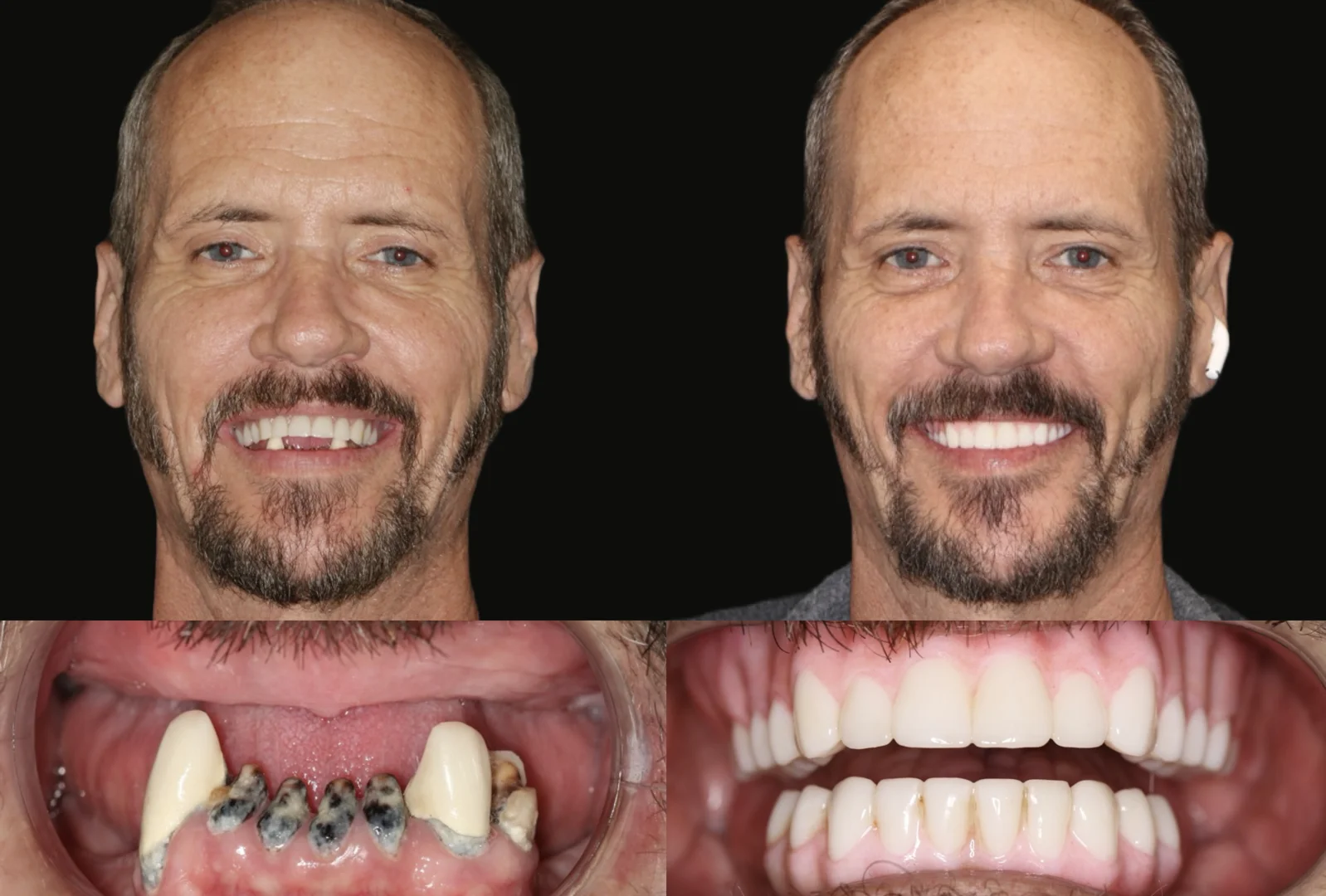
Dealing with a failed dental implant can feel discouraging, but having complications doesn't mean you're out of options. Modern replacement techniques and remote-anchorage solutions give me options for even complex cases. From simple component repairs to full-arch reconstructions, I have the experience and technology to restore your bite and confidence.
I design every smile directly from your unique facial features using 3D digital facial scanning, and I craft every restoration right here in our office with our own CAD/CAM mills and 3D printers. You never have to worry about outside lab delays or mismatched parts. If you're experiencing discomfort, swelling, or looseness with an existing implant, I'm here to provide clear answers in a judgment-free environment.
We serve people across Navarro County and welcome you if you're driving in from Ennis, Waxahachie, Midlothian, Waco, and across the greater Dallas-Fort Worth area.
To explore your revision options, text or call our Smile Transformation Coordinator at 903-602-3439, or call our office at 903-872-8422.
Frequently Asked Questions About Failed Implants Repair
Is revision surgery more painful than the initial implant procedure?
Revision treatment is typically very comfortable because I use gentle surgical techniques and comprehensive numbing medication. For maximum peace of mind, I provide full sedation up to general anesthesia with a board-certified anesthesiologist on staff. Most people report that their post-treatment healing time involves mild soreness easily managed with basic over-the-counter or prescribed comfort medications.
Can peri-implantitis be cured without removing the dental implant?
If I catch peri-implantitis while the titanium post is still completely rigid in the jaw, I can provide soft-tissue care and may smooth exposed top threads with implantoplasty to buy time. Those measures don't rebuild lost support or cure a failing implant. If bone loss is present or the post moves, I recommend removal, site cleaning, and replacement.
How long must a patient wait before placing a new implant after failure?
If the site is clean, free of active infection, and structurally sound, I can occasionally place a new, wider post during the same appointment. When the anatomy needs a different approach, I assess whether a remote-anchorage implant can use denser bone instead. The timing depends on the site, your health, and the replacement strategy.
Does insurance cover the repair or replacement of a dental implant?
Dental and medical insurance plans sometimes cover portions of failed implant revision care. Medical plans sometimes cover surgical infection removal, site cleaning, and functional reconstruction when chewing function is compromised. Our in-house Medical Insurance Coordinator works directly with your insurance providers to verify and submit claims on your behalf.
What are the earliest warning signs that an implant is failing?
The earliest sign is bleeding, redness, or tenderness around the gumline when brushing or flossing. You might also notice a persistent bad taste, gum recession that exposes dark metal threads, or a subtle feeling of looseness when chewing. If you experience any of these symptoms, schedule a clinical exam immediately to evaluate the site.

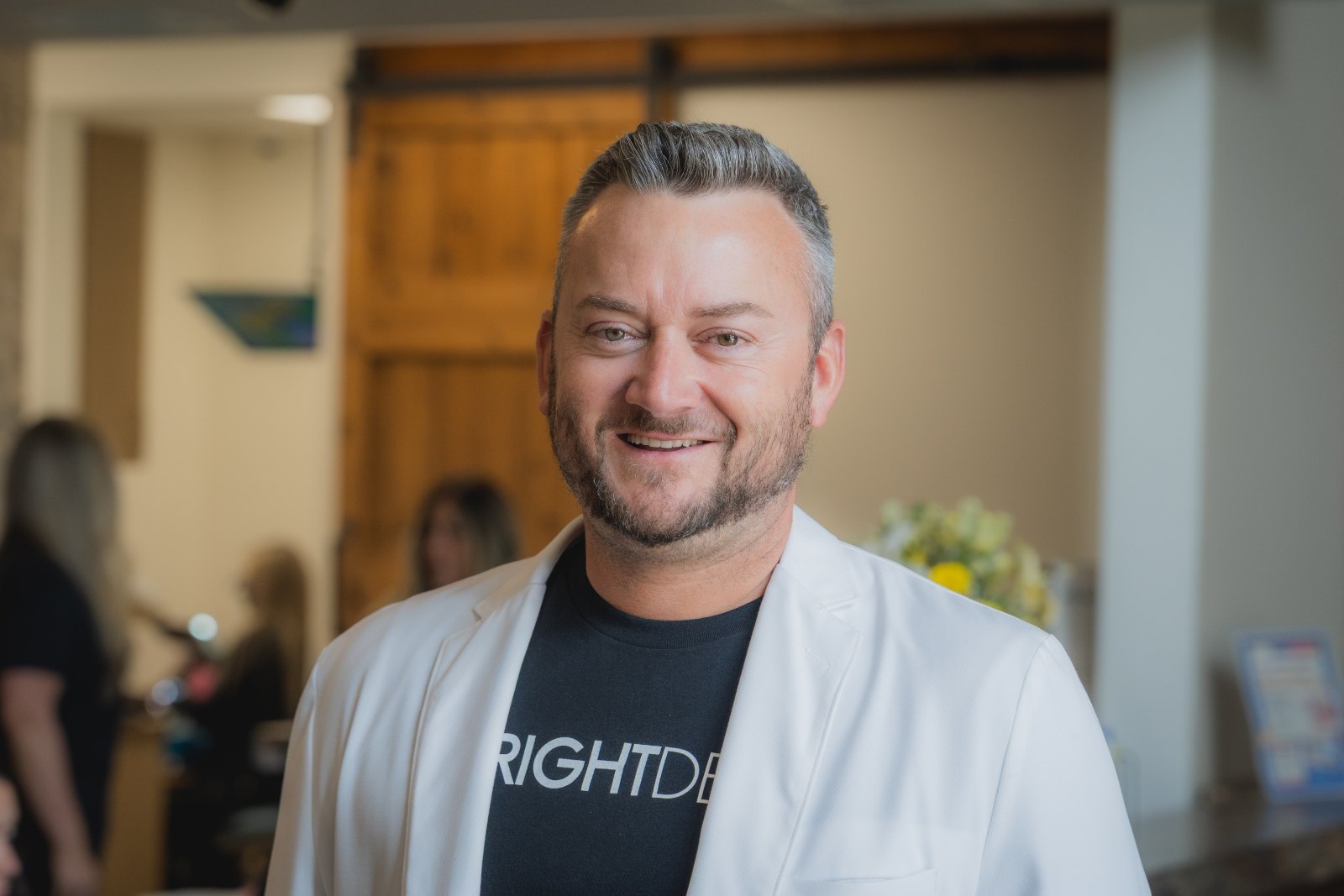
Dr. Justin Wright, DDS, is the founder and clinical director of Just Wright Dental and Implant Center in Corsicana, Texas. With more than 18 years in practice and over 10,000 dental implants placed, Dr. Wright focuses on advanced full-arch restorations, complex revision cases, and remote-anchorage solutions for patients with severe bone loss.