Custom Dentures 101: Find Your Best Options
What Are Custom Dentures and How Do They Work?
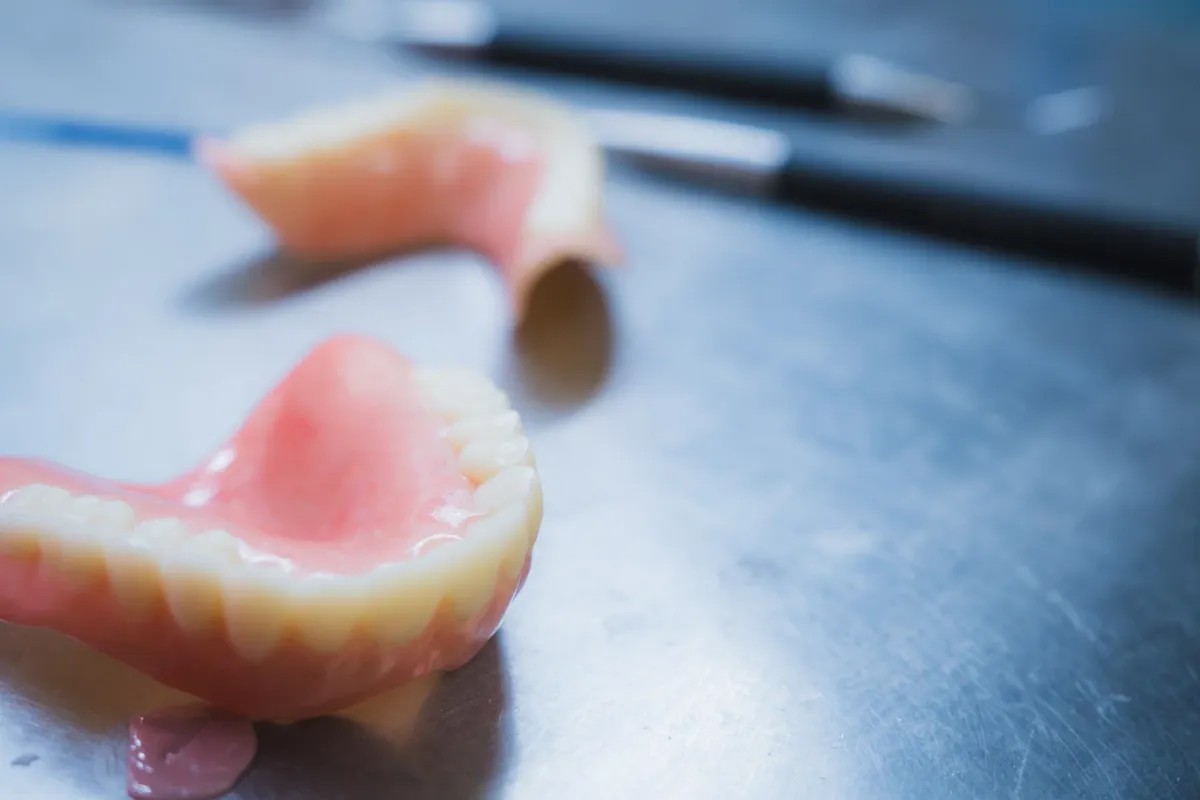
Custom dentures are individually engineered dental prosthetics designed to replace missing teeth while matching your unique gum contours, bite dynamics, and facial proportions. Rather than relying on static, one-size-fits-all molds, we use high-resolution intraoral scanners and 3D facial mapping to create a digital model of your jaw and soft tissue, supporting balanced pressure distribution and stable retention.
When teeth are missing, the surrounding jawbone naturally changes shape over time. Properly designed traditional dentures account for this anatomy by distributing chewing forces across the ridge while supporting the muscles of your lips and cheeks. This prevents the sunken facial appearance often associated with tooth loss.
The mechanism behind a secure custom denture relies on precise border molding and tissue adaptation. In an upper denture, intimate contact with the palate creates natural peripheral seal suction. In a lower denture, where tongue movement makes suction more challenging, custom shaping wraps gently along the residual ridge to maximize stability without impinging on active muscle attachments.
Custom Dentures vs. Over-the-Counter Alternatives
Over-the-counter DIY kits and boil-and-bite generic devices use standard arch sizes that cannot accommodate the delicate contours of living gum tissue. Because these generic products lack proper bite balance, they frequently concentrate force onto high spots, leading to painful friction sores and accelerated bone resorption—the gradual shrinking of the jawbone due to improper mechanical pressure.
In contrast, laboratory-crafted custom prosthetics are designed to maintain an even, harmonious occlusion (bite contact), protecting your underlying tissue and keeping you comfortable throughout daily meals and conversations.
Feature | Custom Dentures | Over-the-Counter / DIY Kits |
|---|---|---|
Fabrication Method | 3D digital facial scan & CAD/CAM precision milling | Boil-and-bite thermal plastics or stock sizes |
Tissue Adaptation | Individualized to ridges, palate, and muscle borders | Generic shape; uneven pressure points |
Chewing Stability | Balanced occlusion for functional chewing | High risk of shifting, slipping, and dislodgement |
Impact on Jawbone | Distributes forces evenly to reduce localized trauma | Concentrates pressure, accelerating bone loss |
Aesthetic Quality | Natural tooth translucency matched to facial proportions | Monolithic, artificial appearance |
Clinical Adjustments | Chairside adjustments with on-site lab support | None; self-adjusted without professional oversight |
What Are the Main Types of Custom Dentures Available?
The main types of custom dentures include full dentures for total arch replacement, removable partial dentures for scattered tooth loss, immediate dentures placed the day of tooth removal, and implant-retained overdentures. The right design depends directly on your remaining dentition, the density of your jawbone, and your functional goals.
Full, Partial, and Immediate Denture Solutions
Full dentures replace an entire upper or lower arch when no natural teeth remain. They rest comfortably over the alveolar ridge and are custom-sculpted to establish a natural vertical dimension, giving you a full denture smile makeover that rejuvenates the lower third of the face.
Removable partial dentures are ideal when several healthy natural teeth remain in the arch. These appliances use a lightweight, rigid framework—often cast metal or advanced polymers—with discreet clasps that wrap around existing teeth to anchor the prosthetic firmly in place while filling gaps seamlessly.
Immediate dentures are planned and fabricated prior to any planned tooth removals. On the day teeth are removed, we deliver the denture right away so you never leave our office without a smile. As the underlying bone and gum tissue heal and reshape over the subsequent months, we perform temporary soft relines to maintain a snug, protective fit.
Implant-Retained Overdentures and Hybrid Arches
For patients looking for enhanced stability, implant-retained overdentures offer a remarkable balance between removable convenience and surgical security. In this approach, two to four dental implants are gently placed in the jaw, serving as artificial anchors. The custom denture snaps firmly onto these attachments, virtually eliminating slippage during speech or eating.

For a fully fixed, non-removable solution, we provide advanced full-arch restorations, commonly known as All-on-Four dentures or comprehensive All-on-X treatment. With this method, four or more implants support a permanent, solid bridge. In our Corsicana facility, we frequently deliver a same day full arch restoration, allowing patients to walk out with fixed provisional teeth designed directly from their 3D facial scans.
For individuals who have been told by other practices that they have severe bone loss, I utilize remote-anchorage implants (including zygomatic, pterygoid, transsinus, and transnasal techniques) that anchor into dense bone, so we can find a way forward even when you have been told there is no bone.
Materials Used to Fabricate Modern Custom Dentures
Modern prosthetics have moved far beyond the fragile, opaque plastics of previous decades. Today, we utilize high-performance materials tailored to your clinical requirements:
High-Impact Acrylics: Highly cross-linked polymers that resist fracturing, provide lifelike gum shading, and allow for easy chairside relining as tissues change.
Monolithic Zirconia: An ultra-durable, biocompatible ceramic utilized in fixed hybrid arches that resists chipping and staining while offering natural optical translucency.
Flexible Thermoplastics: Lightweight, nylon-based resins used in select partial dentures. These offer flexible comfort and tissue-colored clasps that blend with your gums without metallic wire show.
Micro-Layered Composite Teeth: Wear-resistant denture teeth crafted with natural opalescence, replicating the natural gradation of natural enamel.
How Does the Process of Getting Custom Dentures Work?
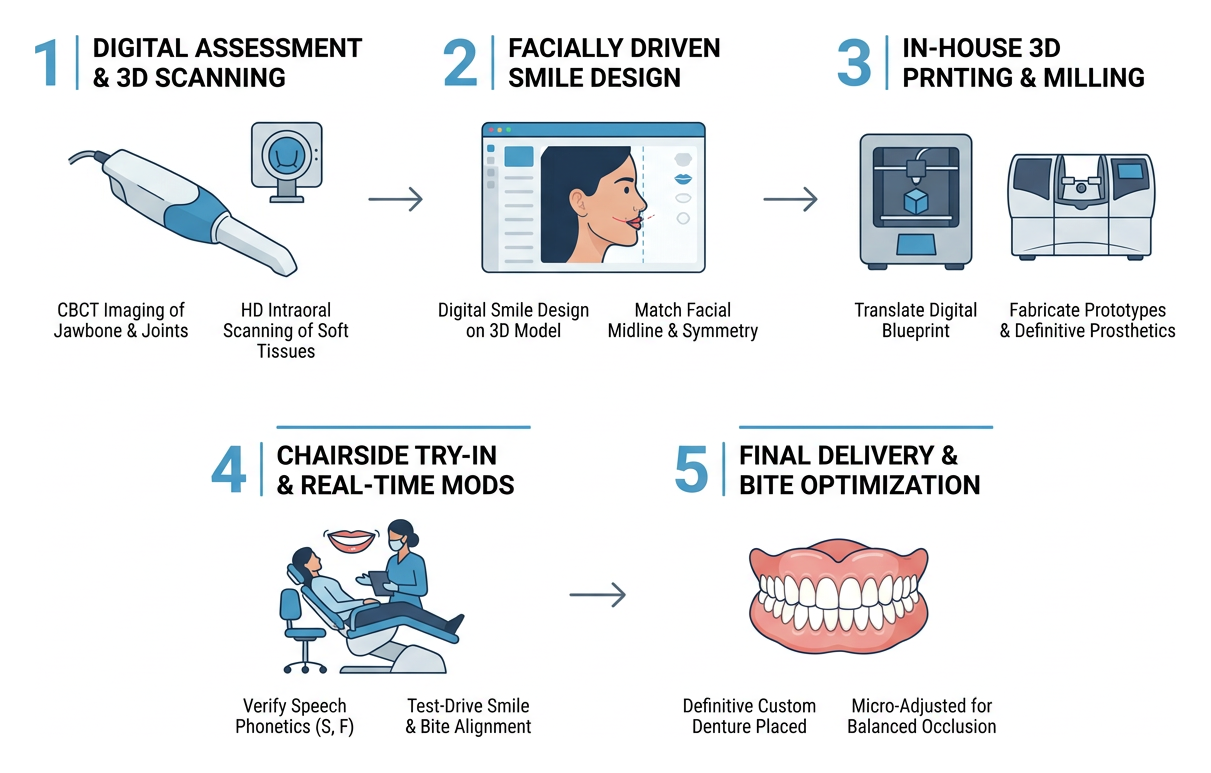
The process of getting custom dentures involves five clear steps: comprehensive 3D imaging, digital smile design, in-house fabrication, a live try-in verification, and final delivery with customized adjustments. Because we house our own CAD/CAM milling units and 3D printers right here in our office, this entire workflow is seamless, precise, and fast.

Clinical Steps from Digital Scanning to Try-In
Digital Assessment & 3D Scanning: We evaluate your jawbone, joint health, and soft tissues using low-radiation cone-beam computed tomography (CBCT) and high-definition optical intraoral scanning.
Facially Driven Smile Design: Rather than pulling teeth from a standard mold guide, we design your smile to match your facial midline, lip mobility, and resting facial symmetry.
In-House 3D Printing & Milling: Our lab technicians translate the digital blueprints into physical prototypes using our in-house 3D printers and precision milling units.
Chairside Try-In: You get to test-drive your new smile. We assess speech phonetics (such as "S" and "F" sounds), verify the resting lip profile, and check your bite alignment while our technician stands chairside to make real-time modifications.
Final Delivery & Bite Optimization: Once verified, the definitive custom denture is placed, polished, and micro-adjusted to ensure balanced occlusal contact.
The Adjustment Period and Adaptation Timeline
Adapting to new dentures is a natural neuromuscular learning curve that varies from person to person. In the early days, your tongue and cheek muscles learn to hold the appliance securely, and your salivary glands may temporarily produce extra saliva as they interpret the denture as food.
Early adaptation: Stick to softer foods such as scrambled eggs, pureed soups, and flaked fish. Practice reading out loud to train your tongue on the new tooth positions.
Progressive adaptation: Gradually introduce firmer foods, chewing slowly and distributing food evenly on both sides of your mouth to prevent the denture from tipping.
Ongoing comfort: Most patients report full speech clarity and comfortable, confident chewing as their muscles adapt. Minor sore spots are completely normal during this window and are quickly relieved during follow-up visits.
Why Should You Choose Custom-Fit Dentures Over Generic Options?
Choosing custom-fit dentures over generic alternatives supports proper bite alignment, can reduce painful tissue chafing, and restores natural facial aesthetics without guesswork. A precision fit preserves your quality of life, allowing you to laugh, speak, and enjoy meals with more confidence and less worry about slipping or embarrassment.

From a long-term wellness standpoint, thoughtful affordable treatment planning can be a sound pathway. Well-balanced custom dentures can reduce excessive focal stress on the jaw ridge, helping maintain the soft tissue foundation and reducing the frequency of emergency repairs.
How to Clean and Care for Custom Dentures Daily
Proper daily care helps prevent plaque accumulation, protects oral tissues from fungal irritation (denture stomatitis), and extends the usable life of your prosthetic:
Brush Daily with a Soft Denture Brush: Clean all surfaces using a non-abrasive denture cleanser or mild liquid soap. Avoid regular household toothpaste, which contains abrasive silica that can scratch polished acrylic.
Rinse After Meals: Remove and rinse your denture under lukewarm water after eating to dislodge trapped food particles. Never use boiling water, as high heat can warp the plastic.
Soak Overnight: Submerge your dentures in a clean water bath or a mild soaking solution every night. Keeping the material hydrated preserves its dimensional stability and allows your gum tissues to rest and breathe.
Attend Regular Professional Relines: Bone naturally remodels over time. Having your dentures professionally relined every 1 to 2 years restores an intimate, non-slipping fit.
Frequently Asked Questions About Dentures
How long do custom dentures typically last before replacement?
Custom dentures generally provide reliable function for 5 to 10 years when cared for diligently. Over time, natural changes in your jawbone architecture and gradual wear on the prosthetic teeth will alter your bite alignment. Having your fit evaluated annually and receiving a professional lab reline every 1 to 2 years helps maintain proper stability throughout the denture's lifespan.
Can broken or cracked custom dentures be repaired?
In most instances, cracked acrylic bases, chipped teeth, or fractured clasps can be repaired using professional laboratory acrylics. Because we maintain our own in-house digital lab with dedicated CAD/CAM equipment, we can often complete structural repairs and relines in a single visit. Never attempt to use household superglues, as they contain toxic chemicals and can distort the appliance irreparably.
How do implant-supported dentures protect jawbone health?
When natural tooth roots are missing, the jawbone naturally undergoes resorption because it no longer receives mechanical chewing stimulation. Dental implants act as artificial titanium roots that integrate directly with the bone tissue through a process called osseointegration. By transferring chewing forces deep into the jaw, implants stimulate the bone, helping maintain natural jaw volume and long-term facial support.
Does dental insurance cover the health investment for custom dentures?
Many commercial dental insurance policies categorize custom dentures as a major restorative benefit, frequently assisting with up to 50% of the overall treatment investment up to your annual policy limit. Our in-house Medical Insurance Coordinator works closely with your carrier to maximize all available benefits. We also offer flexible healthcare payment plans to ensure comprehensive care fits comfortably within your budget.
Finding Your Ideal Denture Solution
Restoring your smile is not just about replacing missing teeth; it is about reclaiming your health, comfort, and day-to-day confidence. Whether you need a lightweight partial denture, a full set of facially derived 3D-printed dentures, or an implant-stabilized hybrid bridge, our team provides concierge-level, judgment-free care tailored to your unique anatomical needs.
We invite you to visit us at our Corsicana practice—conveniently accessible for patients driving in from across Navarro County, Ellis County, Waxahachie, Ennis, Waco, and the Dallas-Fort Worth area. You can schedule a free smile assessment or book a consultation appointment to sit down with us, explore your 3D imaging, and choose the ideal smile solution for your life.
Text or call Shelley, our Smile Transformation Coordinator, at 903-602-3439, or call our office at 903-872-8422.
About the Author
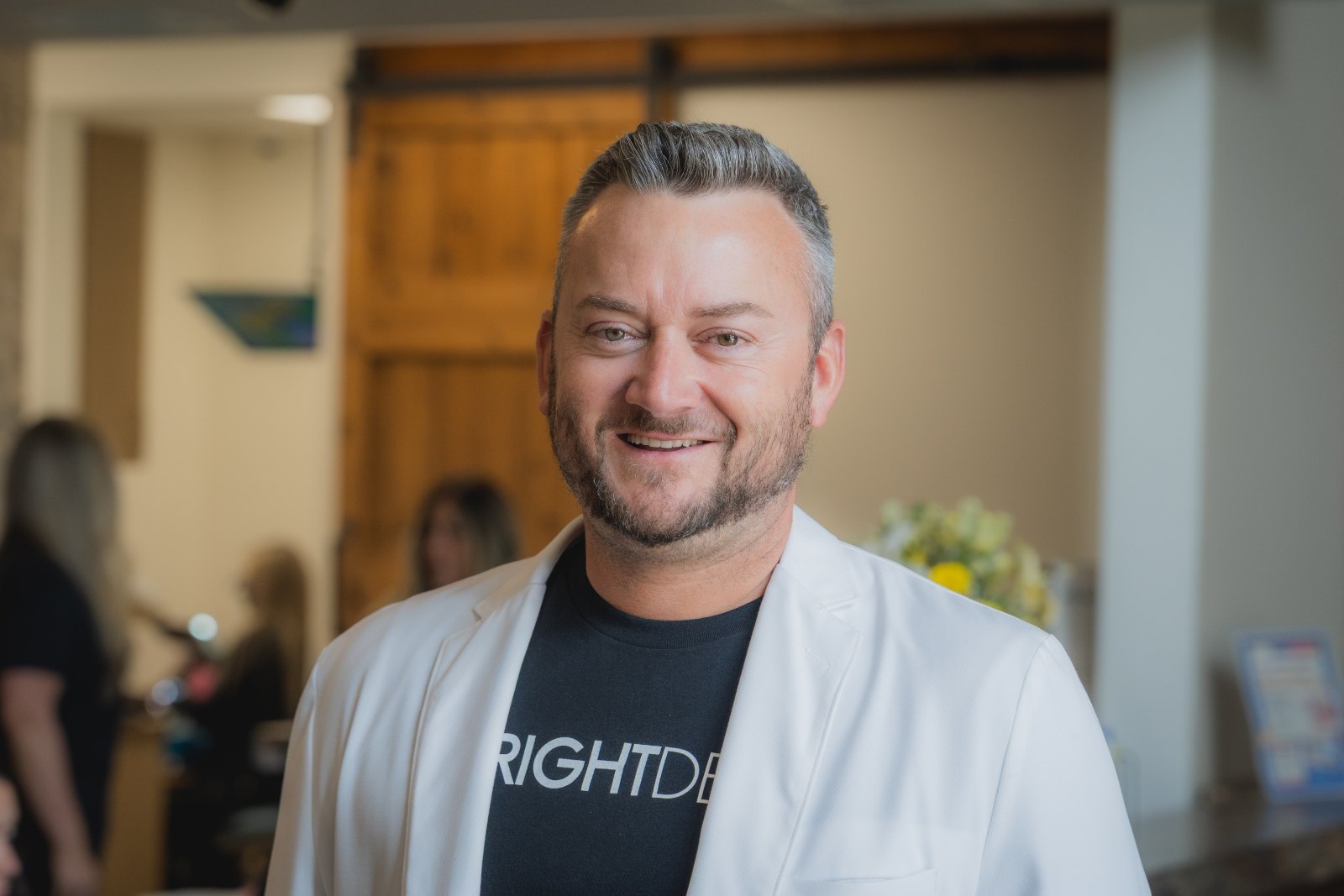
Dr. Justin Wright, DDS, is the founder and clinical director of Just Wright Dental and Implant Center in Corsicana, Texas. With 18-plus years in practice, over 10,000 dental implants placed, and more than 1,000 full-mouth reconstructions completed, Dr. Wright focuses on complex restorative dentistry, facially driven 3D smile design, and remote-anchorage implant solutions for patients with severe bone loss. His practice integrates advanced in-house CAD/CAM milling and 3D printing technology to deliver precise, lifelike dental prosthetics.