
What Is the Best Teeth Whitening Treatment for Sensitive Teeth
The Best Teeth Whitening Treatment for Sensitive Teeth
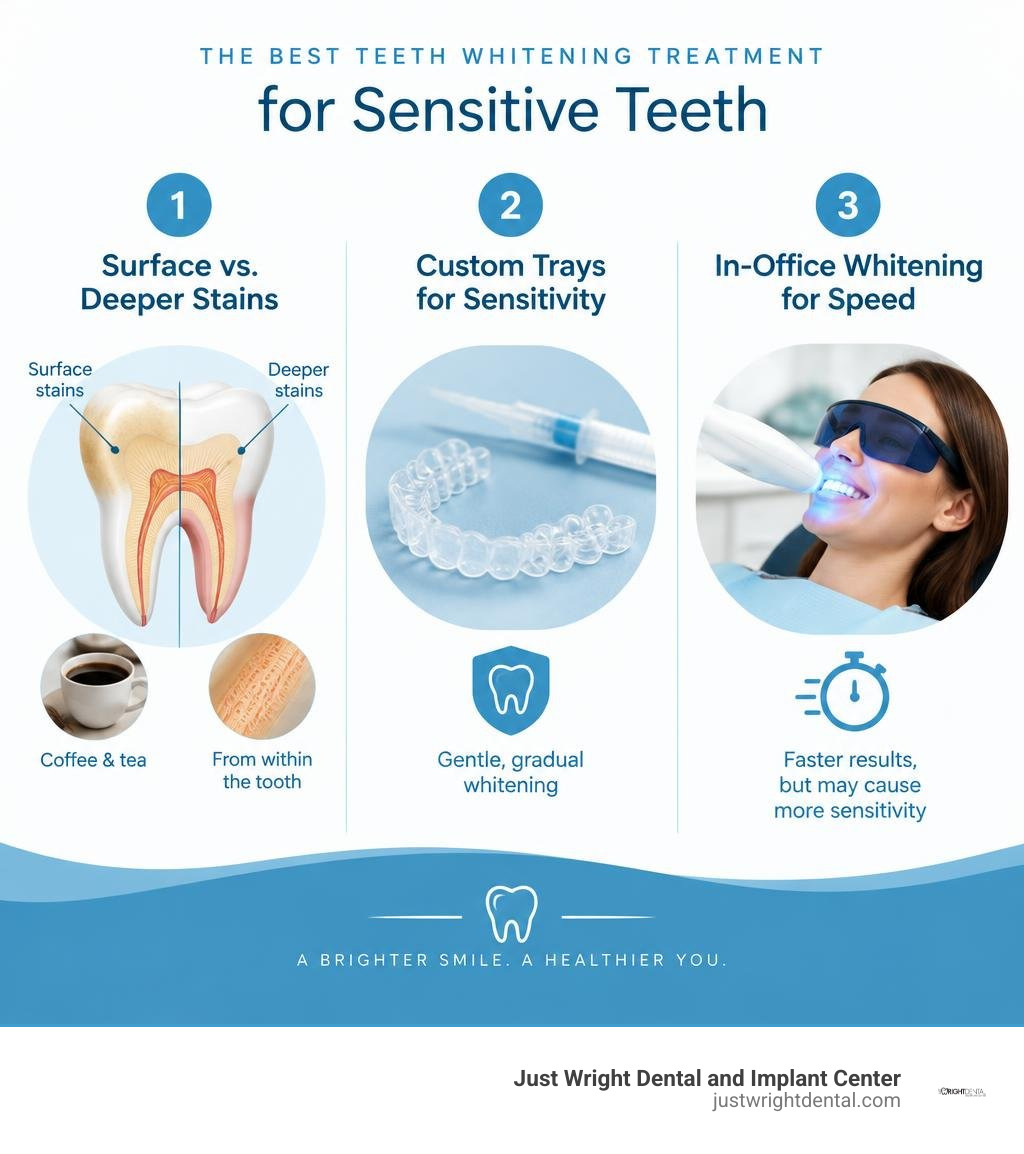
Dentist-supervised custom take-home trays are often the best starting point for sensitive teeth. They let you whiten gradually and adjust how long you wear the trays. In-office whitening works faster, but it may cause more short-term sensitivity. The right choice depends on why your teeth feel sensitive and how much whitening you want.
Coffee and tea can leave stains on the tooth surface. Other color changes come from deeper within the tooth and may respond differently to whitening. I’d check your teeth and any existing dental work before recommending a treatment.

I’m Dr. Justin Wright, DDS, and I’ve spent more than 18 years helping people plan cosmetic and restorative dental care. I’ll help you find the best teeth whitening treatment for your smile without overlooking sensitivity.
How Does Teeth Whitening Work on Sensitive Enamel?
Teeth whitening works when peroxide penetrates your enamel to break apart dark chemical bonds through an oxidation process. As the whitening gel breaks down, it creates reactive oxygen molecules that travel into the deeper layers of the tooth structure, lightening both surface stains and deep discoloration.
Enamel is naturally porous, like a hard sponge with thousands of microscopic channels called dentinal tubules. When hydrogen peroxide or carbamide peroxide travels down these open tubules, it temporarily reaches fluid near the living pulp and nerve center of the tooth. This rapid fluid movement creates a temporary pulpal response, which is why you feel a quick flash of cold or a mild ache during or after a session.
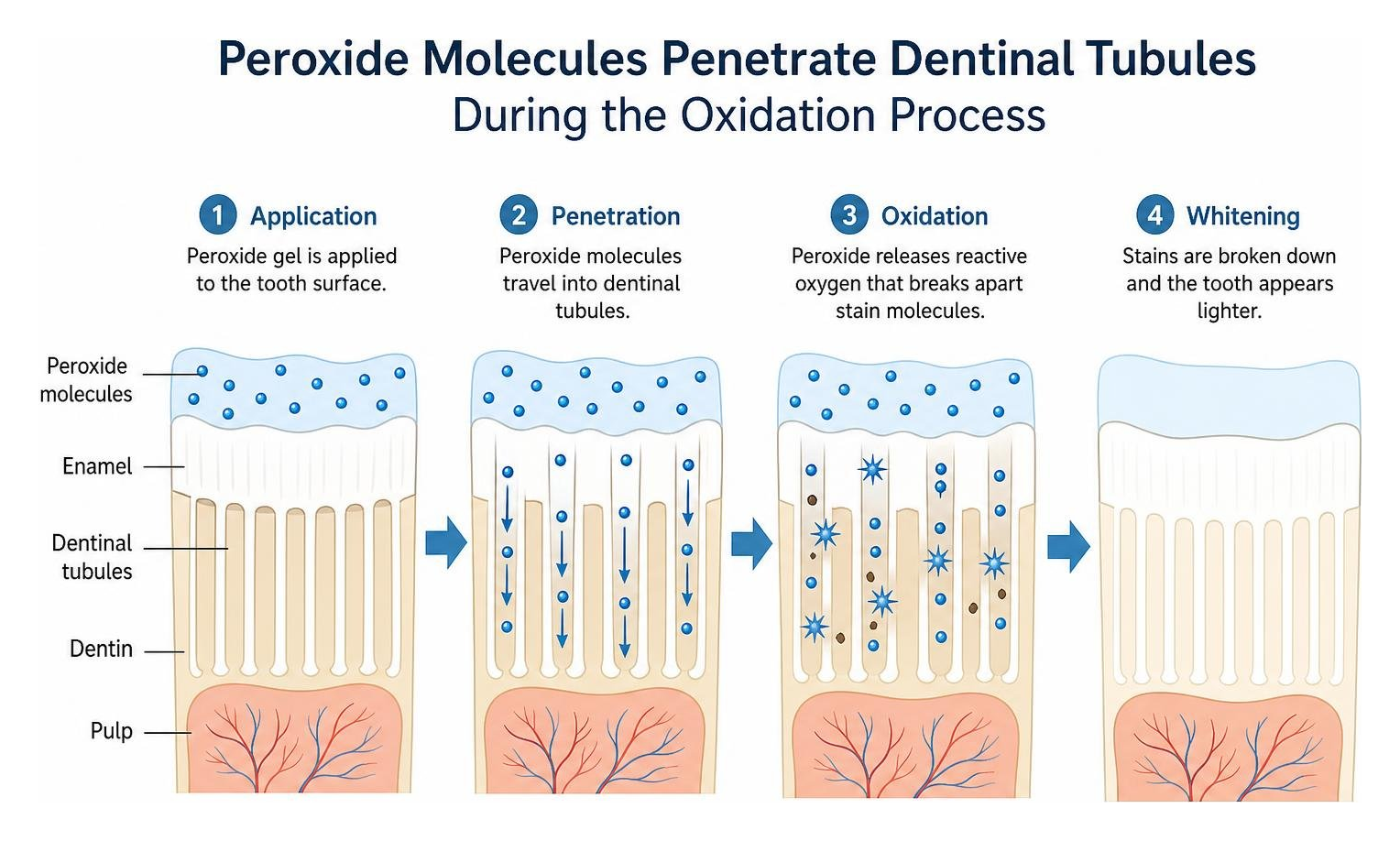
Carbamide peroxide breaks down more slowly than pure hydrogen peroxide, which makes it much gentler on sensitive nerves. Once the peroxide clears from the tooth, your enamel naturally rehydrates and the nerve settles down completely.
What Is the Best Teeth Whitening Treatment for Sensitive Teeth?
Dentist-supervised custom take-home trays offer the most control for sensitive teeth because you can adjust the wear time and whitening gel strength. In-office bleaching delivers immediate results in a single visit, but higher peroxide concentrations can sometimes challenge a lower sensitivity threshold.
When you want to brighten your smile, we generally look at two primary professional paths:
Treatment Option | Key Benefits | Honest Tradeoffs |
|---|---|---|
Dentist-Supervised Take-Home Trays | Complete control over wear time; gentler peroxide strengths; minimal nerve irritation | Takes 1 to 2 weeks for full results; requires daily patient compliance |
In-Office Professional Whitening | Brightens teeth in about an hour; fully monitored by a clinical team; gums protected | Higher initial peroxide strength; higher chance of temporary mild sensitivity |
Choosing between these options comes down to your personal schedule, your enamel health, and how quickly you want to see a shade change.
In-Office Bleaching: The Best Teeth Whitening Treatment for Immediate Results
In-office bleaching can brighten your teeth up to 5 shades in about an hour, making it ideal if you need rapid results for an upcoming event. During this appointment, we place a protective barrier resin directly over your gums so the strong whitening gel only touches your natural enamel.
We use chemically activated gels containing 25% to 40% hydrogen peroxide that work effectively without any drying heat lamps. Low-to-medium peroxide levels around 25% to 35% produce excellent shade changes while keeping your teeth comfortable. If you’re considering comprehensive cosmetic dentistry like full-mouth veneers or bonding, in-office brightening helps establish an even, radiant foundation for your overall smile design.

Dentist-Supervised Take-Home Trays: The Best Teeth Whitening Treatment for Gradual Comfort
Dentist-supervised take-home kits provide the gentlest path to a bright smile because they use lower peroxide concentrations over a 10 to 14 day period. Using custom-fitted trays or prefilled UltraFit trays helps keep the whitening gel firmly against your teeth rather than spilling onto sensitive gum tissue.
These systems utilize 10% to 15% carbamide peroxide or gentle hydrogen peroxide blends that you wear for 15 to 60 minutes a day. If you notice any sensitivity, you can simply skip a day or shorten your wear time without losing your progress. You can see real-world results in our teeth whitening before & after gallery, showing how gradual daily stain removal transforms stubborn yellowing into a bright, natural smile.
Do Whitening Lights and Lasers Worsen Tooth Sensitivity?
Whitening lights and lasers are not required to whiten your teeth and often contribute to tooth sensitivity through heat and enamel dehydration. While marketing campaigns frequently feature glowing blue LED lights, scientific evaluations show they provide no measurable boost to whitening efficacy.
A major umbrella review published in the Saudi Dental Journal confirmed that light activation doesn't improve shade results and frequently increases patient discomfort. The intense light warms the tooth surface, creating thermal pulp irritation and drawing moisture out of the enamel. This dehydration creates an artificial, temporary whiteness that rebounds a few days later while leaving your nerve endings irritated. Chemically activated formulas whiten deeply from within the enamel structure without exposing your mouth to unnecessary heat.
How Can You Prevent Sensitivity and Protect Dental Work?
You can prevent sensitivity by pairing proven desensitizing ingredients with a personalized whitening plan, but existing crowns, veneers, and fillings won't change color. A thorough dental checkup helps verify that your enamel is healthy and free of untreated cavities or gum recession before applying any whitening gel.
To keep your teeth calm and protect your smile, follow these helpful steps:
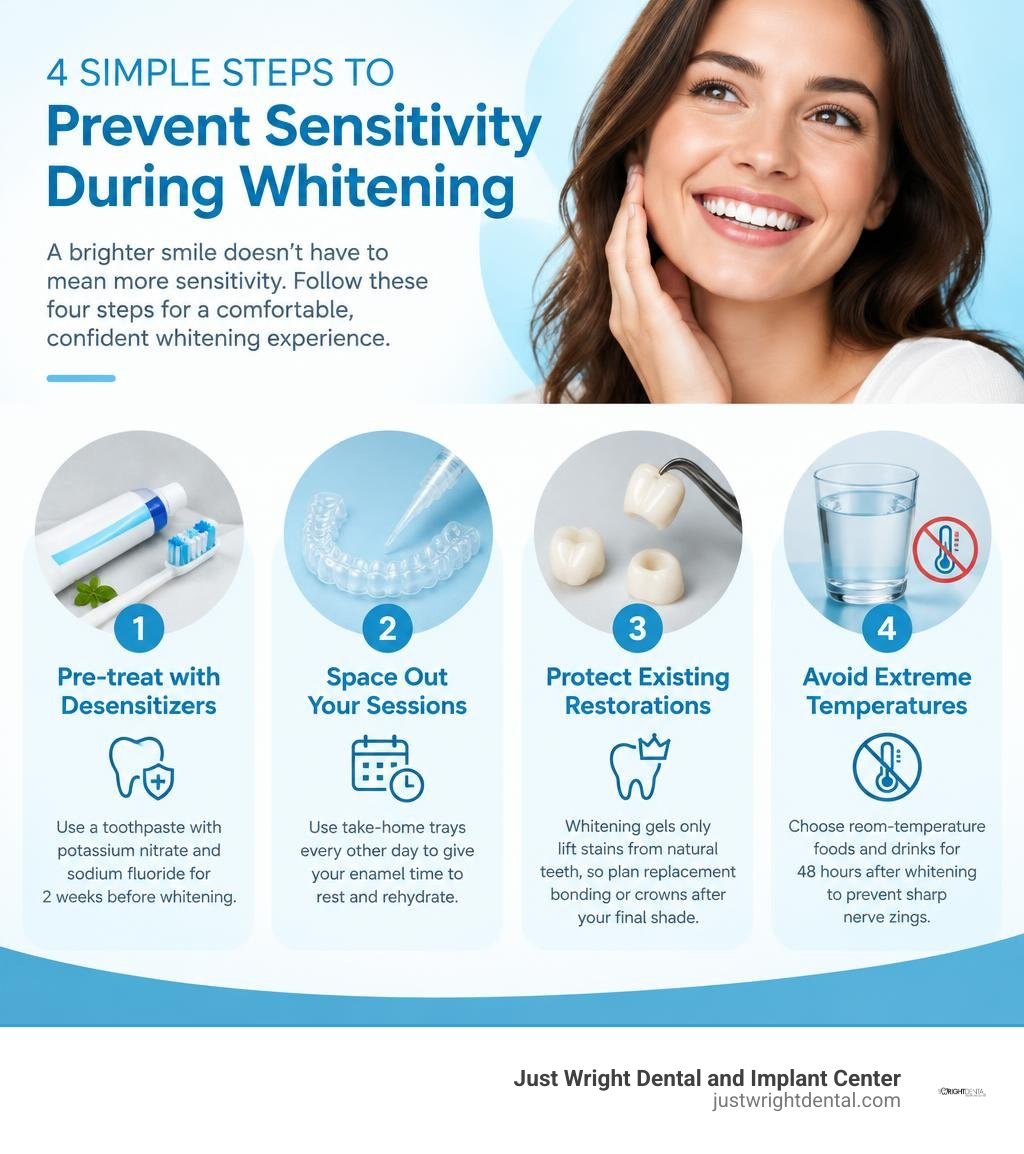
Pre-treat with desensitizers: Use a toothpaste containing potassium nitrate and sodium fluoride for two weeks prior to whitening to calm the internal nerve pathways.
Space out your sessions: If using take-home trays, whiten every other day rather than daily to give your enamel time to rest and rehydrate.
Protect existing dental restorations: Whitening gels only lift stains from natural enamel, so plan any replacement bonding or crowns after reaching your final shade.
Avoid extreme temperatures: Stick to room-temperature foods and drinks for 48 hours following a whitening session to prevent sharp nerve zings.
When planning complete smile transformations, we coordinate whitening alongside restorative treatments so your natural teeth match your restorations seamlessly.
Frequently Asked Questions About Teeth Whitening
How long do professional teeth whitening results last?
Whitening results typically remain stable anywhere from 6 months to 3 years depending on your daily habits. Drinking coffee, tea, or red wine without rinsing can shorten that window, while good oral hygiene helps preserve brightness. Simple touch-up sessions with custom trays once or twice a year keep your smile looking fresh.
Can you whiten teeth with crowns, veneers, or fillings?
Whitening gels only lift discoloration from natural tooth enamel and won't change the shade of porcelain or composite restorations. If your natural teeth brighten around an existing crown or filling, that dental work may stand out. We often recommend whitening your natural teeth first and then updating visible restorations to match your new shade.
Why do dentists recommend avoiding dental bonding right after whitening?
Peroxide releases active oxygen molecules into the enamel, which temporarily interferes with the bonding agents used for composite fillings and veneers. Placing bonding immediately after whitening can reduce adhesion strength. Waiting 7 to 10 days allows the oxygen to dissipate so your dental work bonds securely.
Can you use whitening trays while wearing braces?
Whitening trays are not recommended with traditional orthodontic brackets because the gel cannot reach the enamel beneath the bracket, resulting in uneven spots. If you use clear aligners, you can sometimes use specialized whitening gels under professional supervision. In most cases, it's best to complete orthodontic alignment before whitening your entire smile evenly.
What should you eat or avoid immediately after a whitening treatment?
For the first 48 hours after treatment, your enamel tubules remain open and can quickly absorb dark pigments. Stick to a "white diet" featuring foods like chicken, rice, cauliflower, and water. Avoid dark sauces, berries, coffee, red wine, and tobacco while your enamel fully rehydrates.
Conclusion
Finding the right teeth whitening approach means balancing the speed of your results with your personal comfort. Whether you prefer the steady control of custom take-home trays or the rapid transformation of in-office care, protecting your enamel is the top priority.
At Just Wright Dental and Implant Center, I look at your complete oral health to design cosmetic options tailored to your specific smile goals. If you're ready to brighten your smile comfortably, text or call Shelley, our Smile Transformation Coordinator, at 903-602-3439, or call our office at 903-872-8422 to get started.
Dr. Justin Wright, DDS, is the founder and clinical director of Just Wright Dental and Implant Center in Corsicana, Texas, specializing in advanced cosmetic reconstruction, custom smile transformations, and comprehensive restorative dentistry.