How to Identify Symptoms and Solutions for an Infected Dental Implant
Act Early When You Suspect an Infected Dental Implant
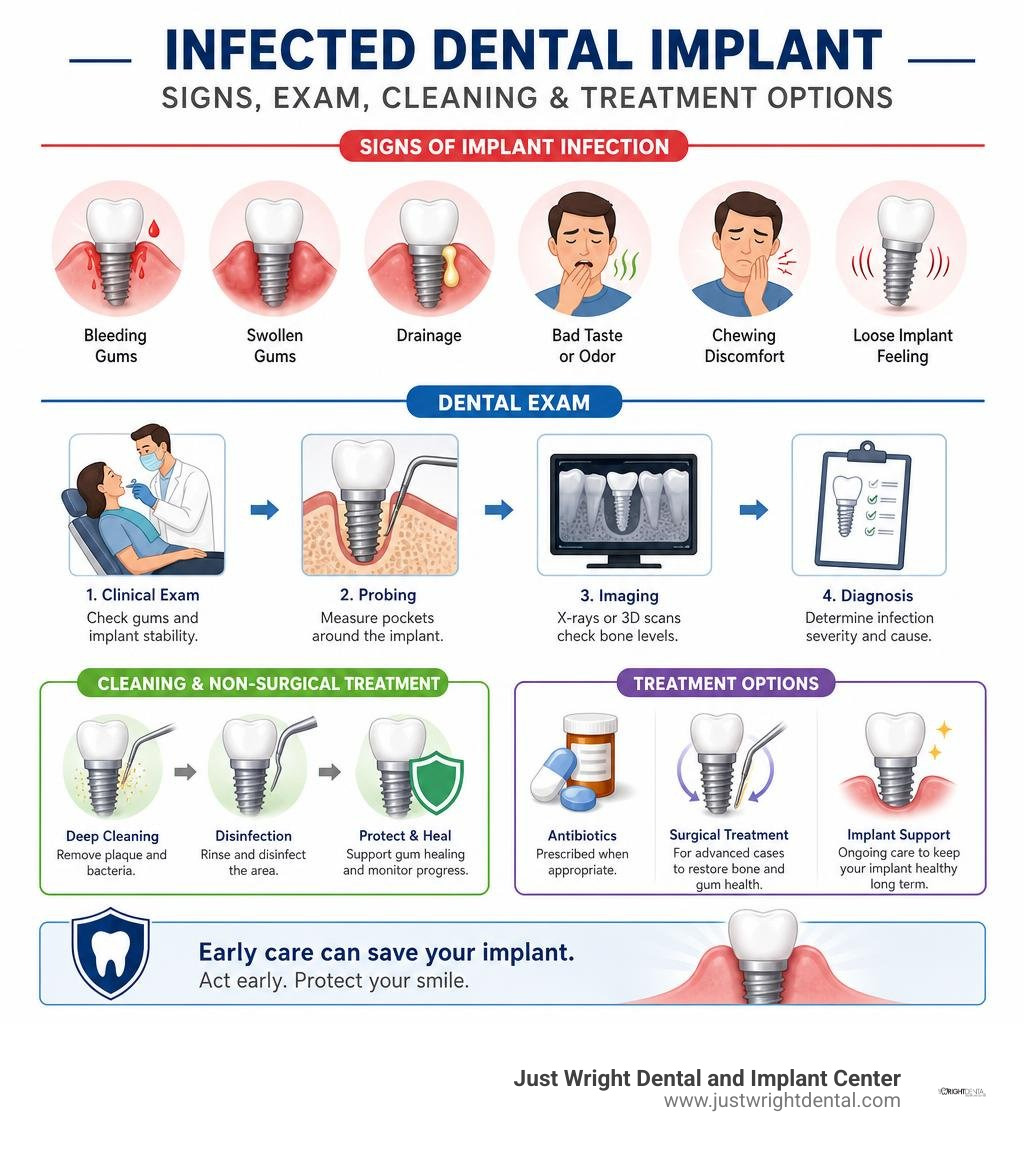
If you notice bleeding, swollen gums, drainage, a bad taste, chewing discomfort, or looseness around an implant, contact your dentist promptly for an exam. An infected dental implant may often be managed when we find the problem early, before it causes major bone loss. Do not try to treat it on your own with mouthwash or leftover antibiotics.
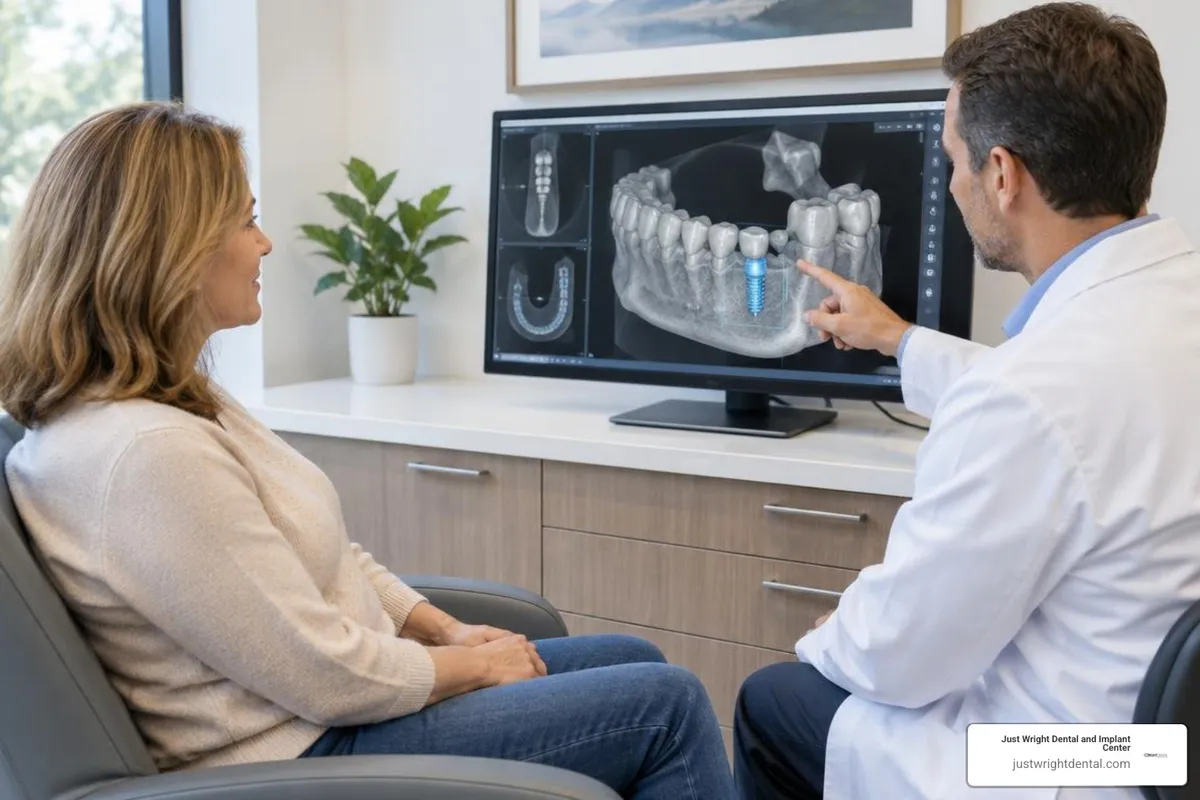
Many implant infections are linked to peri-implantitis, an inflammation caused by bacterial buildup around the implant. It can develop soon after treatment or quietly years later, and it is not always accompanied by obvious discomfort. Your dentist can check the gum tissue, measure the area around the implant, and use X-rays or 3D imaging to look for bone changes.
I'm Dr. Justin Wright, DDS, and in 18+ years, I've placed more than 10,000 implants, completed more than 1,000 full-mouth implant cases, and cared for people with concerns about an infected dental implant. At Just Wright Dental and Implant Center, we look at the full picture - your implant, bite, gum health, medical history, and goals - so we can help you understand the next best step.
Introduction
Dental implants are designed to look, feel, and function just like natural teeth. Approximately 5 million dental implants are placed annually worldwide. When placed, an implant undergoes osseointegration—a natural process where your jawbone fuses directly to the biocompatible titanium post, anchoring it securely in place.
Around a natural tooth, tiny connective fibers run perpendicular to the root surface, creating a tight physical barrier against oral bacteria. In contrast, the soft tissue surrounding a dental implant forms a biological seal with fibers that run parallel to the post. While this soft-tissue barrier protects your jawbone, it is naturally more delicate than the seal around a natural tooth.
When bacteria gather along the gumline, they can organize into a sticky layer known as a biofilm. If plaque remains undisturbed, these microbes release toxins that trigger localized inflammation.

This inflammatory process occurs in two primary stages:
Peri-implant mucositis: A reversible inflammation limited strictly to the surrounding soft tissues, much like gingivitis around a natural tooth. The bone remains completely intact.
Peri-implantitis: An advanced inflammatory condition where the infection spreads beneath the gumline, resulting in progressive loss of the supporting jawbone.
Recognizing the transition between these stages helps us step in before minor surface inflammation leads to bone breakdown.
Recognizing Signs and Symptoms of an Infected Dental Implant
Because dental implants do not contain living nerves like natural teeth, an infection rarely starts with a sharp toothache. Instead, problems often present as subtle changes in the surrounding gum tissue.
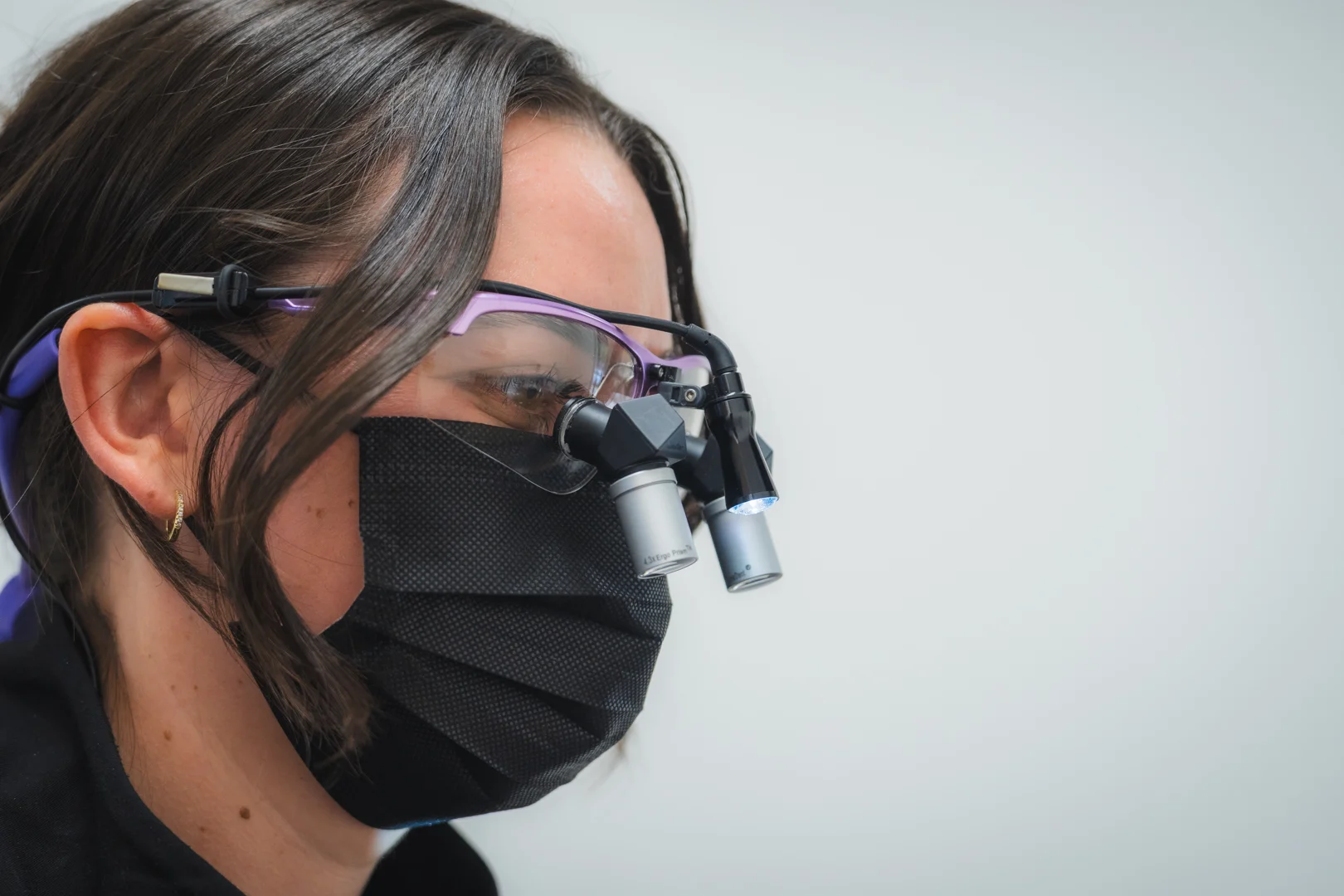
During routine evaluations, we carefully check the depth of the space between the implant and gumline (pocket depth), monitor for bleeding, and evaluate any fluid or pus (purulent exudate).
Feature | Peri-Implant Mucositis | Peri-Implantitis |
|---|---|---|
Tissue Affected | Soft gum tissue only | Gum tissue and supporting jawbone |
Bone Loss | No bone loss | Progressive crestal bone loss |
Reversibility | Fully reversible with proper cleaning | Bone loss cannot always be restored; requires clinical stabilization |
Bleeding on Exam | Present | Present, often accompanied by pus |
Pocket Depths | Normal to slightly elevated | Deepened pockets around the fixture |
Early Warning Signs vs. Advanced Tissue Loss
In the early stages, you might notice mucosal erythema (redness of the gums) and localized edema (puffy swelling). The gums may bleed when you brush, floss, or eat crisp foods. You might also experience persistent halitosis (bad breath) or an unpleasant taste that does not go away after using mouthwash.
As an infection progresses to peri-implantitis, bone resorption can cause the gum tissue to recede. This recession may expose the threaded metal collar of the implant fixture. You may also feel discomfort while chewing (mastication discomfort) as the surrounding tissues become tender to pressure.
When to Seek Urgent Care for an Infected Dental Implant
Certain symptoms mean you should not wait for your next routine checkup. If you notice any wobbling or mobility in your implant restoration, this suggests the bone support has been compromised or an internal prosthetic screw has loosened.
Other urgent signs include acute throbbing discomfort, noticeable facial swelling, or a fever. In rare situations, severe infections in the lower jaw can track past the bone plate into deeper areas beneath the chin, a complication detailed in this clinical report on deep fascial space infection following implant failure. If you develop rapid swelling or severe warmth around the jaw, schedule an emergency dental evaluation promptly so we can assess the area.
Pathophysiology and Microbiome Shifts Around Failing Implants
To understand why implants become infected, we have to look at the microscopic community inside your mouth. Your oral cavity is home to hundreds of bacterial species living in balance. However, when oral hygiene slips or systemic health shifts, harmful bacteria can overwhelm beneficial strains.
Bacteria on titanium surfaces construct an extracellular matrix—a protective, glue-like shield that encases the colony. Bacteria living inside these biofilms can be up to 1,000 times more resistant to antimicrobial treatments than free-swimming (planktonic) bacteria.
Furthermore, this is rarely an isolated problem. A metagenomic study linking microbiome alterations to peri-implantitis shows that when one implant becomes infected, healthy implants elsewhere in the mouth can experience shifts toward a less balanced bacterial environment.
Microbial Dynamics and Systemic Inflammation
In an active infection, oxygen-loving bacteria are replaced by aggressive anaerobic pathogens such as Porphyromonas gingivalis, Treponema denticola, and emerging sulfate-reducing species like Desulfovibrio. These organisms produce damaging byproducts, including hydrogen sulfide and toxic lipopolysaccharides.
Your immune system responds by releasing signaling proteins known as pro-inflammatory cytokines (such as IL-1, IL-6, and TNF-alpha). These signals activate cells that break down bone tissue, leading to localized bone loss.
Because the soft-tissue seal around an implant has parallel fibers rather than perpendicular ones, inflammatory byproducts can enter the bloodstream more easily. As highlighted in a scientific synthesis on the systemic health burden of peri-implantitis, untreated peri-implantitis can elevate systemic inflammatory markers like C-reactive protein (CRP), potentially interacting with broader cardiovascular and metabolic health.
Mechanical and Host Risk Factors
Bacterial plaque is the primary cause of peri-implant disease, but several mechanical and lifestyle factors can raise your overall risk:
Tobacco Use: Nicotine constricts blood vessels in the gums, reducing oxygen delivery and slowing tissue repair.
Systemic Health: Poorly managed blood sugar levels (such as an elevated HbA1c in diabetes) impair the immune response and weaken bone stability.
Excess Dental Cement: If microscopic cement fragments remain beneath the gumline after crown placement, they can trap bacteria and cause localized inflammation.
Bite Forces (Occlusal Overloading): Severe nighttime teeth grinding (bruxism) places heavy lateral stress on the bone-to-implant connection.
Hygiene Maintenance: Skipping routine cleanings allows hardened tartar (calculus) to build up around the restoration.
Staying on track with regular general dentistry visits gives us the chance to spot these risk factors early and address them gently.
Diagnosis and Clinical Treatment Protocols
Accurately evaluating an implant requires a complete clinical exam paired with modern diagnostic imaging.
During an exam, we use gentle, rounded instruments to check pocket depths around the implant and look for any bleeding or exudate. We also rely on low-radiation 3D cone-beam computed tomography (CBCT) imaging to visualize your jawbone from every angle. This shows us the exact pattern of any bone changes—whether it is a contained, saucer-shaped defect or horizontal bone loss across multiple threads.
As demonstrated in a clinical investigation on salvaging infected postextraction implants, even acutely compromised implants can often be stabilized when diagnosed early and managed with targeted debridement protocols.
Non-Surgical Surface Decontamination
When an infection is caught in its earliest stages, we focus on non-surgical treatments to remove bacterial biofilms without irritating the sensitive titanium surface:
Specialized Mechanical Debridement: We use smooth titanium or carbon-fiber instruments and gentle air-polishing sprays (using glycine or erythritol powder) to lift away plaque without scratching the implant metal.
Antiseptic and Saline Irrigation: Flushing the pocket with targeted rinses helps reduce active bacterial counts beneath the gumline.
Topical Oxygen Therapies: Applying specialized oxygen-releasing gels into the pocket creates an aerobic environment that slows down anaerobic bacteria while supporting healthy soft-tissue healing.
Targeted Medications: In select cases, localized or short-term systemic medications may be recommended to support the body's natural defenses.
Professional Options to Save an Infected Dental Implant
When bone loss has progressed, conservative surface cleaning alone may not reach the deeper contours of the implant. Depending on your situation, we generally evaluate two main restorative approaches:
Option 1: Regenerative Surface Therapy (Saving the Implant)
Benefit: Keeps your existing implant foundation intact by gently accessing the site, thoroughly decontaminating the fixture surface, and placing a guided bone graft with a protective membrane to rebuild lost bone support.
Tradeoff: Requires adequate remaining bone architecture to support the graft, along with diligent long-term home maintenance to prevent reinfection.
Option 2: Controlled Removal and Revision (Resetting the Foundation)
Benefit: Completely eliminates deep, untreatable bacterial reservoirs when an implant has lost significant bone support or mobility has occurred, creating a clean site for future healing.
Tradeoff: Requires a healing time of a few months and site reconstruction before a new dental implants restoration can be placed.
At Just Wright Dental and Implant Center in Corsicana, TX, we complete all diagnostic evaluations and restorative treatments under one roof. With our 100% in-house digital workflow—utilizing advanced 3D CBCT imaging, digital smile design, 12 CAD/CAM milling units, and 4 precision 3D printers—we eliminate outside lab delays. Whether you need gentle surface decontamination or a revised restorative plan, our team provides personalized, judgment-free care.
Best Practices for Long-Term Implant Prevention
Protecting your dental health investment comes down to steady, gentle daily habits and consistent clinical maintenance. Because implant restorations have unique contours, standard brushing alone is not always enough.
To keep your implants healthy for years to come:
Clean the Spaces In Between: Use soft interdental brushes with coated wire cores to clean the sides of your implant crowns without scratching the metal.
Incorporate a Water Flosser: Water flossers use a gentle, pulsing stream of water to flush food particles and loose plaque from deep beneath the gumline.
Brush Along the Gumline: Use a soft-bristled manual or electric toothbrush twice a day with non-abrasive toothpaste, angling the bristles gently toward the gumline.
Protect Against Clenching: If you grind your teeth at night, a custom-fitted nightguard helps distribute biting forces evenly and shields your bone from excess pressure.
Support Your Overall Health: Keep chronic conditions like diabetes well-managed, maintain balanced nutrition, and avoid smoking to support healthy blood flow in your gums.
Keep Regular Checkup Visits: Visit us at least twice a year for comprehensive exams and cleanings designed specifically for implant care.
Frequently Asked Questions About Dental Implant Infections
Can an infected dental implant heal on its own?
An infected dental implant cannot resolve on its own. Once bacteria establish a complex biofilm on the textured titanium surface beneath your gumline, home brushing and rinsing cannot reach deep enough to clear the infection. Leaving it unaddressed allows bacterial toxins to continue breaking down the surrounding jawbone. Professional evaluation and specialized surface decontamination are necessary to stop the process and protect your implant foundation.
Does peri-implantitis always cause noticeable discomfort?
Peri-implantitis is frequently free of noticeable discomfort in its early and moderate stages. Dental implants do not have an internal nerve pulp, meaning bone loss can develop quietly without the sharp warning sensations of a traditional cavity. Many people only notice subtle signs like mild gum puffiness, slight bleeding when brushing, or a faint bad taste. Routine 3D imaging and pocket measurements during your regular dental checkups are the most reliable ways to catch bone changes early.
Can an implant be replaced after removal due to severe infection?
Yes, an implant can often be replaced if removal becomes necessary. When an implant is removed due to advanced infection, we thoroughly clean the socket to eliminate all lingering bacteria. We then place a bone graft to rebuild the natural height and density of your jaw. After a dedicated healing time of a few months, the bone is typically strong, healthy, and ready for a new, secure implant placement.
Conclusion
A healthy dental implant is one of the best ways to restore your smile, chew comfortably, and protect your jawbone. While complications like peri-implantitis can occur, catching early signs—such as minor gum bleeding, redness, or tenderness—allows us to take gentle, effective steps to protect your smile and preserve your natural bone support.
At Just Wright Dental and Implant Center, we believe in treating the person, not just the teeth. We provide a calm, welcoming environment where you can ask questions openly and receive clear, thoughtful guidance about your oral health. For patients with complex needs or severe bone loss, our experience with advanced solutions—including our Smile-in-a-Day protocol and remote-anchorage techniques (such as zygomatic and pterygoid implants)—allows us to rebuild stable smiles without complex bone grafting. We also offer gentle sedation options, including numbing medication and deep sedation overseen by an on-staff board-certified physician, ensuring your complete comfort throughout your visit.
Text or call Shelley, our Smile Transformation Coordinator, at 903-602-3439, or call our office at 903-872-8422. If you have questions about your implant, notice changes in your gums, or simply want to ensure your smile stays healthy, taking a few minutes to talk with our team is a valuable step for your long-term health. We invite you to Book An Appointment with us today so we can help you keep your smile strong and confident.
About Dr. Justin Wright, DDS
Dr. Justin Wright, DDS is the founder and clinical director of Just Wright Dental and Implant Center in Corsicana, Texas.